
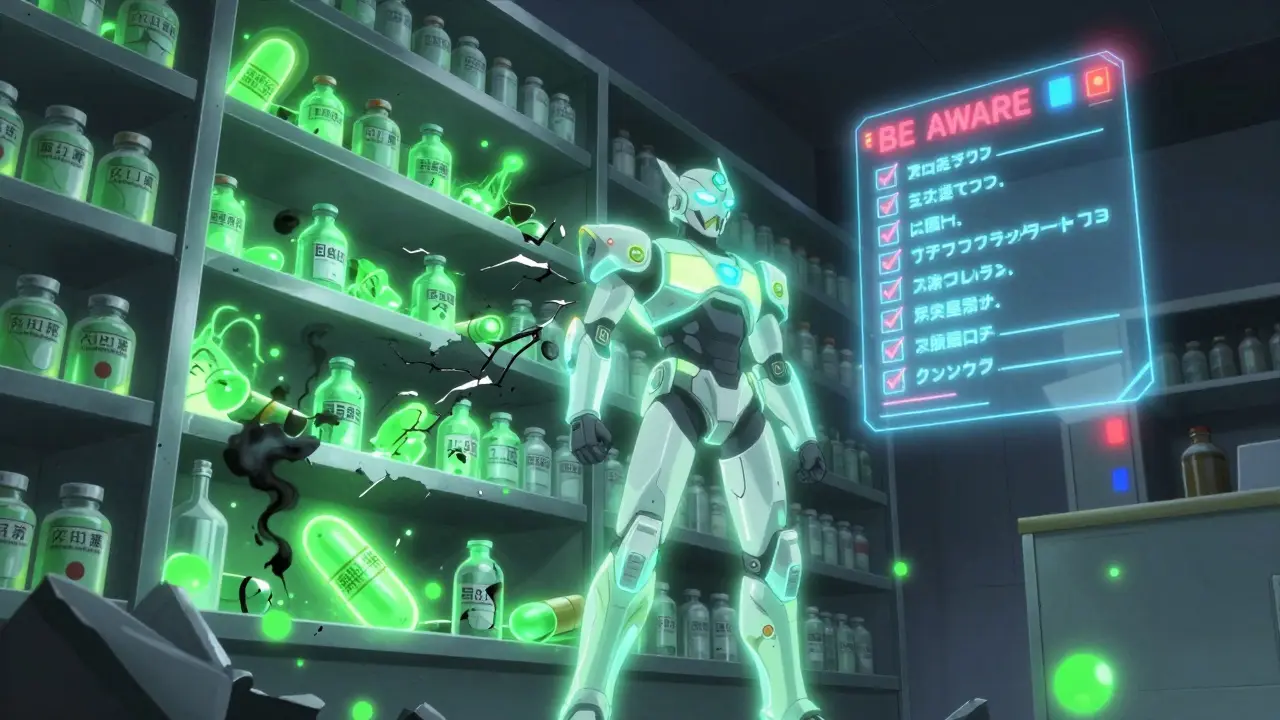
Every year, millions of people around the world take medicine that isn’t what it claims to be. These aren’t mistakes - they’re counterfeit drugs, deliberately made to look real but packed with the wrong ingredients, no active drug at all, or even toxic substances. And while governments and companies fight back with scanners, barcodes, and laws, the real frontline defense? You.
Why Your Eyes Matter More Than You Think
You might assume that if a pill comes in a sealed box with a pharmacy label, it’s safe. But counterfeiters have gotten terrifyingly good. In 2023, the World Health Organization found that in some countries, up to 30% of medicines sold were fake. Even in places like the U.S. and Australia, where systems are stronger, fake drugs still slip through - mostly through websites that look real but aren’t.Here’s the hard truth: no scanner, no government agency, no pharmacy system can catch every fake. But you can. A 2022 study showed that people who check their medicine carefully can spot 70-80% of counterfeits just by looking. That’s not luck. It’s a skill - and it’s learnable.
What to Look For: The BE AWARE Checklist
The World Health Professions Alliance created a simple tool called BE AWARE to help patients spot fakes. You don’t need a degree in pharmacy. Just use your eyes and common sense.- B - Box integrity: Is the packaging cracked, wrinkled, or sealed with tape? Legitimate medicine comes in factory-sealed boxes with tamper-proof features. If it looks like it was resealed at home, walk away.
- E - Expiration date: Is it faded, smudged, or missing? Fake batches often have dates that don’t match the manufacturer’s style. Compare it to a previous box you’ve taken - if the font looks off, it’s a red flag.
- A - Appearance of the medicine: Does the pill or capsule look different? Same color? Same shape? Same markings? If your last bottle had a blue pill with “A12” on it and this one is white with “B45,” that’s not normal. It’s fake.
- A - Active ingredients: Read the label. Does it say “Lisinopril 10mg”? If it says “Lisinopril 10mg” but the pill looks nothing like the one you’ve taken before, double-check. Some fakes even get the name right but have no active drug at all.
- R - Registration numbers: In Europe and Australia, legitimate medicines have a unique serial code. It’s often printed as a barcode or alphanumeric string. If there’s no code, or it’s blurry, ask your pharmacist to scan it. They’re required to do this.
- E - Expiration date consistency: If the box says “EXP 05/2025” but the blister pack inside says “EXP 08/2024,” that’s a mismatch. Counterfeiters copy labels but don’t always match every detail.
- A - Ask questions: If something feels off, ask your pharmacist. Don’t feel silly. They’ve seen fakes before. In fact, they’re trained to spot them.
Where Fake Drugs Come From - And How to Avoid Them
The biggest source of counterfeit medicine? Online pharmacies that don’t belong to trusted networks.In 2023, Pfizer reported that 89% of counterfeit exposures came from websites that looked like real pharmacies. These sites offer pills at half the price. “Too good to be true” is the biggest warning sign. A $100 bottle of blood pressure medicine from a verified U.S. pharmacy? That’s normal. $20 from a site you found on Instagram? That’s a trap.
Here’s how to stay safe:
- Only buy from pharmacies with the .pharmacy domain. In the U.S., Canada, and Australia, this seal means the pharmacy has been verified by the National Association of Boards of Pharmacy (NABP). Type it into your browser - don’t click ads.
- Never buy from social media. No legitimate pharmacy sells medicine through Facebook, TikTok, or WhatsApp.
- If you’re traveling, don’t buy medicine on the street. Even in popular tourist areas, fake drugs are common. Bring your own supply.
- Ask your local pharmacy if they can order your medicine. Many will do it for the same price - or cheaper - than sketchy online sellers.
Technology Helps - But You’re Still the Final Check
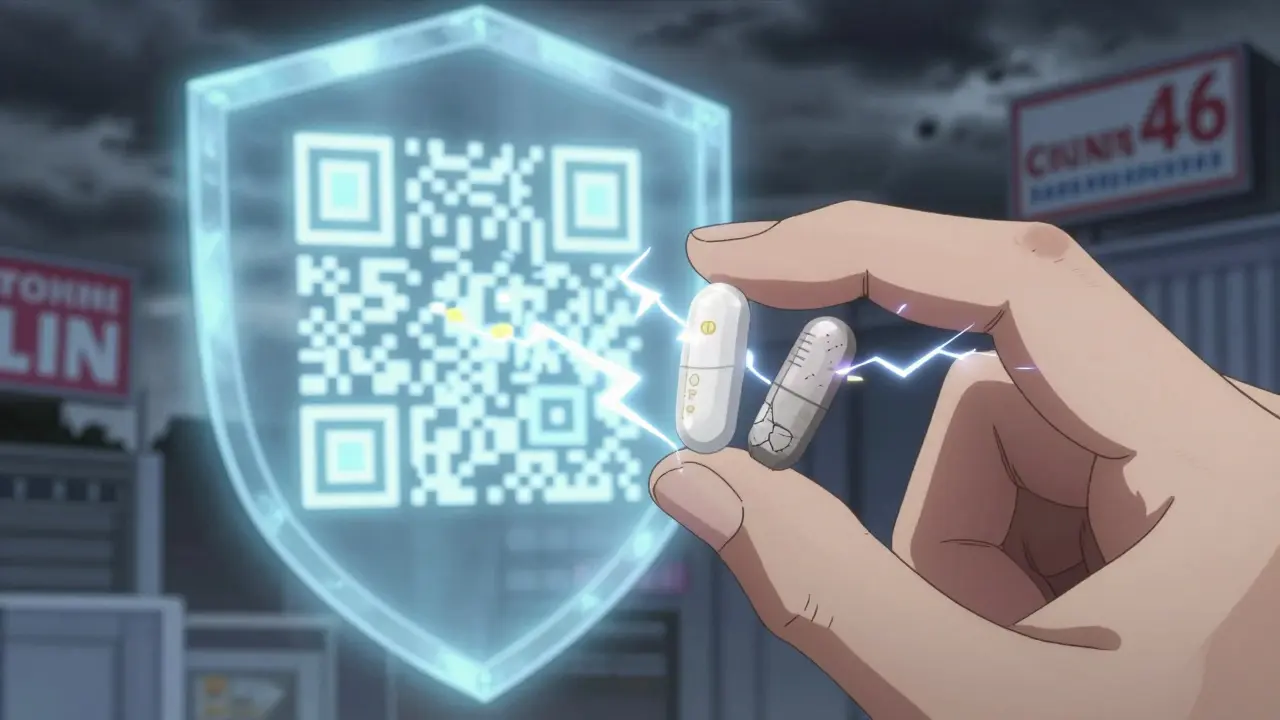
New tools are popping up. In France, since February 2024, you scan a QR code on your medicine box to see the digital leaflet. In Brazil, since June 2024, the same system is rolling out. These aren’t gimmicks. They’re designed to make it harder to fake packaging.But here’s the catch: if you don’t know the QR code is there, or you ignore it because “it’s just a website,” you’re still at risk. The same study that found 70-80% detection rates with visual checks also found that only 28% of people in Europe actually check tamper seals. That’s not vigilance. That’s luck.
Even in countries with full serialization (like Australia, where every prescription box has a unique code), consumers rarely ask for verification. Pharmacists say 9 out of 10 patients just take the box and leave. That’s a missed opportunity.
Real Stories - The Cost of Not Looking
In January 2024, Maria Silva from São Paulo noticed her diabetes pills looked different. The color was lighter. The marking was fainter. She called her pharmacist. They confirmed it was fake. She reported it to ANVISA (Brazil’s health agency). Later, authorities shut down a warehouse with 12,000 fake pills - pills that could’ve killed her family.On the other side? A Reddit user in Canada shared that he bought “generic Viagra” for $15 from a website. He took one. His blood pressure crashed. He ended up in the ER. Turns out, the pill had a dangerous chemical used in rat poison. He was lucky to survive.
These aren’t rare. In 2023, over 12,000 complaints were posted under the hashtag #FakeMeds on Twitter. Most involved online purchases. Nearly 80% of victims said they ignored red flags because the price was “too good.”
What You Can Do Right Now
You don’t need to be a detective. Just follow these steps:- Always buy from a verified pharmacy - in person or online with a .pharmacy domain.
- Before taking any new medicine, compare it to your last bottle. Look at color, shape, markings.
- Check the box: Is the seal broken? Are the letters clear? Is the expiration date consistent?
- If there’s a code, scan it. Use the WHO’s Medicines Safety app (downloaded over 850,000 times). It’s free and works offline.
- If something feels wrong, call your pharmacist. Don’t wait for side effects.
These steps take less than 90 seconds. But they can save your life.
Why This Matters - Even If You’re Healthy
You might think, “I don’t take much medicine. Why should I care?” But counterfeit drugs don’t just harm the person who takes them. They erode trust in the entire system. When fake insulin circulates, it makes people afraid of real insulin. When fake antibiotics spread, they fuel drug-resistant infections. Your vigilance isn’t just personal - it’s public health.And it works. Pfizer reported that in 2023, consumer reports led to 217 counterfeit operations shut down across 116 countries. Those reports prevented 3.2 million harmful doses from being taken. That’s not a statistic. That’s 3.2 million people who didn’t get sick - or worse.
Frequently Asked Questions
Can I tell if a medicine is fake just by looking at it?
Yes, in most cases. About 70-80% of counterfeit medicines have visible flaws - mismatched colors, blurry text, broken seals, or inconsistent pill markings. But the most dangerous fakes look perfect. That’s why checking multiple things - packaging, expiration, physical appearance, and where you bought it - matters more than any single clue.
What should I do if I think I’ve taken a fake medicine?
Stop taking it immediately. Contact your doctor or pharmacist. Report it to your country’s health agency - in Australia, that’s the TGA (Therapeutic Goods Administration). Keep the packaging and pill. Authorities use these to track where the fake came from. Don’t throw it away.
Are online pharmacies ever safe?
Only if they have the .pharmacy domain and are verified by the NABP (in the U.S., Canada, or Australia). Most fake pharmacies use .com, .net, or .org domains. If a site doesn’t ask for a prescription, or if it ships from overseas without a local address, it’s not safe.
Do all countries have systems to track fake medicines?
No. While 128 countries have some form of tracking system, only 42% of low-income nations can enforce it. In places like parts of Africa and Southeast Asia, counterfeit rates hit 25-30%. That’s why consumer vigilance is even more critical there - and why buying from international online pharmacies is risky.
Is it true that fake medicine can be deadly?
Absolutely. Fake antibiotics can lead to untreatable infections. Fake cancer drugs can let tumors grow unchecked. Fake heart pills can cause heart attacks. In 2023, the WHO estimated that over 1 million deaths annually are linked to counterfeit medicines - mostly in low-income countries, but not exclusively.


Post A Comment