

Imagine this: you’ve had a long day, your allergies are flaring up, and you pop a Benadryl to get some relief. Later, you have a glass of wine to unwind. It seems harmless-until you can’t stay awake behind the wheel, or you wake up confused, disoriented, and unsure how you got home. This isn’t a rare accident. It’s a predictable and dangerous outcome of mixing antihistamines with alcohol.
Why Your Brain Can’t Handle Both
Both antihistamines and alcohol slow down your central nervous system. That’s not a coincidence-it’s chemistry. First-generation antihistamines like diphenhydramine (Benadryl) were designed to block histamine, the chemical that causes sneezing and runny nose. But they also slip easily into your brain, where they interfere with signals that keep you alert. Alcohol does something similar: it boosts GABA, a calming neurotransmitter, and blocks glutamate, which keeps your brain active. Together, they don’t just add up-they multiply.Studies show that combining even one drink with a standard dose of Benadryl can reduce your reaction time by nearly half. That’s not just feeling sleepy. That’s impaired coordination, blurred vision, and delayed decision-making-all the same effects as being over the legal blood alcohol limit. And it doesn’t matter if you think you’re "just having one." The body doesn’t distinguish between a sip and a shot when it comes to this interaction.
Not All Antihistamines Are the Same
You might think switching to "non-drowsy" options like Claritin (loratadine) or Zyrtec (cetirizine) makes you safe. It doesn’t. These second-generation antihistamines were built to avoid the brain, but they’re not bulletproof. When alcohol enters the picture, even these "safe" options become risky.Alone, Claritin causes drowsiness in about 10% of users. With alcohol? That jumps to 30-35%. Zyrtec, which causes drowsiness in 15-20% of people on its own, pushes to 40-45% when mixed with even moderate drinking. The liver processes both substances using the same enzymes. Alcohol slows down how fast your body clears the antihistamine, meaning it lingers longer-and stronger-than it should. One study found blood levels of antihistamines stayed elevated 25-40% longer when alcohol was present. That’s not just a side effect. That’s a pharmacological trap.
The Real Danger: Driving and Falls
The CDC found that nearly 3 in 10 fatal car crashes in 2021 involved drivers with both alcohol and sedating medications in their system. That’s not just drunk driving. It’s driving while impaired by a combination most people don’t realize is deadly. You might not feel "drunk," but your brain is moving slower than it should. Reaction times drop. Judgment clouds. You don’t notice the brake light ahead until it’s too late.Older adults are at even higher risk. People over 65 metabolize both alcohol and antihistamines more slowly. The FDA reports they experience more than twice the CNS depression compared to younger adults. That means a single glass of wine with a nighttime allergy pill can lead to falls, hip fractures, or confusion that mimics dementia. A 2022 study in the Journal of the American Geriatrics Society found a 75% higher risk of serious falls in seniors who mixed these substances.
What You Might Not Realize: It’s Everywhere
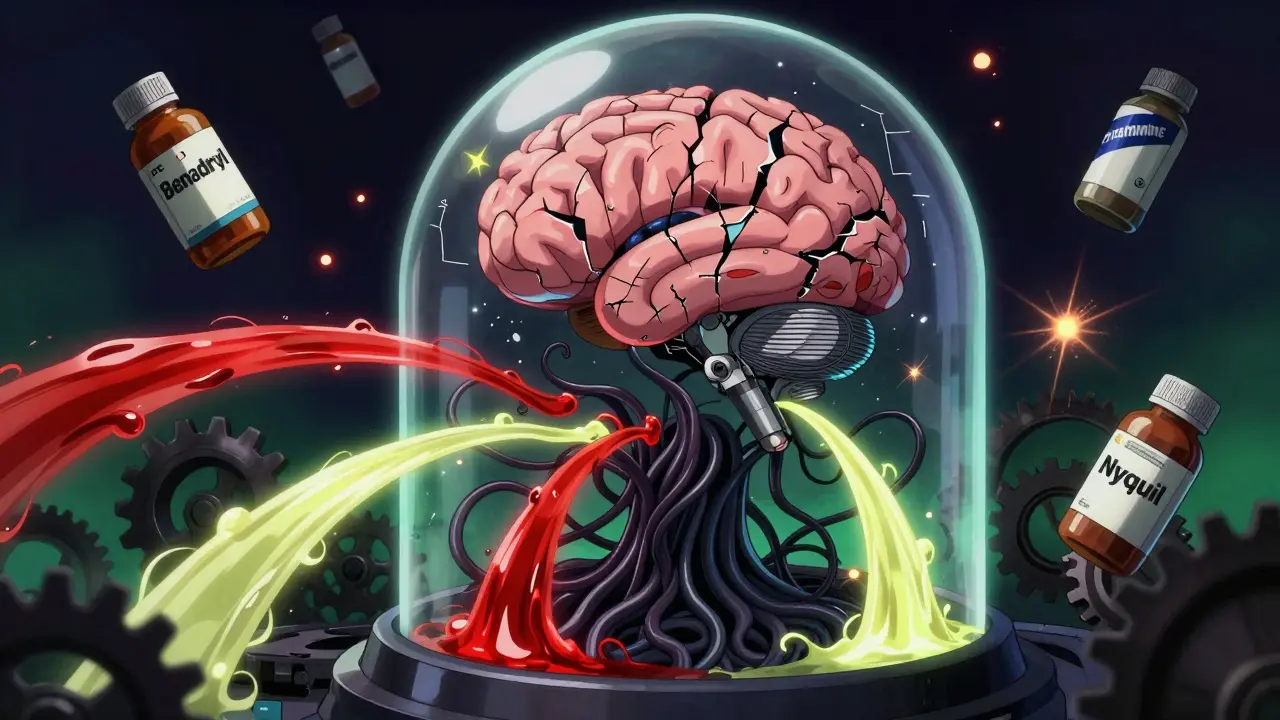
Diphenhydramine isn’t just in Benadryl. It’s in 72 different over-the-counter products. That includes sleep aids like Nytol and Sominex, cold and flu formulas like Tylenol Cold & Flu, and even motion sickness pills like Dramamine. You might take one for a headache, another for a stuffy nose, and a third for sleep-all without realizing they contain the same active ingredient. Add alcohol, and you’re stacking doses without knowing it.And here’s the kicker: OTC labels say "may cause drowsiness." They don’t say "don’t drink." The FDA requires black box warnings on prescription versions, but not on the ones you buy at the pharmacy counter. So most people assume if it’s sold without a prescription, it’s safe. It’s not.
What Real People Are Saying
On Reddit’s r/Allergies, 78% of users who mixed antihistamines with alcohol reported "significantly worse drowsiness" than expected. Over a third admitted falling asleep while driving. On drug review sites, 65% of negative Benadryl reviews mention dangerous alcohol interactions. Phrases like "passed out unexpectedly" and "couldn’t wake up the next morning" show up again and again.Even with "non-drowsy" brands, the stories are troubling. Nearly half of Claritin and Zyrtec users who drank alcohol reported unexpected sleepiness. Older adults were especially affected: 53% reported confusion or memory loss after combining even small amounts of alcohol with their meds. That’s not normal aging. That’s a drug interaction.

What Should You Do Instead?
If you need allergy relief and plan to drink, here’s what works:- Use nasal sprays: Flonase or Nasacort target your nose directly. No brain contact. No drowsiness. Safe with alcohol.
- Try Singulair: This leukotriene inhibitor helps with allergies and asthma. No known interaction with alcohol, but it takes 3-7 days to work-so plan ahead.
- Wait it out: If you took a first-generation antihistamine, wait at least 12-16 hours before drinking. For second-gen, wait 8-12 hours. But remember: metabolism varies. Some people take longer.
- Read labels: Check every pill bottle. Look for "diphenhydramine," "doxylamine," or "phenyltoloxamine." If you see them, skip the alcohol.
There’s no such thing as a "safe" amount of alcohol with antihistamines. Even if you feel fine, your brain isn’t. The risks aren’t theoretical-they’re documented in ER visits, traffic crashes, and real people’s stories.
When to Seek Help
If you’ve mixed alcohol and antihistamines and feel extremely drowsy, confused, have trouble breathing, or can’t stay awake, call emergency services immediately. This isn’t just "feeling tired." This is respiratory depression-a condition where your body stops breathing properly. It can be fatal.And if you’ve been doing this regularly-maybe you’ve been using Benadryl to sleep, then having a drink to relax-you’re not alone. But you’re at risk. Talk to your doctor or pharmacist. There are better, safer ways to manage allergies and sleep without putting your life on the line.
The truth is simple: if you’re taking an antihistamine, don’t drink. Not even a little. Your brain doesn’t need the extra burden. And neither do the people around you.





Post A Comment