

Every year, over 23,000 people in the U.S. end up in the emergency room because of dangerous mixtures between dietary supplements and prescription medications. And here’s the scary part: most of them had no idea it could happen. You might think, "It’s just a vitamin," or "It’s natural, so it’s harmless." But natural doesn’t mean safe - especially when you’re already taking pills for your heart, blood pressure, depression, or thyroid. The truth is, your supplement could be quietly sabotaging your medication - or making it dangerously strong.
Why Supplements Can Be Dangerous with Medications
Your body doesn’t know the difference between a pill from your doctor and a capsule from the health store. Both get processed by the same systems - mostly your liver and gut. That’s where problems start. Many supplements change how your body breaks down medications. Some make them weaker. Others make them stronger. Either way, it can be life-threatening. Take St. John’s wort, for example. It’s sold as a natural mood booster. But it’s also one of the most dangerous supplements out there. It can cut the effectiveness of birth control pills by half. It can make your HIV meds useless. It can knock your transplant drug levels down by 50%, putting your new organ at risk. And it doesn’t just affect one drug - it messes with over 57 different prescriptions, including antidepressants, blood thinners, and even chemotherapy drugs. Even something as simple as vitamin E can be risky. If you’re on warfarin (a blood thinner), taking 400 IU or more of vitamin E can raise your INR levels by 15-20%. That means your blood takes longer to clot. Add that to warfarin, and you’re looking at a serious bleeding risk - maybe even internal bleeding. Ginkgo biloba is another common one. People take it for memory or circulation. But if you’re on Eliquis, Xarelto, or warfarin, ginkgo can triple your chance of a major bleed. One Reddit user, Pharmatech87, spent seven days in the hospital after combining ginkgo with Eliquis. He didn’t tell his doctor because he thought it was "just a supplement."Which Supplements Are Most Likely to Cause Problems?
Not all supplements are created equal. Some are mostly harmless. Others are ticking time bombs. Here’s a clear breakdown based on real clinical data:- High-risk (avoid unless cleared by your doctor): St. John’s wort, goldenseal, garlic (in high doses), ginkgo biloba, ginger (over 1,000 mg/day), black cohosh (for those on liver-metabolized drugs), kava, and echinacea.
- Moderate-risk (use with caution): Fish oil (especially over 3,000 mg/day), vitamin E (over 400 IU), coenzyme Q10, and melatonin.
- Low-risk (generally safe with most meds): Milk thistle, American ginseng, cranberry, saw palmetto, and valerian root.
But here’s the catch: even "low-risk" supplements can cause issues if you’re on a drug with a narrow therapeutic index - meaning the difference between a helpful dose and a toxic one is tiny. Drugs like warfarin, digoxin, cyclosporine, and thyroid meds fall into this category. With these, even a small change can throw your whole system off.
How Your Body Gets Confused: The Science Behind Interactions
Supplements don’t just randomly interfere. They work in specific, predictable ways:- Enzyme interference: Many supplements affect the CYP450 liver enzymes - the same ones that break down most medications. St. John’s wort turns on CYP3A4, which speeds up drug breakdown. That means your meds leave your body faster, so they don’t work as well. Others, like grapefruit juice or goldenseal, block those enzymes. That makes your meds build up to toxic levels.
- Absorption competition: Calcium, magnesium, zinc, and iron all fight for the same spot in your gut. If you take iron with your thyroid medication, the iron can block it from being absorbed. Same with calcium and antibiotics like tetracycline or ciprofloxacin.
- Additive effects: Some supplements do the same thing as your meds. For example, if you’re on blood pressure medication and also take hawthorn or garlic, your blood pressure might drop too low. Or if you’re on an SSRI and take 5-HTP or tryptophan, you could trigger serotonin syndrome - a rare but deadly condition.
The FDA has been warning about this since 2006. And yet, a 2023 survey found that 68% of supplement users never tell their doctor what they’re taking. Why? Because they assume it’s harmless. Or they think their doctor doesn’t care. Both are wrong.
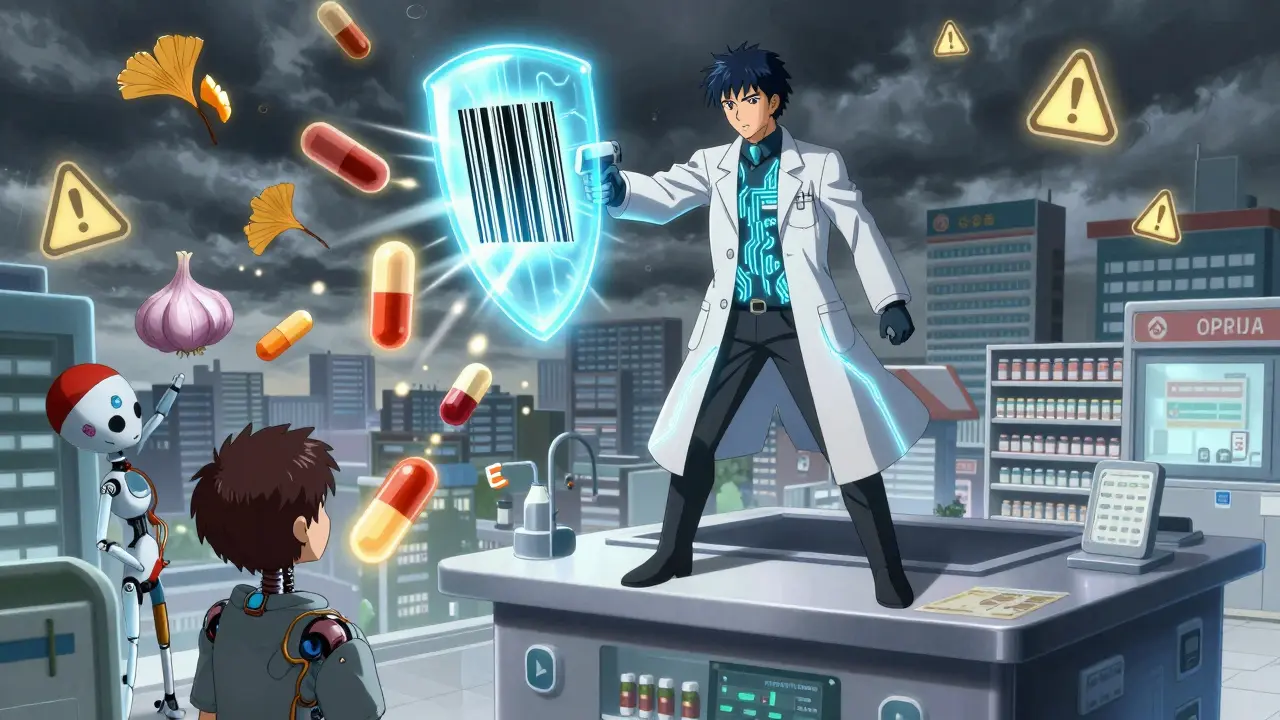
What You Should Do Right Now
You don’t need to stop taking supplements. But you do need to take control. Here’s how:- Make a full list. Write down every pill, capsule, powder, and tincture you take - including vitamins, herbs, probiotics, and even over-the-counter products like Pepto-Bismol or melatonin. Don’t forget the ones you only take occasionally.
- Bring it to your next appointment. The "brown bag method" works. Take your entire medicine cabinet to your doctor or pharmacist. They’ll spot things you didn’t even think mattered. Johns Hopkins found this reduces medication errors by 37%.
- Ask the pharmacist. Pharmacists are trained to catch interactions. Walgreens and CVS have mandatory screening programs. In 2021, they caught dangerous interactions in 18% of cases. That’s one in five people who walked in thinking they were fine.
- Check the label. Look for "Warning" sections. If it says "Do not take if on blood thinners" or "May interfere with antidepressants," pay attention. If it doesn’t say anything, that doesn’t mean it’s safe - it just means the manufacturer isn’t required to warn you.
- Stop high-risk supplements before surgery. Garlic, ginkgo, fish oil, and vitamin E can increase bleeding risk. Most surgeons ask you to stop them 7-10 days before surgery. Don’t assume they know you’re taking them.
What About "Natural" or "Organic" Labels?
Just because something says "natural," "herbal," or "organic" doesn’t mean it’s safe. The FDA doesn’t require supplement makers to prove safety before selling. That’s the law - the Dietary Supplement Health and Education Act of 1994. So a bottle labeled "pure St. John’s wort" could contain anything from the right dose to a dangerous contaminant. In 2023, the FDA issued 142 warning letters to companies making illegal drug claims on supplements - like saying their product "treats depression" or "lowers cholesterol like a statin." Even "organic" doesn’t mean it’s free of interactions. A 2022 study found that 32% of herbal supplements labeled as organic still contained unlisted pharmaceuticals - including antidepressants and erectile dysfunction drugs. So don’t trust the marketing. Trust the science.Who’s at Highest Risk?
People over 50 are the most vulnerable. Nearly 78% of this group take both prescription meds and supplements. But only 32% talk to their doctor about it. Why? They think their doctor doesn’t care. Or they don’t want to be judged. But here’s the reality: your doctor needs to know. The American Medical Association now requires all physicians to ask about supplement use during every medication review. That’s new as of June 2023. And if you’re on any of these medications, you need to be extra careful:- Warfarin (Coumadin)
- Digoxin
- Cyclosporine
- Statins (especially simvastatin with Cordarone)
- SSRIs or SNRIs
- Birth control pills
- Immunosuppressants
- Thyroid meds (levothyroxine)
If you’re on any of these, don’t guess. Ask. Always.
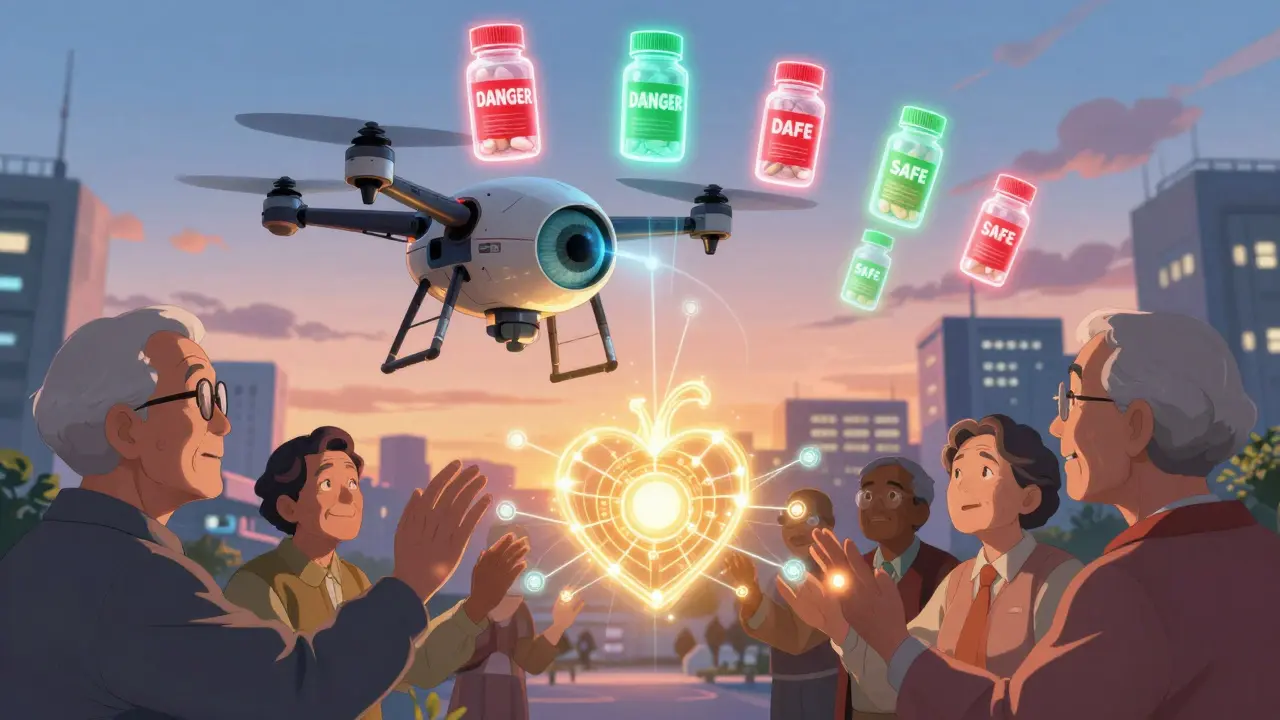
The Future Is Here - And It’s Better
Good news: tools are getting better. The FDA is launching a new mobile app in late 2024 called the Dietary Supplement Ingredient Database. You’ll be able to scan the barcode on your supplement bottle and instantly see if it interacts with your meds. Epic Systems, the company behind most U.S. hospital electronic records, has already started adding supplement interaction alerts into doctor’s dashboards - in 15% of hospitals as of January 2024. And research is moving fast. The National Institutes of Health is funding a $4.2 million study at the University of Washington to build an AI tool that predicts supplement-drug interactions before they happen. That means one day, your pharmacist might warn you before you even buy the bottle. But until then, you’re your own best defense.What to Do If You Already Have a Reaction
If you’ve taken a supplement with your medication and feel unusual symptoms - dizziness, bruising, chest pain, confusion, rapid heartbeat, or unusual bleeding - stop the supplement immediately. Call your doctor. If it’s serious, go to the ER. Don’t wait. Don’t hope it goes away. Document everything: what you took, when, and what you felt. Bring the bottle with you. You’re not overreacting. You’re being smart.Can I take vitamins with my prescription meds?
Some vitamins are safe, but others aren’t. Vitamin K can make blood thinners like warfarin less effective. Vitamin D can raise calcium levels, which can interfere with heart meds. Calcium and iron can block absorption of thyroid meds and antibiotics. Always check with your pharmacist before starting any new vitamin - even a daily multivitamin.
Is it safe to take St. John’s wort with antidepressants?
No. Never. St. John’s wort increases serotonin levels. When combined with SSRIs like Prozac or Zoloft, it can cause serotonin syndrome - a dangerous condition with symptoms like high fever, rapid heart rate, confusion, seizures, and even death. Even if you’re feeling better on your meds, don’t add this supplement. The risk is real and well-documented.
Do I need to tell my doctor about supplements I only take once in a while?
Yes. Even occasional use can cause problems. For example, taking garlic supplements before surgery can lead to dangerous bleeding. Taking melatonin with blood pressure meds can drop your pressure too low. Your doctor needs a full picture - not just the daily stuff.
Can I trust supplement labels that say "no interactions"?
No. Supplement makers aren’t required by law to test for interactions or even list them. A label saying "no known interactions" is not a guarantee. The FDA doesn’t review supplements for safety before they’re sold. Always verify with a pharmacist or doctor - don’t rely on the bottle.
What’s the safest way to find out if my supplement is safe?
The safest way is to bring every supplement and medication you take to your pharmacist for a free interaction check. Most chain pharmacies offer this service. You can also use the free Drugs.com interaction checker as a starting point - but never rely on it alone. Only a human pharmacist or doctor can give you personalized advice based on your full health picture.




Post A Comment