
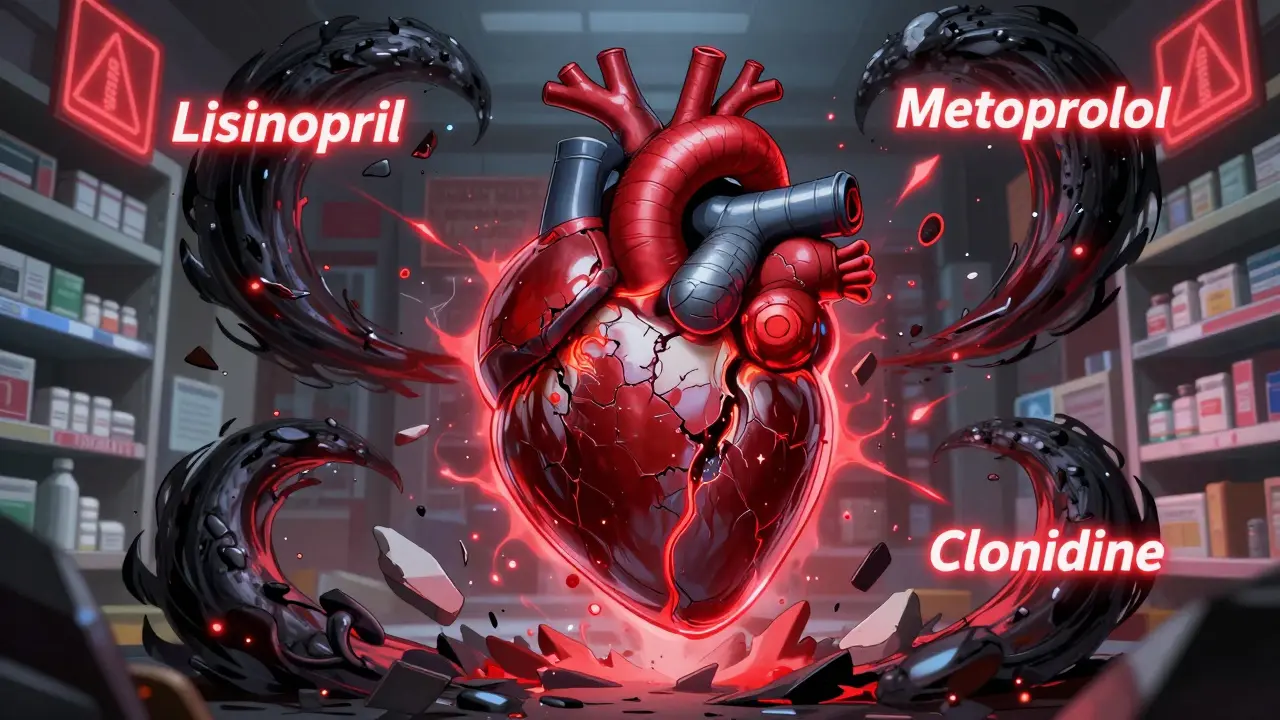
Blood Pressure Medication Interaction Checker
Yohimbe can cause dangerous blood pressure spikes when taken with common hypertension medications. This tool helps you determine if your medication interacts with yohimbe and how severe the risk might be.
Results
Select your medication and answer if you're taking yohimbe to see results.
When you're managing high blood pressure, every pill, every supplement, every morning routine matters. But what if something you took to boost energy, lose weight, or improve performance was quietly undoing your medication? That's the real story behind yohimbe-a herbal supplement marketed for male enhancement and fat loss, but with a dangerous secret: it can trigger life-threatening spikes in blood pressure, especially when taken with common heart medications.
What Exactly Is Yohimbe?
Yohimbe comes from the bark of a tree native to West Africa. Its active ingredient, yohimbine, was first isolated in 1896 and later approved by the FDA in 1989 as a prescription drug for erectile dysfunction. But today, it's rarely found in prescription form. Instead, it's sold in pills, powders, and energy shots labeled as "natural" or "herbal." What most users don't realize is that these products contain wildly inconsistent doses. A 2015 analysis of 49 U.S. brands found yohimbine levels ranged from undetectable to over 6 mg per serving. Some products didn't even contain real yohimbe-they were laced with synthetic yohimbine, a more potent and unpredictable version.
Why does this matter? Because yohimbine works by blocking alpha-2 receptors in your nervous system. This causes your body to release more norepinephrine-the same chemical your brain uses to trigger fight-or-flight responses. The result? Your heart races, your blood vessels tighten, and your blood pressure shoots up. For someone with normal blood pressure, this might just mean jitteriness. For someone on medication to control hypertension? It can be deadly.
How Yohimbe Sabotages Blood Pressure Meds
Let’s say you’re taking lisinopril, a common ACE inhibitor, to keep your blood pressure under control. You add a yohimbe supplement because you read online it helps with fat loss. Within an hour, your blood pressure could jump by 20 to 30 mmHg systolic. That’s not a minor fluctuation-it’s enough to trigger a hypertensive crisis.
The problem isn’t just lisinopril. Yohimbine interferes with nearly every major class of blood pressure medication:
- Beta-blockers (like metoprolol or atenolol): Yohimbine overpowers their ability to slow your heart rate, causing tachycardia.
- Calcium channel blockers (like amlodipine): Yohimbine constricts blood vessels, making these drugs far less effective.
- Clonidine (Catapres): This one is especially dangerous. Clonidine works by activating alpha-2 receptors to lower blood pressure. Yohimbine blocks those same receptors. The result? A direct chemical battle that can spike blood pressure by 30-50 mmHg.
- Diuretics (like hydrochlorothiazide): Yohimbine causes fluid retention and increases heart workload, counteracting the fluid-reducing effect of these drugs.
A 2023 meta-analysis in the Journal of the American Heart Association reviewed 34 studies and found that people taking blood pressure meds who used yohimbe had a 4.7-fold higher risk of hypertensive crisis. That’s nearly five times more likely to end up in the ER.
Real Stories, Real Risks
Behind the numbers are real people. On Reddit’s r/HighBloodPressure, a user posted in June 2022: "Yohimbe nearly killed me while on lisinopril." The thread had 147 comments. Thirty-two others shared similar experiences-systolic readings over 200 mmHg, chest pain, pounding headaches, ambulance rides. One woman described waking up with a pulse of 152 and a BP of 210/110 after taking a "natural energy boost" from a health store.
WebMD’s supplement reviews show 87% of users with hypertension reported negative effects. Over 60 of them specifically mentioned "dangerous blood pressure spikes." And it’s not just older adults. The California Poison Control System found the average age of people hospitalized after taking yohimbe was just 37. Many were otherwise healthy men trying to lose weight or improve gym performance.

The Labeling Lie
Here’s the kicker: you can’t trust what’s on the bottle. ConsumerLab.com tested 23 yohimbe supplements in 2022 and found 68% had inaccurate labeling. Some contained 200% less yohimbine than advertised. Others had 400% more. One product labeled as 5 mg per capsule actually contained 28.7 mg. That’s over five times the amount considered safe for most people.
Why does this happen? Because yohimbe is sold as a dietary supplement, not a drug. The FDA doesn’t require pre-market testing. Companies aren’t held to the same standards as pharmaceutical manufacturers. So if a brand wants to cut costs, they might skip testing. Or worse-they might add synthetic yohimbine to make the product "stronger," without telling you.
What the Experts Say
The American Heart Association calls yohimbe a "high-risk" supplement for people with hypertension. Their 2022 review documented 43 cases of dangerous blood pressure spikes between 2015 and 2021. Dr. David Kiefer from the University of Arizona put it bluntly in a 2023 JAMA Internal Medicine review: "Yohimbe represents one of the most dangerous herbal supplements for patients with hypertension due to its unpredictable dose-response relationship and significant interaction potential with nearly all major antihypertensive classes."
The FDA has issued two public health warnings since 2010. The most recent, in March 2021, cited 127 adverse event reports-19 of them involved hypertensive crises requiring hospitalization. In January 2023, the FDA issued a mandatory recall of 17 yohimbe brands after testing revealed extreme inconsistencies in dosage.
Outside the U.S., the risks are taken even more seriously. Canada banned yohimbe supplements in 2020. The European Medicines Agency banned them in 2018. Australia followed suit. But in the U.S., they’re still sold online, in gas stations, and at supplement shops with no warning labels.

Who Should Avoid Yohimbe Completely?
If you’re taking any blood pressure medication, the answer is simple: don’t take yohimbe. Period. But even if you’re not on meds, you might still be at risk:
- You have heart disease, arrhythmia, or a history of stroke
- You have anxiety, panic disorder, or insomnia
- You’re taking antidepressants-especially SNRIs like venlafaxine or tricyclics like amitriptyline
- You have liver or kidney disease
- You’re under 40 and think "natural" means "safe"
Dr. Robert Eckel presented data at the American Heart Association’s 2024 Scientific Sessions showing yohimbe was involved in 14.2% of all supplement-related emergency room visits for hypertension between 2020 and 2023. That’s more than ginseng, green tea extract, or even ephedra.
What Should You Do?
If you’re currently taking yohimbe and blood pressure medication, stop immediately. Don’t taper. Don’t reduce the dose. Just quit. Then call your doctor. Tell them exactly what you took and when. You may need to be monitored for 24-48 hours.
If you’re thinking about trying it, ask yourself: Why? Is it for weight loss? There are safer, proven ways. For sexual performance? Prescription medications like sildenafil are tested, regulated, and monitored. For energy? Coffee, sleep, and hydration work better-and without the risk of a heart attack.
Pharmacists are seeing this more often. A 2022 survey by the National Community Pharmacists Association found 89% had identified at least one yohimbe-blood pressure interaction in the past year. Twenty-seven percent had seen cases that required emergency care. That’s not rare. That’s routine.
The bottom line: supplements aren’t harmless. "Natural" doesn’t mean safe. And when it comes to your heart, you can’t afford to gamble.
Can yohimbe cause a heart attack?
Yes. While yohimbe doesn’t directly cause heart attacks, it can trigger a hypertensive crisis-where blood pressure spikes so high it ruptures blood vessels in the brain, heart, or kidneys. Between 2020 and 2023, yohimbe was linked to multiple cases of heart attacks and strokes in people taking blood pressure medications. The American Heart Association has documented cases where patients with no prior heart disease suffered cardiac events after taking yohimbe.
Is there a safe dose of yohimbe for people with high blood pressure?
No. There is no safe dose of yohimbe for anyone with high blood pressure, heart disease, or who is taking blood pressure medication. Even a single 5 mg dose can cause dangerous spikes in blood pressure. The Memorial Sloan Kettering Cancer Center and Mayo Clinic both state that yohimbe is contraindicated for these populations. The variability in supplement content makes it impossible to predict how your body will react.
What should I do if I took yohimbe and now feel dizzy or have a racing heart?
Stop taking yohimbe immediately. Sit down, stay calm, and check your blood pressure if you have a monitor. If your systolic reading is above 180 mmHg, or if you feel chest pain, shortness of breath, confusion, or vision changes, call emergency services. These are signs of a hypertensive emergency. Do not wait. Do not try to "wait it out." Get help now.
Are there any supplements that are safe to take with blood pressure medication?
Some supplements like magnesium, potassium (if your kidneys are healthy), and CoQ10 have been studied for mild blood pressure support and are generally considered low-risk when taken under medical supervision. But even these can interact with medications. Always talk to your doctor or pharmacist before adding any supplement to your regimen. There is no such thing as a "safe" supplement if you’re not sure how it affects your body or your meds.
Why is yohimbe still sold in the U.S. if it’s banned elsewhere?
The U.S. regulates supplements differently than drugs. Under the Dietary Supplement Health and Education Act of 1994, manufacturers don’t need FDA approval before selling products. The FDA can only act after harm is reported. That’s why yohimbe remains on shelves despite bans in Canada, Australia, and the EU. The FDA has issued warnings and recalls, but enforcement is slow. Consumers are left to navigate the risks on their own.
How can I tell if a supplement contains yohimbe?
Check the ingredient list for "yohimbe," "yohimbine," or "Pausinystalia yohimbe." But don’t rely on labels alone. Many products hide it under "proprietary blends," where the exact amount isn’t disclosed. If the label says "male enhancement," "fat burner," or "energy booster," and doesn’t list exact amounts, assume it contains yohimbe or a similar stimulant. When in doubt, avoid it.





Post A Comment