

When your doctor talks about a new medicine for your arthritis, diabetes, or cancer, you might hear the word biosimilar. It sounds complicated - and it is, in a way. But you don’t need to be a scientist to understand what it means for you. Here’s the plain truth: a biosimilar is a highly similar version of a powerful, expensive biologic drug that’s already been proven safe and effective. It’s not a copy, not a generic, and not a new miracle drug. It’s something in between - and it could save you money without lowering your care.
What makes a biologic drug different?
Most pills you take - like aspirin or metformin - are made from chemicals. They’re small, simple, and easy to copy exactly. That’s what generics are: exact chemical duplicates of brand-name drugs. But biologic drugs? They’re made from living things. Think of them as tiny, complex machines built inside living cells - yeast, bacteria, or animal cells. These drugs include antibodies, hormones, and proteins that target specific parts of your immune system or body. They treat conditions like rheumatoid arthritis, Crohn’s disease, psoriasis, and some cancers. Because they come from living systems, no two batches are ever perfectly identical. Even the original maker can’t make the exact same version twice. That’s why you can’t just copy them like you copy a chemical pill.
Biosimilars aren’t generics. Here’s why that matters.
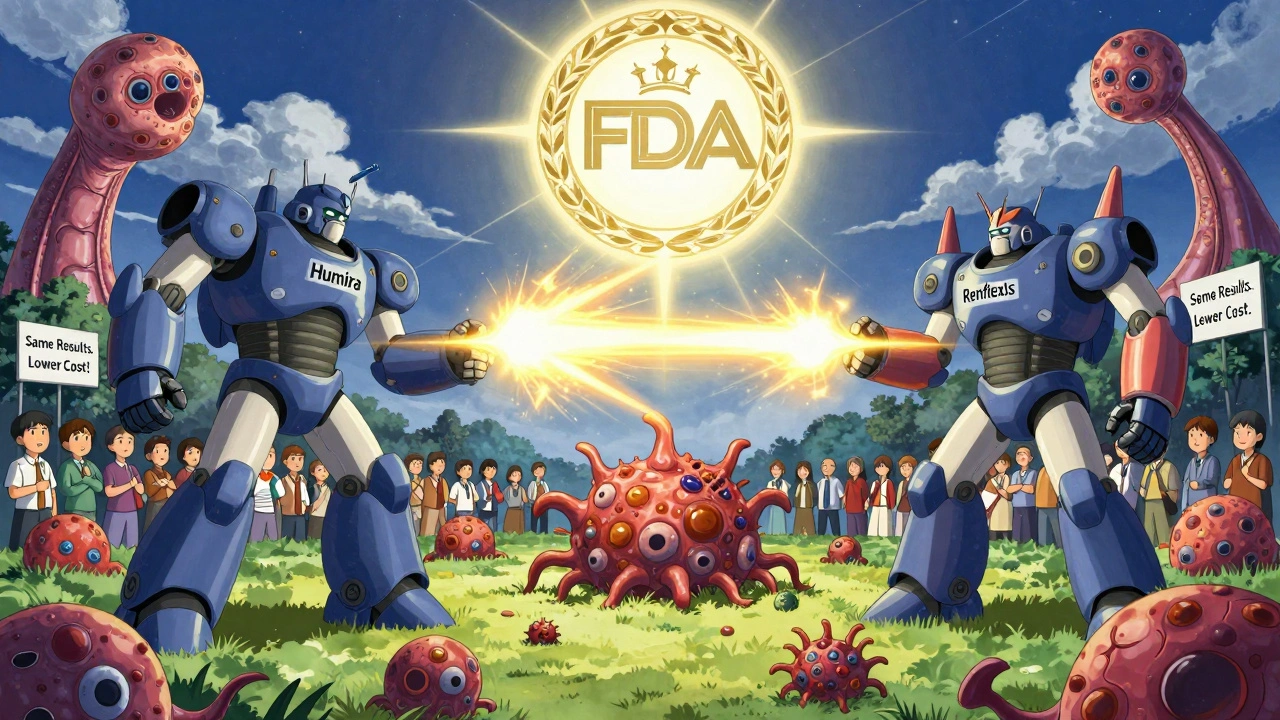
Let’s clear up the biggest confusion: biosimilars are not generics. Generics are exact copies. Biosimilars are highly similar - but not identical. The difference? Complexity. A generic aspirin has the same molecule as brand-name aspirin. A biosimilar for a drug like Humira (adalimumab) has the same basic structure and works the same way, but because it’s made in a different lab with different cells and processes, there are tiny, unavoidable differences. These differences aren’t dangerous. They’re like two handmade sweaters made from the same wool and pattern - one might have a slightly looser stitch, but both keep you warm. The FDA requires biosimilars to prove they work just as well and are just as safe as the original. No clinically meaningful differences. That’s the rule.
How do we know biosimilars are safe?
Before a biosimilar hits the market, it goes through more testing than most new drugs. Manufacturers run dozens of lab tests to compare the biosimilar’s molecular shape, purity, and how it behaves in the body. Then they test it in animals. Finally, they run clinical trials - often with hundreds of patients - to make sure it works the same way in real people. For example, the biosimilar Renflexis, used for rheumatoid arthritis, was tested in 541 patients before approval. The results? No difference in how well it worked or what side effects it caused compared to the original. In Europe, where biosimilars have been used for over 15 years, millions of patients have taken them with no new safety concerns. The FDA and other global health agencies track every single biosimilar after approval, watching for any unusual reactions. If something pops up, they act fast.
What conditions are treated with biosimilars?
Biosimilars are already helping people with serious, long-term conditions. They’re used for:
- Chronic inflammatory diseases like rheumatoid arthritis, psoriasis, and Crohn’s disease (e.g., biosimilars for Humira, Enbrel, Remicade)
- Certain cancers, including breast cancer and colorectal cancer (e.g., biosimilars for Herceptin, Avastin)
- Diabetes (biosimilars for insulin glargine)
- Eye diseases like macular degeneration
- Low blood cell counts after chemotherapy (e.g., biosimilars for Neupogen)
These aren’t experimental treatments. They’re standard options in many clinics now. If your doctor suggests switching to a biosimilar, it’s not because they’re cutting corners. It’s because the science says it’s just as good.

Will it cost less?
Yes - and that’s the point. Biosimilars are typically 15% to 30% cheaper than the original biologic. That doesn’t sound huge, but when you’re paying thousands a year for a shot or infusion, it adds up. For example, the original Humira can cost over $70,000 a year. A biosimilar might cost $50,000. That’s a $20,000 saving. Insurance companies often push for biosimilars because they save money overall. In some cases, your plan might require you to try a biosimilar first before covering the brand-name drug. That’s legal and common. It’s not a punishment - it’s a smart way to stretch healthcare dollars so more people can get treatment.
What’s the name on the bottle?
Here’s something practical: biosimilars have different names than the original drugs. The original biologic might be called “infliximab.” The biosimilar might be “infliximab-dyyb.” The first part is the same - that’s the active ingredient. The four-letter suffix at the end is there to tell them apart. This helps doctors and pharmacists track which version you’re taking, especially if there’s a rare side effect. You won’t be confused - your doctor will explain it. But if you see a new name on your prescription, don’t panic. It’s not a different drug. It’s just a different version of the same one.
Can you switch from the original to a biosimilar?
Yes. Many patients switch safely. Studies have shown that switching from a brand-name biologic to a biosimilar doesn’t increase side effects or reduce effectiveness. The Arthritis Foundation and other patient groups have reviewed dozens of studies and say switching is safe. Some patients even feel better after switching - not because the drug is stronger, but because they’re less stressed about the cost. If you’re worried, talk to your doctor. But don’t assume switching means you’re getting a second-rate drug. You’re getting the same result at a lower price.
What about interchangeable biosimilars?
There’s a newer category: interchangeable biosimilars. These are biosimilars that the FDA says can be swapped for the original drug without the doctor’s approval - just like a pharmacist might swap a brand-name pill for a generic. The first one approved was Semglee, a biosimilar for insulin glargine, in 2021. More are coming. This makes access even easier. But even if your drug isn’t interchangeable yet, it doesn’t mean it’s less safe. It just means the extra step of proving it can be swapped automatically hasn’t been completed. Both types are equally effective.
What’s the future look like?
The global biosimilar market is growing fast - it’s expected to hit over $30 billion by 2028. More biologics are losing patent protection, so more biosimilars are coming. In the U.S., only about 10% of biologic use is from biosimilars right now. In Europe, it’s 25%. That gap is closing. As more manufacturers enter the market, prices will drop even more. Some experts estimate biosimilars could save the U.S. healthcare system over $50 billion in the next decade. That means more people can get life-changing treatments - not just those who can afford the high price tag.
What should you do?
If your doctor brings up a biosimilar, ask:
- Is this biosimilar approved by the FDA for my condition?
- Has it been tested in people like me?
- Will my insurance cover it?
- What’s the difference in cost?
Don’t be afraid to ask. You’re not being difficult. You’re being informed. You deserve to know your options. And if you’re already on a biologic and your insurance switches you to a biosimilar, don’t stop taking it unless your doctor says so. Most patients don’t notice any difference - and that’s exactly how it should be.
Biosimilars aren’t a compromise. They’re a smart, science-backed way to make powerful treatments available to more people. They’re not magic. But they’re real. And they work.
Are biosimilars safe?
Yes. Every FDA-approved biosimilar must prove it’s as safe and effective as the original biologic. This requires extensive lab testing, animal studies, and clinical trials in hundreds of patients. Post-market monitoring continues after approval to catch any rare side effects. Millions of patients worldwide have used biosimilars for over 15 years with no new safety issues.
Can I switch from my current biologic to a biosimilar?
Yes, and it’s common. Multiple studies show switching from a brand-name biologic to a biosimilar doesn’t reduce effectiveness or increase side effects. Doctors and patient groups like the Arthritis Foundation confirm it’s safe. If you’re concerned, talk to your doctor - but don’t assume switching means lower quality. You’re getting the same treatment at a lower cost.
Why are biosimilars cheaper than the original biologics?
Because they don’t need to repeat the original research. The reference biologic already proved it works and is safe. Biosimilar makers only need to prove their version is highly similar. This cuts development costs significantly. While manufacturing biologics is still complex and expensive, competition from multiple biosimilar makers drives prices down - typically 15% to 30% lower than the original.
Are biosimilars the same as generics?
No. Generics are exact chemical copies of small-molecule drugs like aspirin or metformin. Biosimilars are highly similar versions of large, complex biologic drugs made from living cells. Because biologics are made in living systems, they can’t be copied exactly - only closely matched. That’s why biosimilars require more testing than generics.
How do I know if I’m getting a biosimilar?
Check your prescription or the label. Biosimilars have the same generic name as the original biologic, but with a four-letter suffix added - like infliximab-dyyb instead of just infliximab. Your pharmacist or doctor will tell you if you’re being switched. You won’t be given a biosimilar without your knowledge - it’s not hidden.
Do biosimilars work as well as the original?
Yes. The FDA requires biosimilars to show no clinically meaningful differences in safety, purity, and potency. That means they work the same way, at the same dose, for the same condition. Clinical trials and real-world use confirm they deliver the same results - whether it’s reducing joint pain, controlling blood sugar, or shrinking tumors.



Post A Comment