

Combining yohimbe supplements with blood pressure medications isn’t just risky-it can be life-threatening. If you’re taking medication for high blood pressure and thinking about trying yohimbe for weight loss, energy, or sexual performance, stop. The interaction isn’t theoretical. It’s been documented in emergency rooms, poison control centers, and clinical studies. This isn’t a "maybe" situation. It’s a clear, proven danger.
What Exactly Is Yohimbe?
Yohimbe comes from the bark of a tree native to West Africa. Its active ingredient, yohimbine, was first isolated in 1896. In the late 1980s, the FDA approved it as a prescription drug for erectile dysfunction under the brand name Yocon. But today, it’s sold almost exclusively as an over-the-counter supplement. You’ll find it in products labeled for male enhancement, fat burning, or athletic performance. What most users don’t realize is that these supplements contain wildly inconsistent amounts of yohimbine. One capsule might have 1.2 mg. Another, labeled the same way, could have 28.7 mg. That’s more than a 20-fold difference. And that’s not a manufacturing error-it’s the norm.
The problem? Yohimbine blocks alpha-2 receptors in your brain and nervous system. Normally, these receptors help calm your body down by limiting how much norepinephrine (a stress hormone) gets released. When yohimbine blocks them, your body goes into overdrive. Your heart rate spikes. Your blood vessels tighten. Your blood pressure shoots up. For someone with normal blood pressure, this might just feel like a strong coffee buzz. For someone on blood pressure meds? It’s a chemical war inside their body.
How Yohimbe Sabotages Blood Pressure Medications
Most blood pressure medications work by lowering your heart rate, relaxing blood vessels, or helping your body get rid of excess fluid. Yohimbe does the exact opposite. It doesn’t just interfere-it reverses the effects of many common drugs.
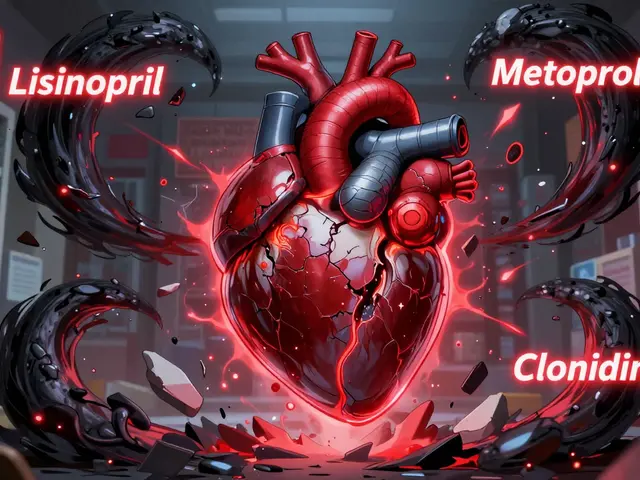
- Clonidine (Catapres), guanfacine, guanabenz: These drugs activate alpha-2 receptors to lower blood pressure. Yohimbe blocks those same receptors. When taken together, they cancel each other out. Studies show this combo can cause systolic blood pressure to spike by 30-50 mmHg in minutes. That’s enough to trigger a hypertensive crisis.
- Beta-blockers (metoprolol, atenolol): These slow your heart rate. Yohimbe makes your heart race. The result? Your body is fighting itself. Your heart can’t decide whether to go fast or slow. This mismatch increases strain on your heart muscle and raises your risk of arrhythmia.
- ACE inhibitors (lisinopril, enalapril), calcium channel blockers (amlodipine, diltiazem): These relax arteries. Yohimbe tightens them. The combined effect? Your arteries get stuck in a tug-of-war. Blood pressure doesn’t just stay high-it can spike unpredictably.
- Diuretics (hydrochlorothiazide): These help flush out fluid. Yohimbe causes your body to hold onto sodium and water. You’re essentially undoing the medication’s entire purpose.
- SNRIs and tricyclic antidepressants (venlafaxine, duloxetine, amitriptyline): These increase norepinephrine levels. Yohimbe does the same. Together, they create a dangerous overload. A 2022 study documented 17 cases of systolic blood pressure over 180 mmHg-emergency levels-after people combined these drugs with yohimbe.
The American Heart Association calls yohimbe a "high-risk" supplement for people with hypertension. Between 2015 and 2021, they recorded 43 cases of dangerous blood pressure spikes directly linked to yohimbe use in people on antihypertensive meds. That’s not a small number. That’s a pattern.
The Numbers Don’t Lie
Let’s look at hard data:
- A 2017 study from the California Poison Control System analyzed over 7 years of calls. Of all supplement-related emergencies, 78% of yohimbe cases required medical intervention-compared to just 42% for other supplements.
- 67% of those cases involved tachycardia (heart rate over 100 bpm).
- 58% had systolic blood pressure above 140 mmHg. Many went well over 200.
- A 2023 meta-analysis in the Journal of the American Heart Association found yohimbe increases the risk of hypertensive crisis by 4.7 times in people on blood pressure meds.
- The FDA received 127 adverse event reports between 2010 and 2021, including 19 hospitalizations for hypertensive crisis.
Even worse, the supplements themselves are unreliable. ConsumerLab.com tested 49 yohimbe products in 2022. Sixty-eight percent had inaccurate labeling. Some had less than half the yohimbine listed. Others had more than triple. You could buy a "5 mg" capsule and unknowingly ingest 20 mg. That’s enough to send someone with high blood pressure to the ER.

Real People, Real Consequences
Online forums are full of stories that mirror the clinical data. On WebMD, 87% of 214 reviews from people with hypertension reported negative effects after taking yohimbe. Over 60 of them described sudden, terrifying spikes in blood pressure. On Reddit’s r/HighBloodPressure, a thread titled "Yohimbe nearly killed me while on lisinopril" had 147 comments. Thirty-two users shared similar experiences-some with readings above 200 mmHg. One man ended up in the ER with chest pain, shaking, and a heart rate of 140. He hadn’t touched caffeine. He’d taken one yohimbe pill.
The average age of people hospitalized for yohimbe-related events? 37. That’s not an older adult with decades of heart disease. That’s someone in their prime, thinking they’re just trying a natural boost. They’re not. They’re playing Russian roulette with their heart.
Why This Isn’t Just "Natural"
Many people assume supplements are safe because they’re "natural." That’s a dangerous myth. Yohimbe isn’t a harmless herb. It’s a powerful drug with a narrow safety window. The FDA has issued two public health warnings about it since 2010. Canada and Australia banned it outright. The European Medicines Agency banned it in 2018. Why? Because the risks aren’t hypothetical. They’re happening.
Even if you’re not on blood pressure meds, you might still be at risk. If you have a history of heart disease, anxiety, kidney or liver problems, or even just a family history of stroke, yohimbe could trigger a crisis. The supplement industry doesn’t test for these interactions. They don’t have to. And they won’t tell you.

What Should You Do?
If you’re currently taking blood pressure medication:
- Stop using yohimbe immediately. Even one dose can be dangerous.
- Check all your supplements. Look at the ingredient list. If it says "yohimbe," "yohimbine," or "Pausinystalia yohimbe," remove it.
- Talk to your doctor. Tell them you’ve used yohimbe, even if it was months ago. They need to know to monitor your blood pressure closely.
- Don’t assume "natural" means safe. Many of the deadliest drugs in history come from plants-digitalis, strychnine, ricin. Yohimbe belongs in that category.
If you’re not on medication but have high blood pressure or heart concerns, skip yohimbe entirely. There are safer, evidence-based ways to improve energy, focus, and sexual health. Yohimbe isn’t the answer. It’s a trap.
What’s Changing?
Regulators are catching up. In January 2023, the FDA recalled 17 yohimbe brands after finding wildly inconsistent dosing. The Draft Guidance on High-Risk Dietary Supplements released in August 2023 proposes mandatory warning labels: "WARNING: May cause dangerous increases in blood pressure, especially when taken with blood pressure medications. Not for use by persons with heart disease or hypertension." Sales of yohimbe supplements in the U.S. dropped 15% in 2023. Pharmacists report more questions and more emergency calls. More doctors are screening for herbal supplement use during routine visits. The tide is turning. But it’s not fast enough.
Your heart doesn’t wait for regulations to catch up. It reacts in real time. And if you’re combining yohimbe with blood pressure meds, you’re already in danger.





Post A Comment