

Swallowing a pill shouldn’t feel like a battle. But for millions of people-especially older adults, stroke survivors, or those with Parkinson’s or dementia-it is. Around 15% of older adults living at home struggle to swallow pills, and that number jumps to 68% in nursing homes. When you can’t swallow, you stop taking your medicine. And that’s not just inconvenient-it’s dangerous. Missing doses of blood pressure pills, antibiotics, or heart medications can lead to hospital visits, worsening conditions, or even death.
Why Swallowing Pills Gets Harder With Age
It’s not just about being weak or stubborn. Swallowing is a complex process involving over 50 muscles and nerves. As we age, those muscles weaken. Nerve signals slow down. Conditions like stroke, Alzheimer’s, or esophageal strictures make it worse. Some people feel like the pill is stuck in their throat. Others gag or cough. A few even choke. And when that happens once, most people avoid it next time.The problem isn’t just the pill itself. It’s what happens after. Crushing tablets or opening capsules to mix with applesauce or juice might seem like a quick fix. But it’s risky. A 2023 study found that nearly 50% of these modifications were inappropriate. Some pills are designed to release slowly over hours. Crush them, and you get a dangerous rush of medicine all at once. Others lose effectiveness when exposed to air or stomach acid. And some, like certain chemotherapy drugs, can be toxic if handled improperly.
What You Can Do Before You Even Reach for the Pill
The first step isn’t about tricks-it’s about asking the right questions. Talk to your doctor or pharmacist. Ask:- Is this medication still necessary?
- Is there a liquid version?
- Can it come as a patch, suppository, or dissolvable tablet?
Many common meds-like blood pressure pills, antidepressants, and pain relievers-have alternative forms. Liquid versions are often available, though they can taste awful. Orodispersible tablets dissolve on the tongue without water. Transdermal patches stick to the skin and release medicine slowly. Rectal suppositories work for some drugs, especially when nausea is an issue. But here’s the catch: only 37% of essential medications have these options. So you still need to work with what you’ve got.
Safe Ways to Swallow Pills When You Can’t
If you must take a pill whole, try these proven techniques:The Lean Forward Method
This works best for capsules. Place the capsule on your tongue. Take a medium sip of water-not too much, not too little. Then, tilt your chin down toward your chest as you swallow. This opens up the throat and lets gravity help. Clinical studies show this method improves success rates by up to 75%.The Bottle Method
Fill a plastic water bottle with water. Put your lips tightly around the opening. Take a drink while keeping your lips sealed. The suction helps pull the pill down. This trick works well for people who gag easily.The Applesauce Trick (Only If Approved)
If your pharmacist says it’s safe to crush the pill, mix it with a spoonful of applesauce, pudding, or yogurt. Don’t use juice or thin liquids-they can cause the medicine to separate or wash too quickly. Always check with your pharmacist first. Never crush extended-release, enteric-coated, or chemotherapy pills.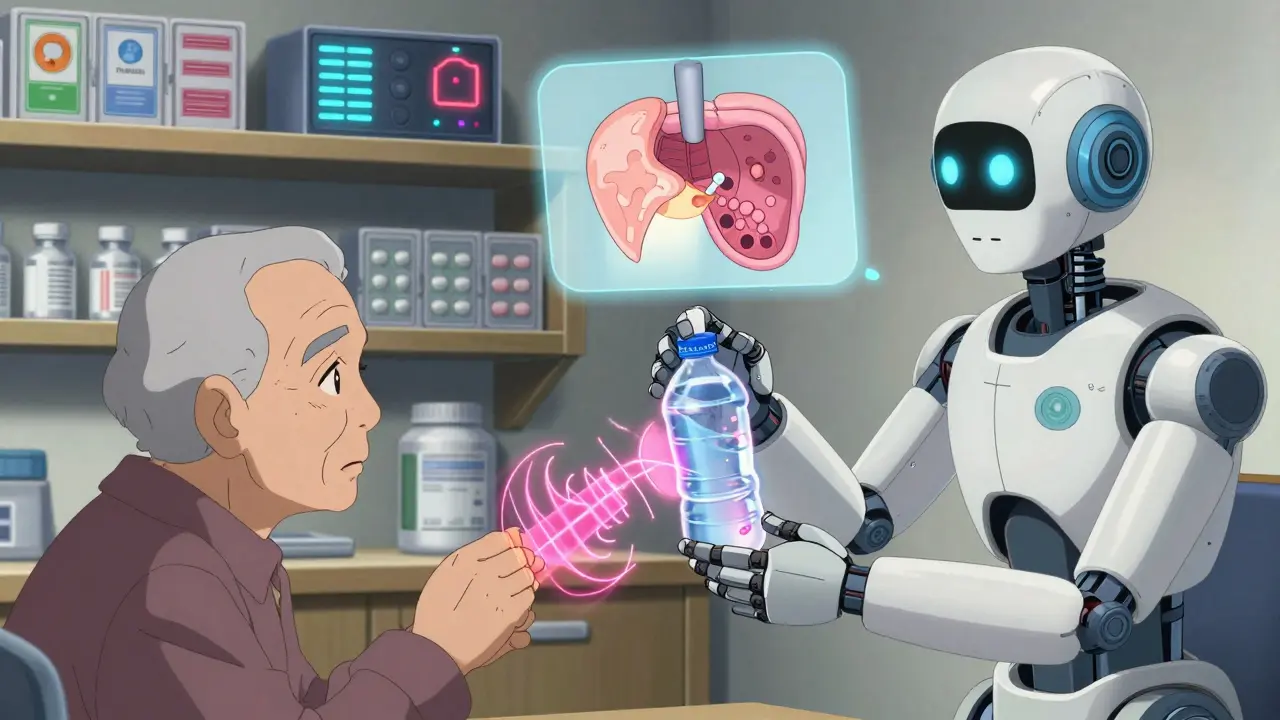
What to Avoid at All Costs
Some common advice is flat-out dangerous:- Don’t crush pills without checking-even if your grandma did it for years.
- Don’t use soda or juice to swallow pills-they can interfere with absorption.
- Don’t lie down right after-stay upright for at least 10 minutes to avoid the pill getting stuck.
- Don’t dry swallow-always use water. Even a sip helps.
And never, ever use alcohol to help swallow a pill. It can interact with medications and increase side effects.
For Caregivers: How to Help Someone Else
If you’re helping an older parent or loved one, your role is critical. Don’t assume they’re refusing medicine because they’re being difficult. They might be scared, in pain, or confused.- Ask them: “Does it feel stuck?” “Do you feel like you’re choking?”
- Keep a log: When did they last take their pills? Did they have trouble?
- Use a pill organizer with alarms.
- Ask for a speech therapist evaluation. They’re trained to teach safe swallowing techniques.
- Never force a pill. If they’re struggling, call the pharmacist.
Many nursing homes still rely on crushing pills out of convenience. But that’s outdated. New guidelines from the American Society of Health-System Pharmacists and the UK’s NICE stress that altering medication should be a last resort. The right solution is often better prescribing-not better tricks.
New Options Coming Soon
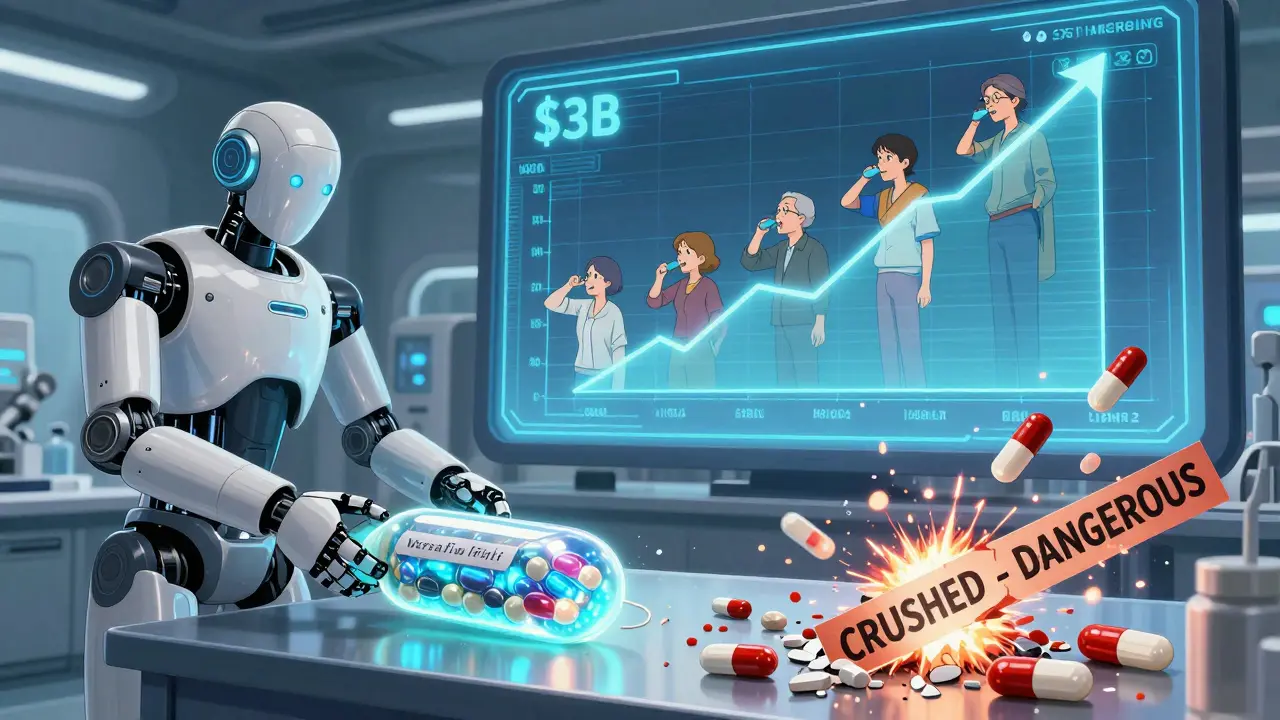
The good news? The pharmaceutical industry is starting to listen. New dissolvable films-like VersaFilm-stick to the inside of the mouth and release medicine without swallowing. In trials, 85% of patients with moderate dysphagia used them successfully. Some companies are developing smaller, smoother pills shaped like torpedoes instead of round tablets. These are easier to swallow. The European Medicines Agency now requires manufacturers to label whether a pill can be crushed. The FDA is pushing for similar rules in the U.S.By 2029, the global market for dysphagia-friendly medications is expected to hit nearly $3 billion. That’s because more people are living longer-and more of them need help swallowing pills.
When to Call for Help
If you or someone you care for has been avoiding pills for more than a few days, it’s time to act. Talk to your doctor. Ask for a referral to a speech-language pathologist. They can test swallowing function and recommend safe strategies. They can also teach you exercises to strengthen throat muscles.Don’t wait until you’re sick again. Missing doses of heart or diabetes meds can lead to emergencies. A simple conversation with your pharmacist might open up a new option you didn’t know existed.
Final Thought: It’s Not About Willpower
Swallowing difficulties aren’t a personal failure. They’re a medical issue. And like any medical issue, they need the right tools and support. The goal isn’t to force pills down. It’s to find a way to get the medicine you need-safely, reliably, and without fear.Can I crush my pills if I can’t swallow them?
Only if your pharmacist or doctor says it’s safe. Many pills-especially extended-release, enteric-coated, or chemotherapy drugs-can become dangerous if crushed. Crushing can cause overdose, reduce effectiveness, or trigger side effects. Always check before crushing.
Are liquid medicines better than pills for swallowing problems?
Sometimes, yes. Liquid forms are easier to swallow and don’t require crushing. But they may taste bad, need refrigeration, or be more expensive. Not all medications come in liquid form. Ask your pharmacist if a liquid version is available for your prescription.
What should I do if my loved one refuses to take their medicine?
Don’t assume it’s defiance. They may be in pain, scared, or confused. Ask them how they feel when they try to swallow. Talk to their doctor or a speech therapist. Try alternative forms like patches, dissolvable tablets, or suppositories. Never force medication-it can cause trauma and make future attempts harder.
Can swallowing exercises help me take pills again?
Yes. Speech-language pathologists can teach specific exercises to strengthen throat muscles and improve coordination. Techniques like the Mendelsohn maneuver or supraglottic swallow can help. These aren’t quick fixes-they take weeks of practice-but many people regain the ability to swallow pills with consistent therapy.
Is it safe to mix crushed pills with food?
Only if the medication is approved for mixing. Use thick, soft foods like applesauce, yogurt, or pudding-not juice or water. Always crush the pill right before giving it. Wash your hands after handling crushed medicine. Never mix multiple crushed pills together unless directed by a pharmacist.
Why do some pills feel stuck even when I swallow them?
It’s often a sensation, not a real blockage. Dry pills can trigger a gag reflex or feel like they’re stuck due to throat muscle tension. Try drinking water before and after. Use the lean forward method. If it happens often, get checked for underlying issues like acid reflux or esophageal narrowing.
What if no alternative form of my medicine is available?
Talk to your pharmacist about compounding. Some pharmacies can make custom liquid versions or smaller pills from standard tablets. This isn’t always covered by insurance, but it’s safer than crushing. If that’s not possible, use safe swallowing techniques like the lean forward method with plenty of water. Never skip doses without medical advice.






Post A Comment