

When you’re scheduled for a CT scan or other imaging test that uses contrast dye, most people assume it’s just another routine part of the procedure. But for some, it’s not. Contrast dye reactions-though rare-can be serious. And if you’ve had one before, you know how scary it can be. The good news? There are clear, evidence-based ways to protect yourself. This isn’t guesswork. It’s science. And it’s been refined over decades by top medical centers like UCSF, Yale, and Memorial Sloan Kettering.
What Exactly Is a Contrast Dye Reaction?
Contrast dye, usually iodinated, helps doctors see blood vessels, organs, and tissues more clearly during X-rays and CT scans. It’s not a drug you take to treat illness-it’s a tool. But your body doesn’t always see it that way. In about 0.04% to 0.22% of cases, people have some kind of reaction. Most are mild: a warm flush, nausea, or a rash. But in 0.01% to 0.04% of cases, reactions can turn life-threatening-think low blood pressure, trouble breathing, or cardiac arrest.
The biggest red flag? A history of a prior reaction. If you’ve had one before, your chance of having another jumps to about 35%. That’s why premedication exists-not to prevent every reaction, but to slash that risk down to around 2%.
Who Needs Premedication?
Not everyone does. The American College of Radiology (ACR) guidelines make it clear: if you’ve had a mild reaction in the past-like a small rash or itching-you probably don’t need it. Studies from UCSF and Yale show these patients have almost no increased risk of a repeat reaction.
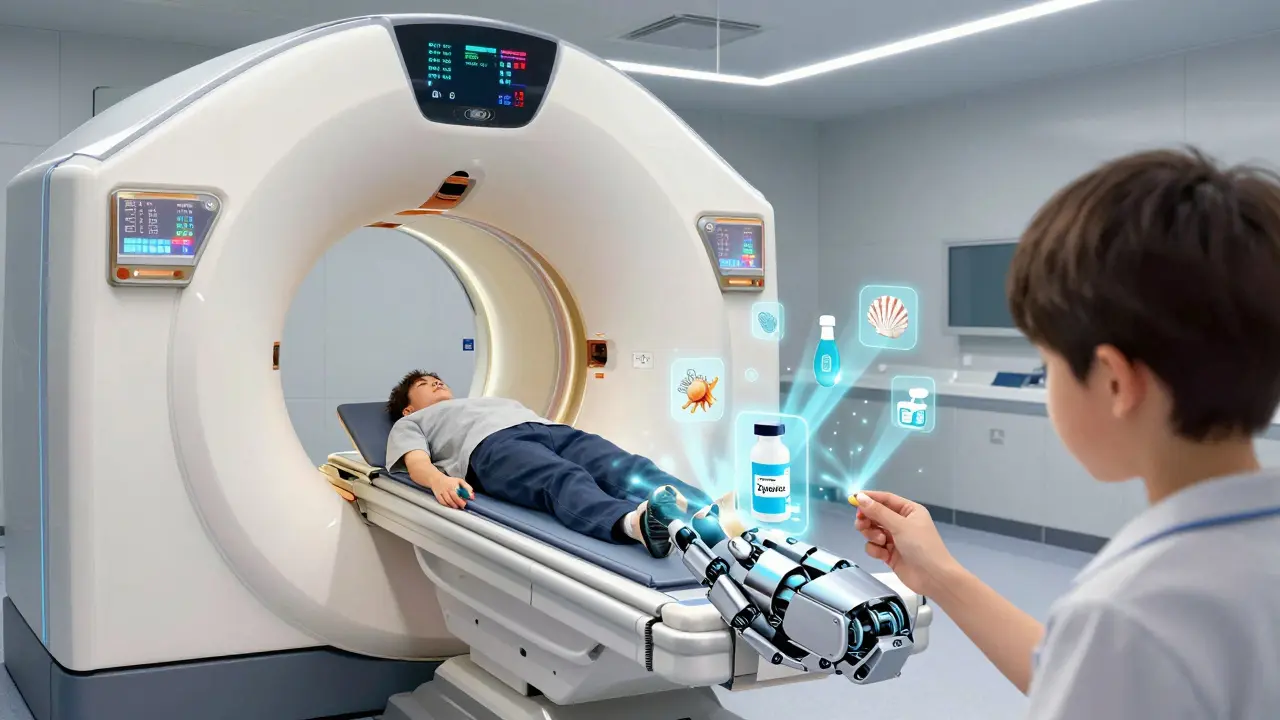
But if you’ve had moderate symptoms-hives, vomiting, wheezing-or worse, a severe reaction like anaphylaxis, premedication is strongly recommended. And here’s the key point: it doesn’t matter if you’re allergic to shellfish, iodine, or Betadine. That’s a myth. People with those allergies aren’t at higher risk. The only thing that matters is your own history with contrast dye.
And if you’ve had a reaction to one type of contrast dye? Switching to another brand within the same class can be just as effective as premedication. In fact, some experts now say it’s the first step-not the last.
The Two Main Premedication Regimens
There are two standard approaches: oral and intravenous. Which one you get depends on how much time you have.
Oral Regimen (for elective scans)
If you’re scheduled days in advance, you’ll likely get an oral protocol. This one’s simple:
- Prednisone 50 mg by mouth at 13 hours before the scan
- Prednisone 50 mg again at 7 hours before
- Prednisone 50 mg one more time at 1 hour before
- Diphenhydramine (Benadryl) 50 mg by mouth one hour before
This schedule isn’t random. Research shows it takes at least 13 hours for steroids to suppress the immune response enough to make a difference. And Benadryl? It blocks histamine, the chemical behind itching and hives. But here’s the catch: Benadryl makes you sleepy. So you need someone to drive you home. No exceptions.
IV Regimen (for emergencies or hospital stays)
If you’re in the ER or already hospitalized, you can’t wait 13 hours. That’s why IV protocols exist. Two versions are commonly used:
- Methylprednisolone (Solu-Medrol) 40 mg IV, followed by another 40 mg every 4 hours until the scan, plus diphenhydramine 50 mg IV one hour before
- Hydrocortisone (Solu-Cortef) 200 mg IV, followed by another 200 mg every 4 hours until the scan, plus diphenhydramine 50 mg IV one hour before
Both work. The choice often comes down to what’s available at your hospital. The key? Timing. If you get the steroids less than 4 to 5 hours before the scan, they won’t work.

The Accelerated Option: 5-Hour Protocol
What if you need a scan tomorrow-and you can’t wait 13 hours? There’s a newer option. A 2017 study in Radiology by Dr. Behrang Mervak compared the traditional 13-hour regimen with a 5-hour version:
- Methylprednisolone 32 mg by mouth at 5 hours before
- Methylprednisolone 32 mg again at 1 hour before
- Diphenhydramine 50 mg by mouth at 1 hour before
The results? Just as effective. No extra reactions. No extra risk. This is now being adopted at hospitals across the country for urgent cases. It’s not yet in the official ACR manual-but it’s in use.
What About Kids?
Pediatric protocols are simpler. For children 6 and older who need premedication, UCSF recommends:
- Cetirizine (Zyrtec) 10 mg by mouth one hour before the scan
No steroids. No IV. Just one antihistamine. It’s safe, effective, and avoids the drowsiness that comes with Benadryl. For younger kids, doctors usually skip premedication unless there’s a history of severe reaction.
Safety Planning: It’s Not Just About the Pills
Premedication isn’t a magic shield. Even with all the right meds, about 2% of people still have reactions. That’s why safety planning goes beyond pills.
First: where you get scanned matters. If you’ve had a severe reaction before, you should be imaged at a facility with a full emergency response team nearby. UCSF requires this. So do Mount Sinai and UCLA. That means: crash cart, trained staff, and rapid access to ICU if needed.
Second: transportation. If you’re taking Benadryl, you can’t drive. You need a ride. If you don’t have one? The scan gets rescheduled. No exceptions.
Third: documentation. Your referring doctor must talk to a radiologist before scheduling. At UCLA, this is required for anyone with a prior allergy history. And the scan? It should happen in a designated location-like Ronald Reagan UCLA Medical Center-not a random outpatient clinic.
In emergencies? The clinical team should accompany the patient into the imaging suite. That way, if a reaction happens, help is right there.
The Cost and Reality Check
Let’s be real: premedication costs pennies. Prednisone? About 25 cents per pill. Benadryl? 15 cents per dose. Compared to a $1,000 CT scan, it’s negligible. But the real value? It lets you get the scan you need-without risking your life.
And while these protocols have been standard for years, things are shifting. The ACR is expected to release Version 11 of its Contrast Media Manual in late 2024. Early drafts suggest a stronger push toward switching contrast agents instead of automatically reaching for steroids. Why? Because modern contrast dyes are much safer than the old ones. Premedication may have been essential 20 years ago-but today, it’s often overkill.
Still, for those with a history of reactions, it’s the best tool we have right now. And when used correctly, it works.
What If You Still React?
Even with all the right steps, a reaction can still happen. That’s why every imaging center must have emergency protocols in place. Oxygen, epinephrine, IV fluids, and trained staff are non-negotiable. And if you’ve had a prior reaction, make sure the staff knows. Say it out loud: "I had a reaction to contrast dye before. I’m on premedication. I need to be watched closely."
Don’t assume they’ll know. They might not have seen your chart. Say it. Again. And again.
Do I need premedication if I’m allergic to shellfish?
No. Being allergic to shellfish, iodine, or Betadine does not increase your risk of reacting to contrast dye. This is a common myth. The only thing that matters is whether you’ve had a prior reaction to contrast dye itself. If you haven’t, no premedication is needed-even if you’re allergic to seafood.
Can I just take Benadryl the night before?
No. Benadryl alone is not enough. It only blocks histamine, but contrast reactions involve multiple immune pathways. Steroids (like prednisone) are needed to calm the deeper immune response. Taking Benadryl without steroids won’t reduce your risk significantly. Always follow the full protocol.
Is premedication necessary for every scan after a past reaction?
Not always. If you’ve had a reaction and the scan is urgent, switching to a different brand of contrast dye within the same class may be just as effective-and avoids the need for steroids and antihistamines. Talk to your radiologist. This is now a recommended first step for many patients.
How long does the premedication last?
The steroids in premedication work by suppressing your immune system for about 24 to 48 hours. That’s why the 13-hour schedule is designed to peak right before the scan. If your scan is delayed beyond 48 hours, you’ll need to restart the full regimen. Don’t assume yesterday’s dose still protects you.
What if I forget to take my prednisone?
If you miss a dose by more than a few hours, the protocol likely won’t work. If you’re more than 4 hours late on your last dose, call your radiology department. They may reschedule your scan or switch to an IV regimen if possible. Never skip the steroids and expect Benadryl to save you.
Are there side effects from premedication?
Yes. Prednisone can cause a temporary spike in blood sugar, especially in diabetics. Benadryl causes drowsiness, dry mouth, and sometimes blurred vision. For most people, these are mild and short-lived. But if you have glaucoma, prostate issues, or severe heart disease, tell your doctor-some medications aren’t safe for you.
Can I take my regular medications with premedication?
Yes, unless told otherwise. Most medications-blood pressure pills, diabetes meds, thyroid drugs-can be taken as usual. But always check with your doctor. Some drugs, like beta-blockers, can interfere with emergency treatments if a reaction occurs. Your radiologist will review your full list.
Is premedication covered by insurance?
Yes. Prednisone and diphenhydramine are inexpensive generic drugs. Insurance covers them fully. You may pay a small copay-usually under $10. But the real cost is avoided: hospitalization from a severe reaction can run into tens of thousands of dollars.
Contrast dye reactions are rare. But for those who’ve experienced them, the fear is real. The good news? We have tools to manage that risk. It’s not about fear-it’s about preparation. Know your history. Ask the right questions. And don’t let myths stop you from getting the care you need.




Post A Comment