
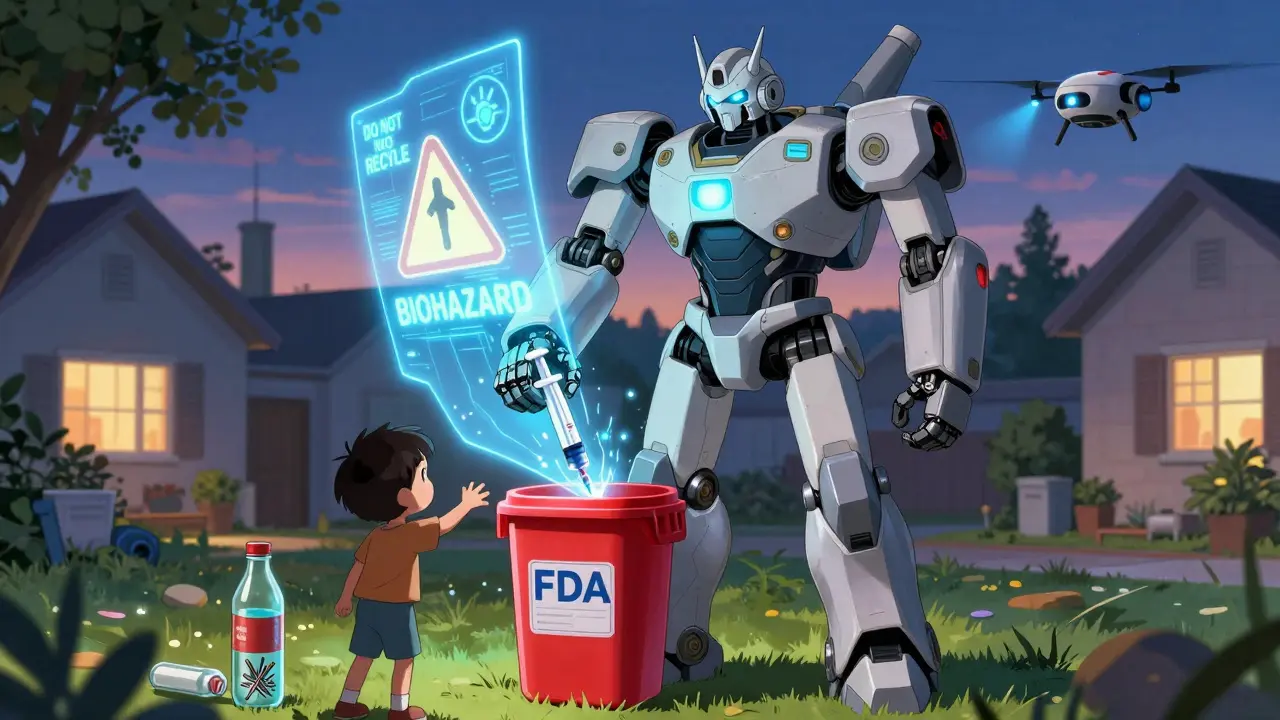
Every year, millions of people in Australia and around the world use injectable medications - insulin for diabetes, blood thinners, epinephrine auto-injectors, or vaccines. But once the needle is used, what do you do with it? Throwing it in the trash, tossing it in the recycling, or even putting it in a soda bottle might seem harmless. But it’s not. A single misplaced needle can hurt a child, a sanitation worker, or a pet. And worse, it can spread deadly diseases like hepatitis B, hepatitis C, or HIV.
Why Proper Sharps Disposal Matters
Sharps aren’t just sharp - they’re potentially infectious. Needles, syringes, lancets, and auto-injectors can carry blood and other body fluids. If someone gets stuck by a used needle, they could be exposed to bloodborne pathogens. The risk isn’t small: hepatitis B can spread in up to 30% of needlestick exposures. Hepatitis C spreads in nearly 2% of cases. Even HIV, though less likely, can still be transmitted.
Healthcare workers face this danger daily, but so do families, caregivers, and home users. In Australia, over 1,000 needlestick injuries are reported each year in the community - and many more go unreported. Most happen because sharps were not stored or disposed of correctly. The solution isn’t complicated, but it requires knowing the rules and sticking to them.
What Counts as a Sharp?
It’s not just needles. Anything that can puncture or cut skin and has been used to inject medication is considered a sharp. This includes:
- Insulin syringes and needles
- Lancets (for blood glucose testing)
- Auto-injectors like EpiPens or Ozempic pens (after use)
- Needles attached to IV lines or infusion sets
- Glass capillary tubes or scalpels used in home care
Even if you think the needle is "clean," it’s still a sharp. Once it’s been used, it’s considered medical waste. Don’t assume it’s safe just because you didn’t see blood. Tiny amounts of fluid can still carry infection.
The Right Container: FDA-Cleared Sharps Containers
Not just any container will do. You need a container designed specifically for sharps. These are called FDA-cleared sharps containers. They’re made of thick, puncture-resistant plastic. They have a tight-fitting lid that won’t pop open. And they’re labeled with the international biohazard symbol.
Why not use a plastic bottle? Because a soda bottle or laundry detergent container can be pierced by a needle - even a dull one. In fact, a 2022 study found that homes using homemade containers had nearly 80% more needlestick incidents than those using proper sharps containers.
Look for containers with these features:
- One-way opening - you can put the needle in, but you can’t reach in to grab it
- Fill line - don’t fill past the 3/4 mark
- Sturdy base - won’t tip over
- Leak-resistant - won’t spill if knocked over
Popular brands in Australia include BD Redi-Sharp, Sharps Compliance Safe•Drop, and Stericycle. You can buy them at pharmacies like Chemist Warehouse, Priceline, or your local medical supply store. A small 1.5-litre container costs about $10-$15. That’s less than a weekly coffee habit.
How to Use the Container
Using the container correctly is just as important as having one. Here’s how:
- Immediately after use, place the sharp into the container. Don’t wait. Don’t put it on the counter.
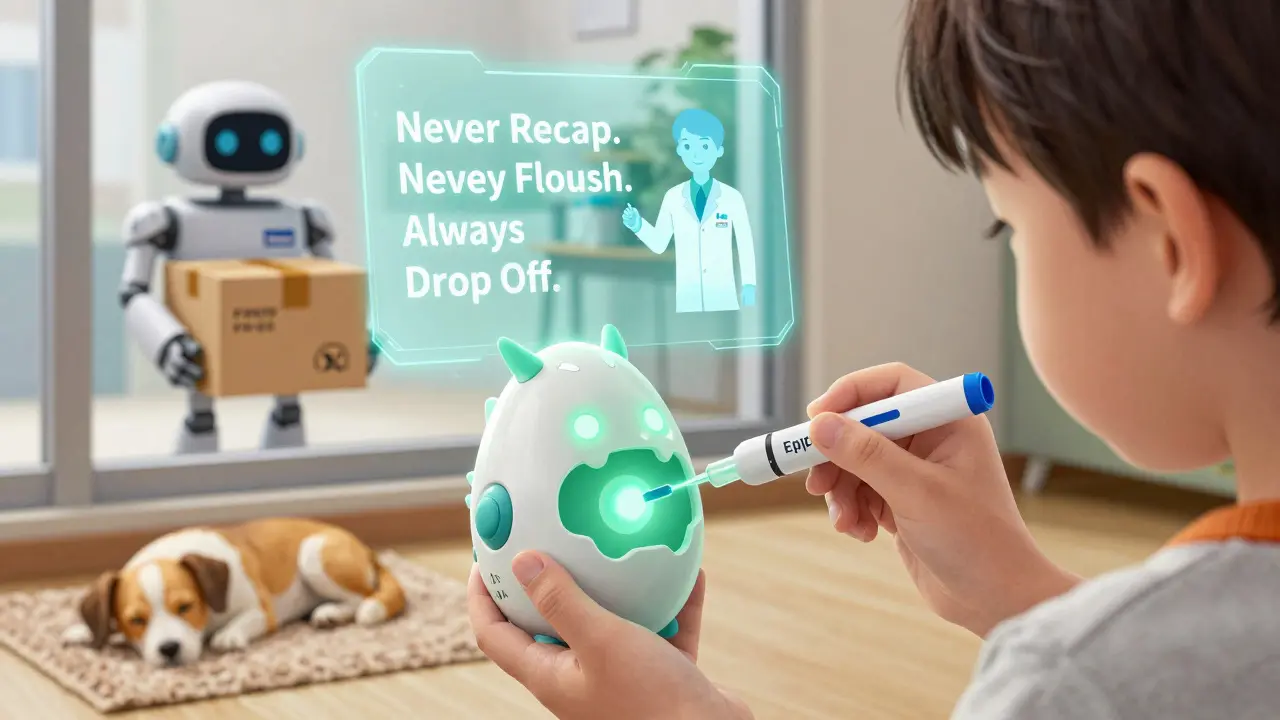
- Never recap, bend, or break the needle. That’s how most injuries happen.
- Keep the container within arm’s reach while you’re injecting - no more than 1.5 metres away.
- Close the lid after every use. Even if it’s not full.
- Stop filling when the sharps reach the fill line. Don’t force more in.
- Keep the container upright and away from children and pets.
If you’re helping someone else - like an elderly parent or a child with diabetes - make sure they’re trained too. Many needlestick injuries happen because the person using the injection doesn’t know how to dispose of it safely.
Where to Drop Off Your Full Sharps Container
Once your container is full, you can’t throw it in the regular trash. But you also can’t just leave it in your garage. You need to take it to a designated drop-off point.
In Australia, most states offer free or low-cost sharps disposal programs:
- South Australia: Council-run sharps collection points at local pharmacies, community health centres, and some hospitals. No appointment needed. Check your local council website for locations.
- Victoria: Pharmacy-based collection - most Chemist Warehouse and Priceline locations accept sharps containers.
- New South Wales: Free drop-off at local council waste centres and participating pharmacies.
- Queensland: Sharps disposal bins at public hospitals and some pharmacies. Some councils offer mail-back kits.
- Western Australia: Free disposal at local pharmacies and health clinics.
Call your local pharmacy first. Not all of them accept sharps, even if they’re big chains. Some require you to book a drop-off time. Others only accept containers from their own program.
For rural areas, mail-back programs are available. Companies like Sharps Compliance offer prepaid return boxes. You pay once for the container and return postage. It’s a good option if you live far from a drop-off point.
What Happens After You Drop It Off?
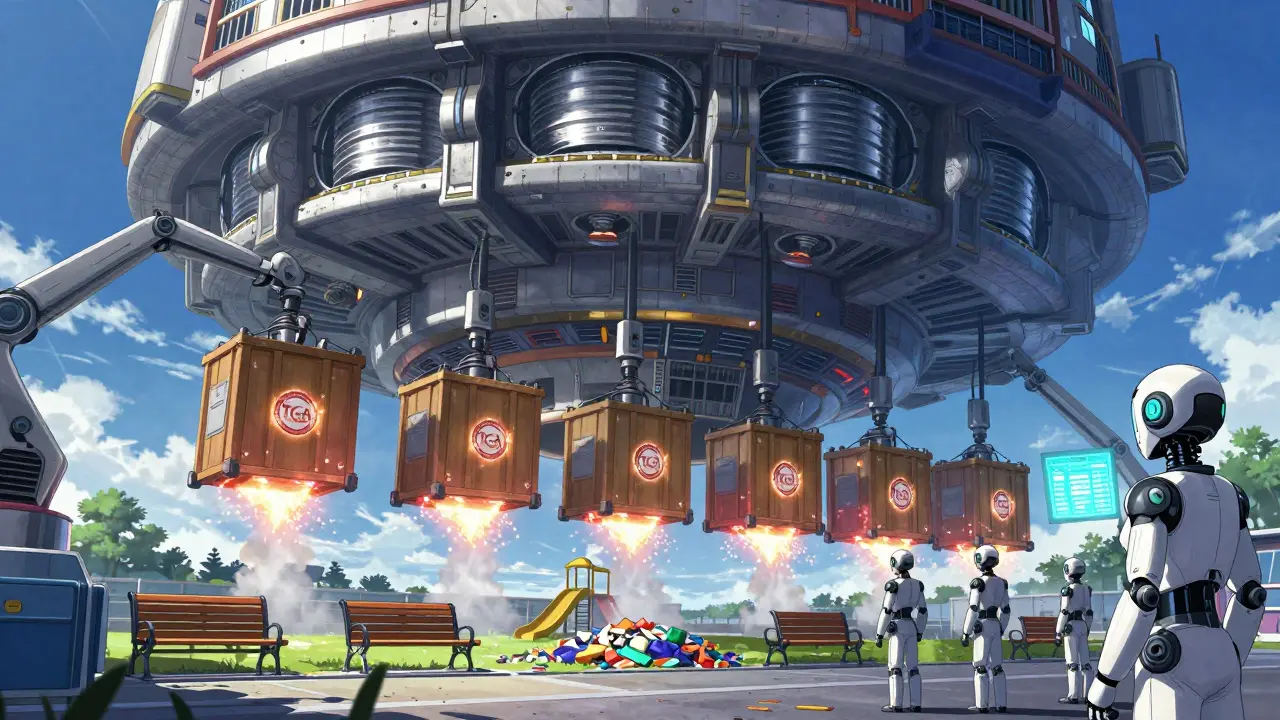
Once you hand over your sharps container, it doesn’t just sit there. It’s collected by licensed medical waste services. The containers are transported in sealed, labelled trucks to specialised facilities. There, they’re sterilised using high-temperature autoclaving or incineration. The plastic is then recycled into new products like park benches or playground equipment.
This process is tightly regulated. In Australia, the National Waste Policy and state health departments oversee how medical waste is handled. Improper disposal - like dumping sharps in landfills - is illegal and can lead to fines.
What NOT to Do
Here are the most common mistakes - and why they’re dangerous:
- Don’t put sharps in recycling bins. Recycling workers aren’t protected from needles. A single slip can cost them their health.
- Don’t use glass jars, plastic bottles, or old food containers. They break. They leak. They’re not designed to stop a needle.
- Don’t try to recap the needle. Even if you think you’re being careful, 32% of needlestick injuries happen during recapping.
- Don’t flush needles down the toilet. That can damage plumbing and pollute waterways.
- Don’t leave sharps lying around. Kids and pets can find them. Pets have been injured by discarded needles in parks and backyards.
Costs and Accessibility
Some people avoid proper disposal because they think it’s too expensive. But the cost of a sharps container is small compared to the cost of a needlestick injury. Post-exposure treatment for hepatitis B or HIV can cost over $3,000 - and that’s just the beginning. You might need weeks of medication, blood tests, and counselling.
Many Australian states offer free containers and disposal for people on government concessions. If you’re on the Pensioner Concession Card or Health Care Card, ask your doctor or pharmacist. Some programs even deliver containers to your door.
For those in remote areas, the federal government funds mail-back kits through the National Diabetes Services Scheme (NDSS). These kits include a container, prepaid return label, and instructions. You can apply through the NDSS website or your diabetes educator.
What to Do If Someone Gets Stuck
Accidents happen. If you or someone else gets pricked by a used needle:
- Wash the area immediately with soap and running water.
- Don’t suck the wound or apply bleach.
- Seek medical help right away - go to a hospital emergency department or call Healthdirect on 1800 022 222.
- If you know the person who used the needle, ask if they have hepatitis, HIV, or other infections.
- Keep the container the needle came from - it may be needed for testing.
Post-exposure prophylaxis (PEP) can prevent infection if started within 72 hours. The sooner, the better.
Final Thoughts: Safety Is Simple
Proper sharps disposal isn’t about complicated rules or expensive gear. It’s about two things: using the right container and taking it to the right place. It’s about protecting your family, your community, and the people who collect your trash.
If you’re using injectable medications, make a plan today. Buy a container. Know where to drop it off. Teach anyone who helps you. Don’t wait until someone gets hurt.
One small step - putting a needle in the right container - can prevent a lifetime of consequences.
Can I throw used needles in the regular trash?
No. Used needles are classified as medical waste and must be placed in a puncture-resistant sharps container. Throwing them in the trash puts waste workers, children, and pets at risk of needlestick injuries and infection. It’s also illegal in most Australian states.
Can I reuse a sharps container?
Only if it’s specifically designed and certified for reuse by the manufacturer and approved by the Therapeutic Goods Administration (TGA). Most household sharps containers are single-use. Reusing them increases the risk of leaks, punctures, and contamination. Never refill or clean a used container at home.
Where can I get a free sharps container in Australia?
If you’re on a Pensioner Concession Card, Health Care Card, or enrolled in the National Diabetes Services Scheme (NDSS), you can often get free sharps containers from your pharmacy, GP, or diabetes educator. Some local councils also provide them at community health centres. Call ahead to confirm availability.
What if I live in a rural area with no drop-off points?
Mail-back programs are available across Australia. Companies like Sharps Compliance and NDSS offer prepaid return boxes. You fill the container, seal it, and mail it back using the included label. These services are often free for concession cardholders and people on chronic medication programs.
How do I know if a container is FDA-cleared?
In Australia, look for containers approved by the Therapeutic Goods Administration (TGA). The packaging should say "TGA-listed" or "Class I medical device." It will also have the international biohazard symbol, a fill line, and a secure lid. If it doesn’t have these, it’s not safe for medical sharps.
Can I use a metal tin or jar to store sharps?
No. Metal containers can rust, dent, or have sharp edges. Glass jars can shatter. Even thick plastic bottles like soda bottles can be pierced by a needle. Only use containers designed and tested to meet medical safety standards. Homemade containers are unsafe and increase the risk of injury.



Post A Comment