

When you swap sugar for an artificial sweetener, you think you’re doing the right thing-cutting calories, managing weight, keeping blood sugar steady. But what if your brain doesn’t get the message? What if, instead of feeling satisfied, you end up hungrier than before?
Why Sugar Feels Different Than Sweeteners
Sugar isn’t just sweetness. It’s energy. When you eat a cookie or sip a sugary soda, your body doesn’t just taste the sweetness-it gets a flood of glucose. That triggers insulin, tells your stomach to slow down, and signals your brain: you’ve had enough. That’s why a small piece of candy can actually help you stop eating. Artificial sweeteners? They’re different. They’re 200 to 600 times sweeter than sugar, but they don’t deliver any calories. Your tongue gets the signal-sweet!-but your gut and brain get nothing in return. No glucose. No insulin spike. No fullness hormone (GLP-1) released. That disconnect confuses your body. In a 2023 study from the University of Southern California, people who drank a sucralose-sweetened beverage reported 17% more hunger than those who drank sugar water-even though both drinks had zero calories. This isn’t just about taste. It’s about expectation. Your brain learns: sweet = calories. When that link breaks, it starts searching for the missing energy. And that search often turns into cravings.The Brain’s Reward System Gets Rewired
Think of your brain’s reward system like a thermostat. It’s set to expect a certain level of pleasure from sweet things. Sugar delivers both sweetness and energy, so your brain stays balanced. Artificial sweeteners? They give you the sweetness without the energy. Over time, your brain starts to recalibrate. A 2016 study at the University of Sydney found that fruit flies exposed to sucralose for five days ate 30% more calories when given real sugar afterward. Why? Their brains had adjusted to expect more energy for the same level of sweetness. When they finally got sugar, they overate to compensate. Humans aren’t that different. People who drink diet soda daily often report that plain water tastes bland. Coffee without sugar feels too bitter. That’s not just habit-it’s your brain asking for more. The stronger the sweetener, the bigger the reset. Sucralose and aspartame are so intensely sweet that they can make naturally sweet foods like fruit feel underwhelming.Who’s Most Affected?
Not everyone reacts the same way. Research shows gender, weight status, and how long you’ve been using sweeteners all matter. Women appear more sensitive. The same 2023 USC study found that female participants had 40% greater brain activity changes in hunger centers after consuming sucralose than men. That doesn’t mean men are unaffected-it means women may be more vulnerable to the appetite-disrupting effects. People with obesity also show stronger responses. In studies, those with higher body weight tend to experience bigger spikes in hunger after consuming artificial sweeteners. Why? Their bodies may already be struggling with insulin sensitivity and reward signaling. Adding a sweetener that doesn’t match the expected energy load makes it worse. And duration matters. Short-term use? Most studies show little to no increase in appetite. But after three months? That’s when problems start showing up. A 2024 study from the German Center for Diabetes Research found that daily sucralose use for over 12 weeks increased activity in the hypothalamus-the brain’s hunger control center-by 34%.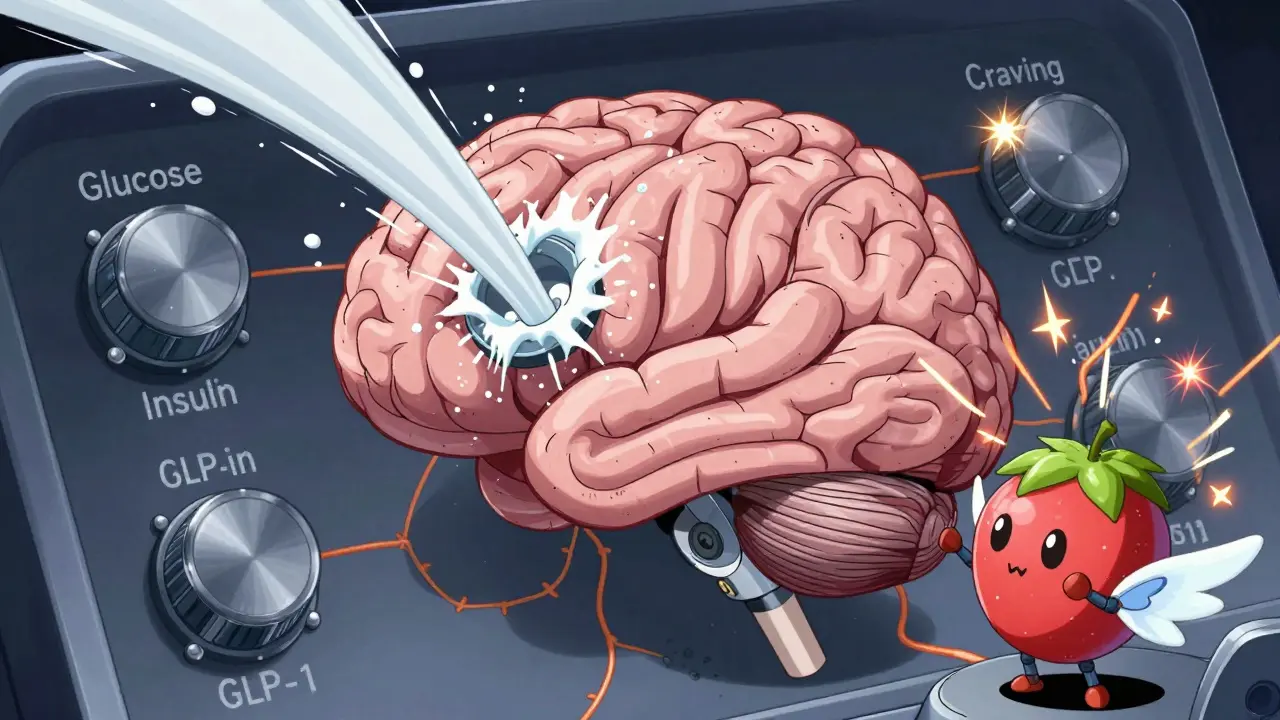
What the Research Really Says
You’ll hear conflicting claims. One study says sweeteners help you lose weight. Another says they make you gain it. Here’s the truth: both can be right. A 2021 meta-analysis of 15 clinical trials found that replacing sugar with artificial sweeteners led to an average drop of 112 calories per day. That’s real. That’s helpful. But that’s short-term. In the long run, your body fights back. The University of Leeds found that over two hours, sweeteners lowered insulin and blood sugar levels compared to sugar-great for diabetics. But they also found that people didn’t eat more later to make up for it. So why do so many people say they feel hungrier? Because the effects aren’t all in your stomach. They’re in your head. The difference? Short-term studies look at what you eat in one meal. Long-term studies look at what you eat over weeks. And over time, your cravings grow. You start reaching for sweet things more often-not because you’re hungry, but because your brain is chasing that sweet high.Real People, Real Experiences
Look at what people are saying online. On Reddit’s r/loseit, 68% of 1,247 users said artificial sweeteners helped reduce cravings. But 32% said the opposite-especially after months of using sucralose. One user wrote: “I switched to diet soda to cut calories. After six months, I was eating three desserts a day. I didn’t even realize I was doing it.” A 2023 American Diabetes Association survey of 4,500 people with type 2 diabetes showed 74% had better blood sugar control with sweeteners. But 41% also reported increased appetite-mostly with aspartame. Amazon reviews tell a similar story. Splenda (sucralose) gets 3.8 stars, but nearly a third of negative reviews mention “cravings after use.” Stevia-based products like Truvia score higher-4.2 stars-with fewer appetite complaints. Why? Stevia is less intense. It’s not 600 times sweeter than sugar. It’s about 200-300 times. That might be why it doesn’t throw your brain’s system off as much.
What Should You Do?
There’s no one-size-fits-all answer. But here’s what works for most people:- Start with lower-intensity sweeteners. Monk fruit and stevia are less likely to trigger cravings than sucralose or aspartame. They’re still sweet, but closer to the natural sugar profile.
- Don’t use them alone. Pair sweeteners with protein or fiber. A Greek yogurt with stevia and berries hits differently than a diet soda. Protein slows digestion and tells your brain you’re full. Clinical data shows this cuts hunger responses by 22%.
- Give your brain a break. If you’ve been drinking diet soda daily for six months and feel hungrier, try cutting out all sweeteners for two weeks. You’ll be surprised how much more satisfying fruit, tea, or plain water taste afterward.
- Watch for the sweetening spiral. The more you use artificial sweeteners, the more you crave intensely sweet foods. That’s not weakness-it’s biology. The solution isn’t to eat more sugar. It’s to retrain your taste buds to enjoy less.



![Insightful Review on the Latest Developments in [Topic Area]](/uploads/2024/07/thumbnail-insightful-review-on-the-latest-developments-in-topic-area.webp)

Post A Comment