
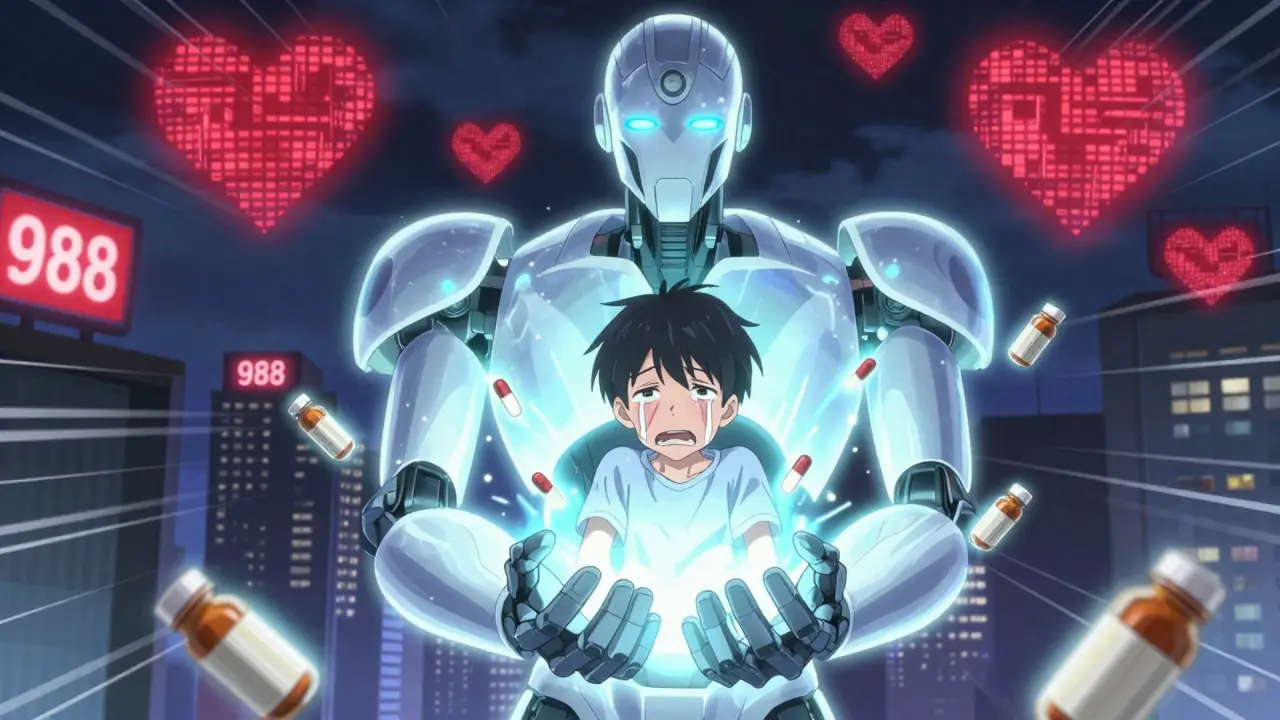
When someone takes too many pills on purpose, it’s not just a medical emergency-it’s a cry for help. Intentional overdose is one of the most common ways people attempt suicide, especially among teens and young adults. It’s not always about wanting to die. Often, it’s about wanting the pain to stop. And yet, the systems meant to catch people in these moments are stretched thin, underfunded, and inconsistent.
Why Intentional Overdose Happens
People don’t wake up one day and decide to end their lives. It’s usually the result of months, sometimes years, of untreated depression, trauma, or isolation. Prescription painkillers, antidepressants, or even over-the-counter drugs like acetaminophen become tools in a moment of desperation. Why? Because they’re easy to get. A medicine cabinet is more accessible than a therapist’s office. According to the CDC, overdose as a suicide method accounts for 15-20% of all suicide deaths in the U.S. That’s tens of thousands of people each year. For adolescents, it’s even more common. In 2024, 10.1% of teens reported serious thoughts of suicide. And for many, overdose felt like the only option they had left. What makes it especially dangerous is how misleading it can seem. Some think, “I’ll just take a few extra pills-it won’t kill me.” But acetaminophen overdoses can cause liver failure within days. Opioid overdoses can shut down breathing. And even if someone survives, they may face permanent organ damage, long hospital stays, or brain injury. The body doesn’t always forgive a second chance.Who’s Most at Risk
It’s not just one group. But some populations face higher risks-and fewer resources. Black and American Indian/Alaska Native communities have the highest rates of fatal overdose deaths, though data doesn’t always separate intentional from accidental cases. Middle-aged adults (45-64) are dying at the highest rates, with 20.2 deaths per 100,000 in 2023. Rural areas are hit harder too-suicide rates there are 25% higher than in cities, and access to care is 40% lower. Teens are another critical group. Many can’t access mental health services without parental consent. They don’t have cars. They don’t have insurance. And if they’re scared of getting in trouble, they won’t call for help. That’s why crisis lines like 988 matter so much.The 988 Lifeline: A Lifeline That’s Almost Out of Air
In July 2022, the federal government launched 988-the Suicide & Crisis Lifeline. It was supposed to be a simple, fast, nationwide answer to mental health emergencies. You dial 988, and someone answers. No waiting. No judgment. In 2024, 988 handled 4.7 million contacts. That’s a 32% increase from the year before. More people are reaching out. That’s good. But the system is collapsing under the weight. Wait times jumped from 2.4 minutes in 2022 to 5.7 minutes in 2024. Staffing cuts at SAMHSA have left crisis centers understaffed. In some states, calls go unanswered. Others get routed to voicemail. One Reddit user, ‘AnxietySurvivor89,’ said: “When I called 988 after taking too many pills, the counselor stayed on the line until EMS arrived 18 minutes later-that probably saved my life.” But what about the other 42% of people who tried to get same-day crisis help and couldn’t? They’re the ones slipping through.
What Works-And What’s Falling Apart
There are proven ways to reduce intentional overdose deaths. The CDC lists seven evidence-based strategies. One of the most powerful? Economic support. A 2023 study found that raising the minimum wage led to a 15.4% drop in suicide attempts. Another? Connectedness. School-based programs that build peer support reduced adolescent suicide attempts by 22%. Digital tools are helping too. Crisis Text Line handled 3.2 million conversations in 2024, with response times under a minute. Apps that connect you to counselors, chatbots that offer CBT techniques, and AI-driven safety plans are becoming more common. But here’s the problem: funding is being cut. SAMHSA’s proposed budget for 2026 includes a $1.07 billion reduction. That’s not a typo. That’s a death sentence for thousands. The CDC’s National Injury Center, which funds state-level prevention programs, could lose $480 million. That means fewer counselors, fewer hotlines, fewer mobile crisis teams. Experts like Dr. Nora Volkow of NIDA say we can’t fix suicide without fixing mental health care. But we’re doing the opposite-closing doors just when more people need them.What You Can Do Right Now
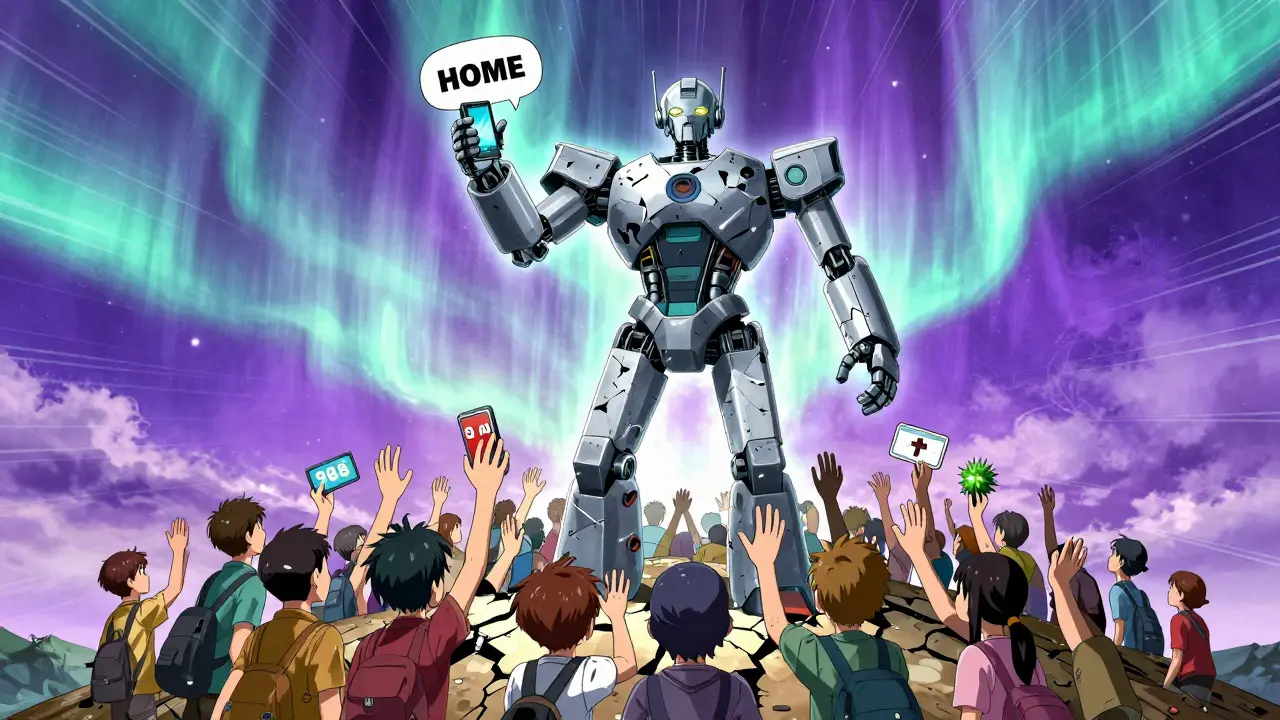
If you’re thinking about hurting yourself: call 988. Or text HOME to 741741. Or go to your nearest ER. You don’t have to be in the middle of an overdose to call. You don’t have to be “bad enough.” You just have to be hurting. If you know someone who might be struggling:- Ask directly: “Are you thinking about killing yourself?”
- Don’t panic. Don’t judge. Just listen.
- Help them save 988 in their phone. Put it on their lock screen.
- Remove access to pills, knives, guns. Don’t wait for them to ask.
- Walk them to a clinic. Drive them to the hospital. Stay with them.
The Hard Truth
We’ve made progress. Overdose deaths dropped 27% in 2024. That’s over 27,000 lives saved. But those numbers don’t tell the whole story. For every life saved, there are dozens more who tried-and failed to get help. The system is broken. But it’s not beyond repair. We know what works. We have the tools. What’s missing is the will. If you’re reading this and you’re not in crisis, do one thing today: share 988 with someone. Post it on your social media. Put it on your fridge. Tell your kids. Your neighbor. Your coworker. Because the next person who needs help might not know where to turn. And if you’re the one who shows them, you might save a life.Where to Get Immediate Help
- 988 Suicide & Crisis Lifeline - Call or text 988. Available 24/7. Free. Confidential.
- Crisis Text Line - Text HOME to 741741. Get connected to a trained crisis counselor in minutes.
- SAMHSA National Helpline - 1-800-662-HELP (4357). Free, confidential, 24/7. For treatment referrals and information.
- Trans Lifeline - 1-877-565-8860. Staffed by trans people for trans people.
- The Trevor Project - 1-866-488-7386. For LGBTQ+ youth. Text or chat online.
- Emergency Room - Go to the nearest hospital. No insurance needed. They are legally required to help you.
If you’re in Australia, call Lifeline on 13 11 14 or visit lifeline.org.au. You’re not alone.
Is intentional overdose always a suicide attempt?
Not always. Some overdoses are accidental-people take too much of a medication because they misunderstood the dose, or they mixed substances without realizing the danger. But when someone takes a large amount of a drug on purpose with the intent to end their life, that’s an intentional overdose. The CDC tracks these separately using ICD-10 codes: X60-X64 for suicide, X40-X44 for accidents. Public health workers need to know the difference to respond correctly.
Can you survive an intentional overdose without long-term damage?
It’s possible, but risky. Many people survive, but often with serious consequences. Acetaminophen overdoses can cause irreversible liver damage. Opioid overdoses can lead to brain injury from lack of oxygen. Benzodiazepines can cause long-term memory problems. Even if you’re rescued quickly, your body may never fully recover. That’s why prevention and early intervention matter more than emergency response.
Why are teens more likely to use overdose as a suicide method?
Teens often have easy access to medications at home-antidepressants, painkillers, ADHD meds. They may see overdose as less violent than other methods, or they might believe it’s less likely to fail. Many don’t understand how dangerous it is. And because of parental consent laws, they can’t access mental health services without adult involvement, which can feel like a barrier or a threat. That’s why crisis lines like 988 are critical-they’re anonymous, immediate, and don’t require permission.
Does calling 988 mean I’ll get arrested or hospitalized?
No. 988 is not a police line. Counselors are trained to de-escalate, not to punish. They will ask if you’re safe, if you have a plan, and if you’re willing to go to the hospital. But they won’t force you unless you’re actively trying to kill yourself and can’t be kept safe. Most people who call are connected to local resources, offered a follow-up call, or given a safety plan. Hospitalization only happens if the counselor believes you’re in immediate danger and there’s no other option.
What if I’m not suicidal but I know someone who is?
You’re not powerless. Start by asking them directly: “Are you thinking about killing yourself?” It’s not a dangerous question-it opens the door. Then listen without trying to fix it. Help them save 988 in their phone. Remove access to pills or weapons. Stay with them until they’re connected to a professional. You don’t need to be a therapist. You just need to care enough to show up.
Are crisis resources free?
Yes. 988, Crisis Text Line, and SAMHSA’s National Helpline are completely free. You don’t need insurance. You don’t need to give your name. Emergency rooms are required by law to treat anyone in crisis, regardless of ability to pay. Even if you’re undocumented or uninsured, help is available.
Why are overdose deaths dropping if suicide rates aren’t?
The drop in overdose deaths is mostly due to fewer accidental overdoses from street drugs like fentanyl. Public health efforts-like wider access to naloxone, safer prescribing, and harm reduction programs-have reduced accidental deaths. But intentional overdoses tied to mental health crises haven’t dropped as much. In fact, mental health demand has gone up while funding has gone down. That’s why experts warn: we’re seeing a shift, not a solution.


Post A Comment