
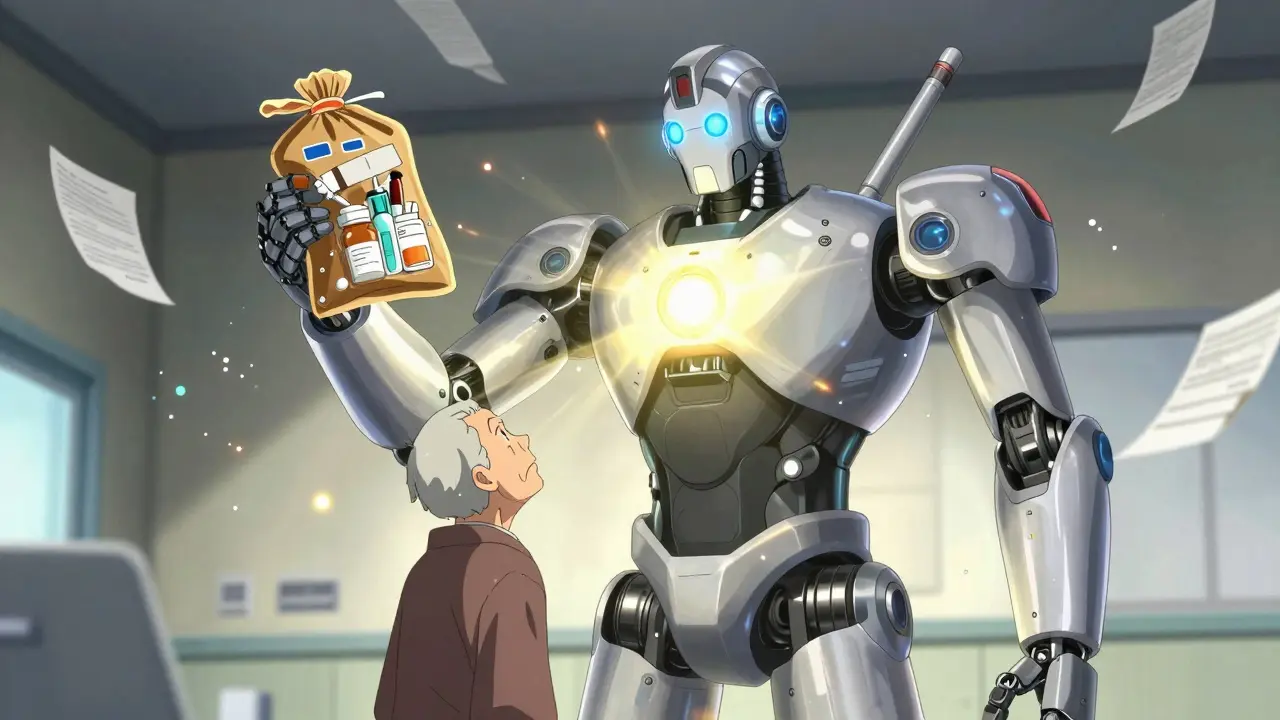
Every year, hundreds of thousands of older adults leave the hospital with a new list of medications - some changed, some added, some stopped. But here’s the scary part: 1 in 5 of them will make a mistake with those meds within three weeks. It’s not because they’re careless. It’s because the system is broken.
Imagine this: You’re 78. You spent a week in the hospital for a bad infection. They gave you antibiotics, blood thinners, insulin, and a new pill for your blood pressure. When you walk out, you’re handed a single sheet of paper with eight drugs listed. No pictures. No explanations. No one asks if you know what each one does. You’re told to take them all, but you’re not sure which is which. You’ve been taking the same pills for years. Now everything’s changed. You’re scared. You don’t want to mess up. But you don’t know how to get it right.
This isn’t rare. It’s standard. And it’s deadly. Medication errors after hospital discharge are the leading cause of preventable harm in seniors. They lead to falls, kidney failure, internal bleeding, and trips back to the ER. The good news? We know exactly how to stop it. And it doesn’t require magic. Just structure, clarity, and a few simple steps that actually work.
Medication Reconciliation: The One Thing That Saves Lives
The single most powerful tool to prevent errors is called medication reconciliation. It’s not just comparing lists. It’s a full audit - from the moment you walk into the hospital to the second you step out the door. And it has to happen three times: at admission, during any unit transfers, and before discharge.
Here’s how it works in a real, effective program:
- Verification: The team asks you to bring every pill bottle, patch, inhaler, and supplement you’re taking - even the ones you only use once a week. This is called the Brown Bag Review. No assumptions. No guesswork.
- Clarification: A pharmacist checks every drug. Why are you on warfarin? Is that dose right for your kidneys? Is that new painkiller safe with your heart meds? They flag anything risky - especially insulin, blood thinners, opioids, and anti-seizure drugs.
- Reconciliation: The hospital’s list is compared to your real-world meds. Any difference? It’s investigated. Was that statin stopped on purpose? Did they forget to restart your thyroid pill? If it’s unclear, they call your GP.
- Communication: The final, cleaned-up list isn’t just filed in your chart. It’s sent to your doctor, your pharmacy, and your home health nurse - all in one clean document.
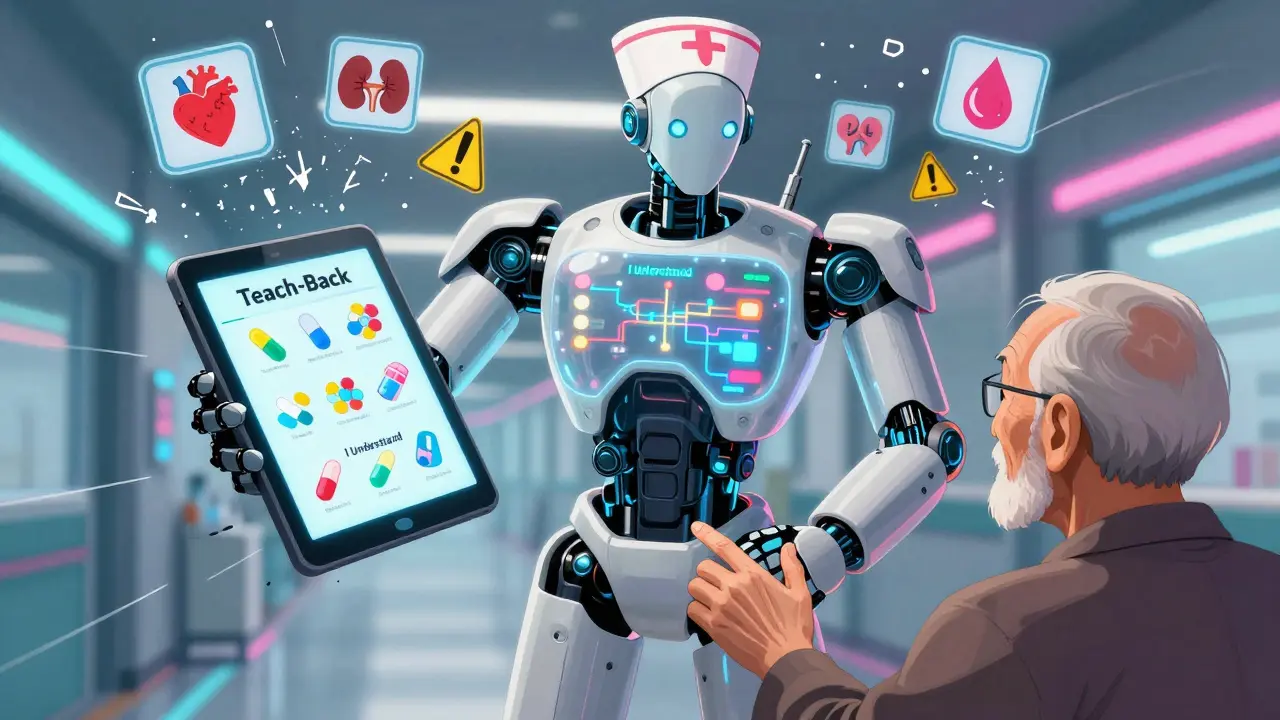
- Education: You’re asked to explain back, in your own words, what each pill is for. This is the Teach-Back Method. If you can’t say, “This blue pill is for my blood pressure and I take it every morning,” then they go again. No shortcuts.
Programs that do this right get 95% accuracy. The ones that don’t? They’re lucky to hit 65%. That gap is where mistakes happen.
Who Needs the Most Help? (And Why)
Not everyone needs the same level of support. But if you’re over 65 and take five or more medications, you’re in the high-risk group. So are people with kidney problems, dementia, or heart failure. These folks need more than a sheet of paper.
Studies show that when a pharmacist leads the discharge process - not a nurse, not a doctor, but a pharmacist trained in geriatric meds - medication errors drop by 67%. Why? Because pharmacists live in the world of drug interactions. They know that mixing a blood thinner with an NSAID like ibuprofen can cause a stomach bleed. They know that certain antibiotics can wreck kidney function in seniors. They know what’s safe and what’s not.
And here’s the kicker: The most common error isn’t taking too much. It’s taking the wrong thing. A patient thinks they’re on metformin for diabetes, but they’re actually on glipizide. They look the same. They’re both white pills. Without clear labeling and verification, it’s easy to mix them up.
The Follow-Up That Makes All the Difference
Getting home is only half the battle. The next 7 days are the most dangerous.
Research from the University of Tennessee’s SafeMed program showed that patients who had a phone call or home visit from a pharmacist or nurse within 7 days of discharge had 22.5% fewer readmissions. Why? Because that’s when problems surface.
Maybe the new blood pressure pill made you dizzy. Maybe the painkiller gave you nausea. Maybe you ran out of insulin because your pharmacy didn’t get the refill. Maybe you forgot to take your diuretic and your legs swelled up.
That first follow-up isn’t about checking boxes. It’s about listening. Did you take your pills? Did you have side effects? Did you understand why you’re on this new one? Did your pharmacy give you the right dose? If the answer is “I’m not sure,” then it’s not safe.
Home health nurses are critical here. They’re often the first to spot a problem. They check your blood pressure, your blood sugar, your weight. They compare your meds to the discharge list. They call the doctor if something’s off. In agencies that use standardized reconciliation tools, medication-related hospitalizations drop by 23%.
Technology That Actually Helps - Not Just Looks Cool
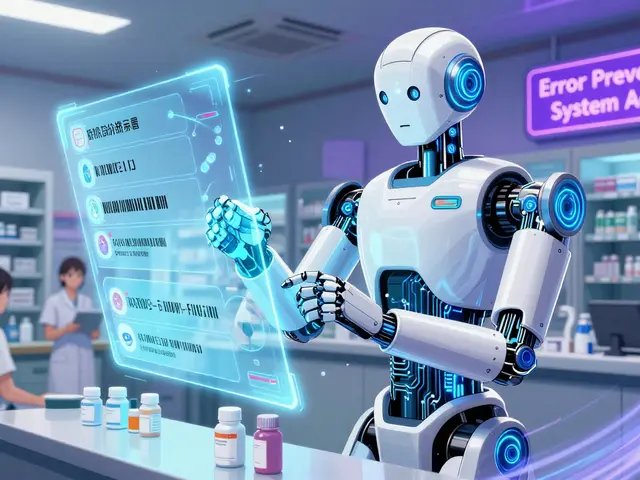
There’s a lot of hype around apps and AI for medication safety. And some of it works.
A 2023 study in JAMA Network Open found that a simple mobile app that showed pictures of each pill - with the name, purpose, and time to take it - reduced errors by 41% in seniors. No complex tech. Just clear visuals. For someone with poor eyesight or memory issues, a photo of the pill next to the label is worth a thousand words.
Electronic systems like Epic’s Care Transition Service have cut errors by 28% in big hospitals. But the real win isn’t the software. It’s when the system automatically sends your updated med list to your pharmacy and doctor the moment you’re discharged. No delays. No manual fumbling.
And telehealth check-ins? They boost adherence by 22%. A 10-minute video call with a nurse who asks, “How are the pills going?” can catch a problem before it becomes an emergency.
But here’s the truth: Technology doesn’t fix bad processes. If the hospital doesn’t reconcile meds properly, no app will save you. Tech is a tool. The real fix is the human process behind it.
What You Can Do Right Now
You don’t have to wait for the system to change. Here’s what you can do - today - to protect yourself or a loved one:
- Bring your brown bag. Before discharge, gather every pill, liquid, patch, and supplement you take - even aspirin or fish oil. Hand it to the pharmacist.
- Ask for the Teach-Back. Say: “Can you please explain each medicine to me, and then let me repeat it back?” Don’t be shy. This is your safety net.
- Get a written list. Ask for a printed copy of your discharge meds - with the reason for each one. “Metoprolol - for high blood pressure,” not just “Metoprolol 25mg.”
- Call your pharmacy. Before you leave the hospital, confirm your prescriptions are ready. Ask if they’ve received the new list.
- Schedule a follow-up. Don’t wait for someone to call you. Call your doctor or home health agency within 48 hours. Say: “I just got out of the hospital. Can we check my meds?”
- Use a pill organizer. Buy a simple weekly one with AM/PM slots. Fill it with help from a family member or pharmacist.
The Hidden Gap: Who Gets Left Behind
Here’s the ugly truth: Medicaid patients and low-income seniors face 37% more medication errors than those with private insurance. Why? Fragmented care. No home health support. Pharmacies far away. No one to help them understand.
It’s not just about money. It’s about access. If you live in a rural area, you might not have a pharmacist on-site at the hospital. If you don’t have a car, getting to a follow-up appointment is hard. If you’re alone, no one’s there to double-check your pills.
That’s why community health workers and home visits matter. They bridge the gap. They’re not fancy. But they’re essential.
What’s Changing - And Why It Matters
The rules are shifting. Medicare now pays hospitals $129-$162 for Transition Care Management services if they follow up within 14-30 days. That’s real money. And it’s tied to results. If your hospital’s readmission rate is too high, they lose up to 3% of their Medicare payments.
By 2025, all hospitals will be required to share your medication list electronically with your doctor and pharmacy using FHIR standards. That means your list will update automatically - no more fax machines or lost papers.
And the American Heart Association, the American Geriatrics Society, and the Joint Commission all now say the same thing: Pharmacist-led reconciliation + Teach-Back + follow-up within 7 days = standard of care.
This isn’t optional anymore. It’s the baseline. And if your hospital isn’t doing it, you have the right to ask why.
Final Thought: Safety Is a Conversation, Not a Paper
Medication safety after hospital discharge isn’t about perfect charts or fancy apps. It’s about people talking - clearly, patiently, and repeatedly.
It’s the pharmacist who asks, “What does this pill do for you?”
It’s the nurse who says, “Show me how you open that bottle.”
It’s the family member who writes down the names and times.
It’s the patient who says, “I’m not sure - can you explain it again?”
That’s how you avoid errors. Not because the system is flawless. But because someone cared enough to make sure you understood.



Post A Comment