

Statin Exercise Safety Calculator
Exercise Safety Assessment
Millions of people take statins to lower cholesterol and protect their hearts. But for many, a nagging side effect gets in the way: muscle pain. And when they try to exercise-the very thing that should help their heart-it often makes things worse. Is exercise safe if you’re on statins? Should you stop moving because your legs ache? The answer isn’t simple, but the latest research gives clear, practical guidance.
Why Statins Cause Muscle Pain
Statins work by blocking an enzyme your liver uses to make cholesterol. But that same enzyme is also involved in producing coenzyme Q10 (CoQ10), a compound your muscles need to generate energy. When CoQ10 drops, muscle cells struggle to function under stress, especially during physical activity. Studies show CoQ10 levels fall by about 40% within 30 days of starting a statin. This doesn’t affect everyone, but for those who are sensitive, it can mean soreness, stiffness, or fatigue that doesn’t go away. Not all statins are the same. Lipophilic statins like atorvastatin, simvastatin, and lovastatin easily slip into muscle tissue, increasing the chance of side effects. Hydrophilic statins like pravastatin and rosuvastatin don’t penetrate muscles as deeply, making them gentler on the body. A 2022 FDA analysis found that high-dose atorvastatin (80 mg) carries a 10.5-fold higher risk of severe muscle damage than pravastatin at the same dose.Exercise: The Double-Edged Sword
Exercise is one of the most powerful tools for heart health. The American Heart Association recommends 150 minutes of moderate activity per week-like brisk walking, cycling, or swimming. But for statin users, exercise can sometimes trigger or worsen muscle pain. Why? Because physical activity, especially intense or unfamiliar movements, causes tiny tears in muscle fibers. Normally, your body repairs these without issue. But with low CoQ10 from statins, the repair process slows down. Muscle inflammation lingers longer, and damage markers like creatine kinase (CK) spike higher than in people not on statins. A 2007 study of Boston Marathon runners found statin users had CK levels nearly 50% higher than non-users after the race. One runner, Maria Rodriguez, developed rhabdomyolysis-a dangerous breakdown of muscle tissue-after combining high-dose simvastatin with intense cycling. Her CK levels hit 12,450 U/L (normal is 30-200 U/L). She was hospitalized. But not everyone has this extreme reaction. Many statin users exercise without issues. The key is intensity.What Type of Exercise Is Safe?
Moderate exercise is safe. Vigorous exercise? Not always. A major 2023 study from Radboud University Medical Center followed 105 people: 35 on statins with muscle pain, 35 on statins with no pain, and 35 not taking statins. All did a 30-minute moderate bike ride. Afterward, CK levels rose slightly in all groups-but the increases were nearly identical. No extra damage from statins. This study, published in the Journal of the American College of Cardiology, was a game-changer. It showed that moderate exercise does not worsen statin-related muscle injury. But when researchers looked at high-intensity workouts, the story changed. A 2016 study found that eccentric exercises (like downhill running or lowering weights slowly) caused a 300% spike in CK in statin users-compared to 200% in non-users. The same study found that high-dose atorvastatin reduced mitochondrial function by 15% after six months, meaning muscles couldn’t produce energy as efficiently. That’s why marathoners on statins often report more soreness and slower recovery. The sweet spot? Stay between 40% and 70% of your maximum heart rate. That’s roughly the pace where you can talk but not sing. Walk, swim, cycle at a steady pace, or do light resistance training. Avoid HIIT, heavy lifting, or long-distance running if you’re just starting out-or if you’re already feeling pain.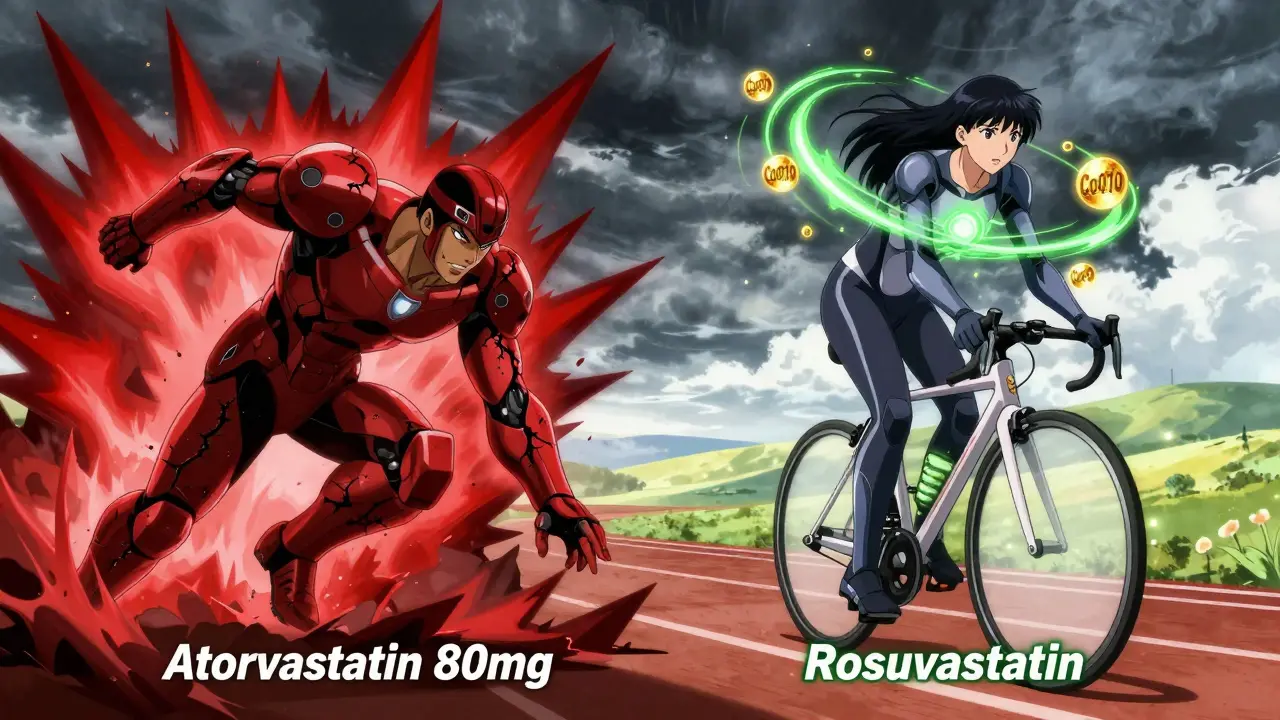
Who’s Most at Risk?
Not everyone on statins will have muscle problems. But certain factors make it more likely:- Age over 65
- High statin dose (especially 80 mg of atorvastatin or simvastatin)
- Being female
- Having thyroid issues or kidney disease
- Genetic variants like SLCO1B1 (a gene that affects how statins enter the liver)
- Starting statins after years of inactivity
What to Do If You Have Muscle Pain
If you started statins and began feeling sore within a month, it’s likely related. But if you’ve been exercising for years and only feel pain after intense workouts, that’s probably just exercise-induced soreness. Here’s how to tell the difference:- Statin pain: Constant, dull ache in thighs, shoulders, or calves. Doesn’t improve with rest. Starts within 30 days of starting the drug.
- Exercise pain: Sharp or burning during or right after activity. Goes away in 1-3 days. Happens after unusual exertion.
How to Keep Exercising Safely
You don’t have to quit exercise. You just need to adjust. 1. Switch statins. If you’re on atorvastatin or simvastatin, ask about switching to rosuvastatin or pravastatin. A 2023 meta-analysis found 65% of patients had reduced pain after switching to a hydrophilic statin. 2. Lower the dose. Some people do just as well on half the dose. Taking statins every other day can also help. One study showed a 58% success rate with this approach. 3. Start slow. Begin with 10-15 minutes of walking daily. Add 5 minutes each week. The ACC recommends this gradual approach for anyone with muscle symptoms. 4. Try CoQ10. A daily 200 mg supplement can help restore muscle energy. A 2023 review found it reduced pain in 60% of users, especially when combined with moderate exercise. 5. Avoid eccentric moves. Skip downhill running, heavy squats, or explosive jumps until your body adjusts. Stick to controlled, steady movements.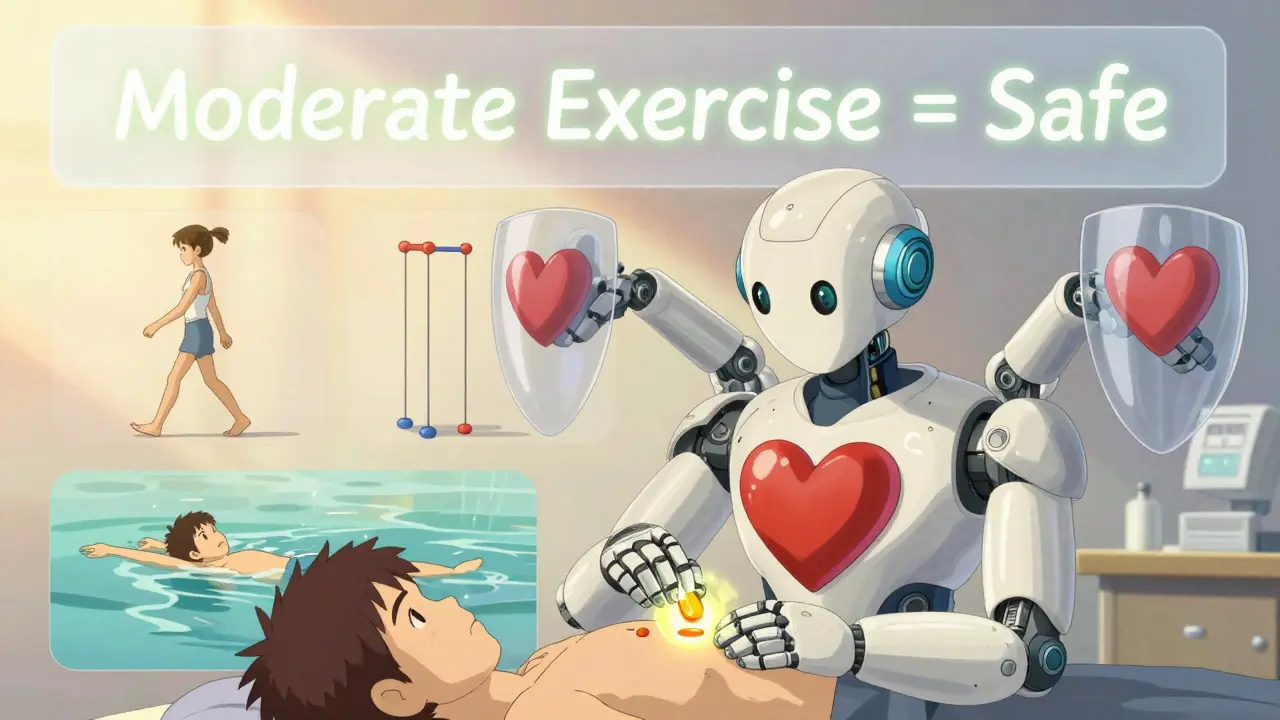
Real Stories
John Davis, a 62-year-old marathon runner from Ohio, started taking atorvastatin 40 mg and noticed his legs felt heavy after every long run. He cut his mileage in half and switched to rosuvastatin 20 mg. Within three months, his pain vanished. He’s now running 40 miles a week again. On the other hand, 58-year-old Linda from Texas stopped exercising entirely after her statin caused constant leg pain. She gained weight, her blood pressure rose, and her doctor had to add another medication. She later learned that gentle daily walks and a statin switch could have kept her active.What Experts Say
Dr. Michelina Catacola, lead author of the 2023 JACC study, says: “Statin therapy does not augment exercise-induced muscle injury. Moderate exercise is safe for statin users-with or without symptoms.” The American College of Sports Medicine advises: “Continue moderate exercise while working with your doctor to adjust statin therapy. Avoid high-intensity eccentric exercise until symptoms resolve.” Dr. Steven Nissen from the Cleveland Clinic warns: “Statins can blunt the benefits of exercise-especially for athletes. We need to think beyond just cholesterol numbers.”Looking Ahead
In 2024, the Statin-Exercise Interaction Registry (SEIR) launched to track 10,000 patients across the U.S. Early data suggests that with the right approach, 78% of people can return to regular activity without worsening symptoms. By 2026, genetic testing may help doctors pick the right statin and the right exercise plan for each person. For now, the message is clear: Don’t quit exercise because of statins. But do listen to your body. Start low. Go slow. Talk to your doctor. And know that your heart will thank you-not just for the pill, but for the walk, the swim, the steady pace that keeps you moving.Can exercise cause rhabdomyolysis while on statins?
Yes, but it’s rare. Rhabdomyolysis happens when muscle tissue breaks down rapidly, releasing dangerous proteins into the bloodstream. It’s most likely when high-dose statins (like 80 mg atorvastatin) are combined with intense, prolonged exercise-especially in older adults or those with kidney issues. Cases like Maria Rodriguez’s, with CK levels over 12,000 U/L, are extreme. Most people won’t experience this, but it’s why avoiding extreme workouts on high-dose statins is critical.
Should I take CoQ10 with statins?
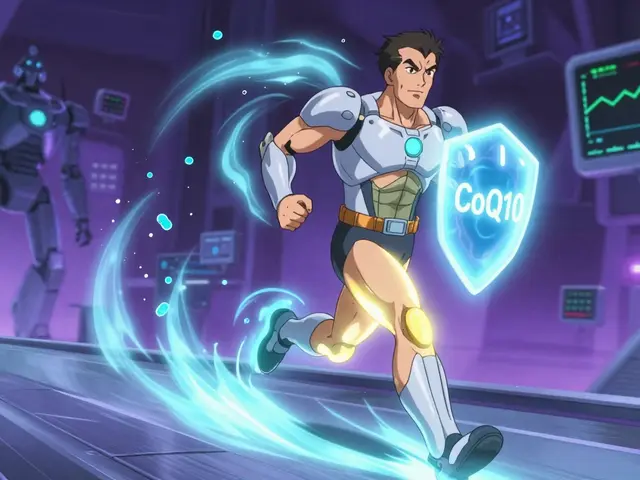
It’s worth trying. While not officially recommended by all guidelines, multiple studies show CoQ10 supplements (200 mg daily) reduce muscle pain in 60% of statin users. It doesn’t lower cholesterol, but it helps muscles produce energy. Since statins reduce your body’s natural CoQ10, supplementation makes biological sense. Talk to your doctor first-especially if you’re on blood thinners or have low blood pressure.
Is walking safe if I have statin muscle pain?
Yes, walking is one of the safest options. The 2023 JACC study and multiple real-world reports show that moderate walking-even for 30 minutes a day-doesn’t raise muscle damage markers in statin users. In fact, many people report less pain over time because movement improves circulation and reduces stiffness. Start with 10-15 minutes and build up. If walking causes sharp pain, stop and check with your doctor.
Can I still lift weights on statins?
Light to moderate weight training is usually fine. Avoid heavy lifting, especially eccentric movements like lowering weights slowly. These movements cause the most muscle damage-and statins make recovery harder. Stick to 1-2 sets of 12-15 reps with lighter weights. Focus on control, not max strength. If your muscles feel unusually sore the next day, scale back.
Do all statins cause muscle pain?
No. Lipophilic statins like atorvastatin, simvastatin, and lovastatin are more likely to cause muscle issues because they enter muscle tissue easily. Hydrophilic statins like pravastatin and rosuvastatin are much gentler. Rosuvastatin, in particular, has one of the lowest rates of muscle side effects. If you’re having pain, switching statins is often the most effective solution.
How long does it take for muscle pain to go away after stopping statins?
Most people notice improvement within 2-4 weeks after stopping or switching statins. Full recovery can take up to 8 weeks, especially if muscle damage was significant. If pain persists beyond two months, other causes (like arthritis, nerve issues, or thyroid problems) should be checked. Never stop statins without medical advice-your heart risk may increase.




Post A Comment