

Every year, millions of patients receive the wrong medication, the wrong dose, or a drug that interacts dangerously with something they’re already taking. These aren’t rare accidents-they’re preventable mistakes happening in pharmacies every day. In fact, a 2023 global review found that dispensing errors occur in about 1.6% of all prescriptions filled, which translates to hundreds of thousands of errors annually in countries like the U.S. alone. The good news? Most of these errors don’t have to happen. The root causes are well understood, and the solutions are proven. This isn’t about blaming pharmacists. It’s about fixing broken systems before someone gets hurt.
What Are the Most Common Pharmacy Dispensing Errors?
Not all mistakes look the same. Some are easy to spot, others hide in plain sight. The most frequent errors fall into five main categories:
- Wrong medication - Giving a patient amoxicillin when they were prescribed azithromycin. This happens more often than you think, especially when drug names sound alike. Think hydroxyzine vs. hydralazine, or clonazepam vs. clonidine.
- Wrong dosage - Dispensing 10 mg instead of 5 mg, or giving a patient a 30-day supply when the prescription says 14 days. Dose errors are especially dangerous with blood thinners, insulin, or seizure medications.
- Wrong dosage form - Giving a patient a tablet when they need a liquid, or a capsule that’s meant to be swallowed whole when they need it opened. This can be fatal for patients who can’t swallow pills or need precise dosing.
- Missed drug interactions - Failing to catch that a patient on warfarin was prescribed a new antibiotic that increases bleeding risk. This isn’t just about checking a list-it’s about knowing how the patient’s liver, kidneys, and other meds affect how drugs behave.
- Expired or improperly stored drugs - Dispensing pills that lost potency because they were kept in a hot, humid back room. This isn’t just about date labels-it’s about how storage conditions change how a drug works.
According to the Academy of Managed Care Pharmacy, these five types account for over 80% of all dispensing errors. And the drugs most often involved? Anticoagulants, antibiotics, opioids, and diabetes medications. These aren’t random picks-they’re high-alert drugs where even a small mistake can lead to death.
Why Do These Errors Keep Happening?
It’s tempting to blame the pharmacist. But research shows the real problem isn’t human error-it’s system failure. Here’s what’s really going wrong behind the counter:
- Workload pressure - Pharmacists are often juggling 20+ prescriptions at once, with customers waiting, phone calls ringing, and insurance issues piling up. One study found that 37% of errors happen when staff are rushed.
- Similar-looking or sounding drug names - Over 200 drug pairs look or sound alike. Think propranolol and propafenone. When prescriptions are handwritten or called in over the phone, it’s easy to mix them up. The FDA estimates this causes 22% of verbal prescription errors.
- Interruptions - Every time a pharmacist gets pulled away to answer a question, fix a printer, or help a customer, their focus breaks. Studies show that just three interruptions per prescription increase the chance of error by over 12%.
- Missing patient info - If the pharmacy doesn’t know a patient’s allergies, kidney function, or other meds, they can’t spot a problem. One analysis found that 43% of errors came from incomplete records.
- Illegible handwriting - Even in 2026, some doctors still write prescriptions by hand. A 2022 survey found that 43% of dispensing errors trace back to unreadable scripts.
These aren’t one-off issues. They’re built into daily workflow. That’s why training alone won’t fix them. You need systems that work even when people are tired, busy, or distracted.
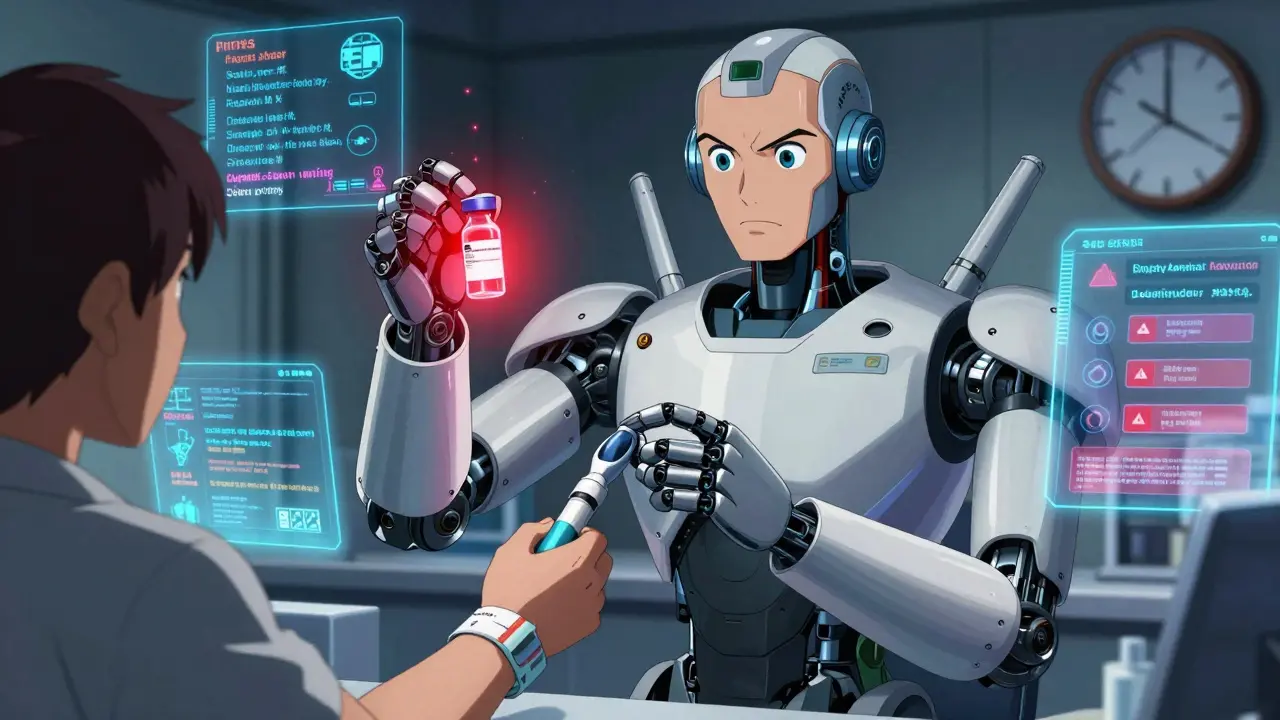
How to Stop These Errors Before They Happen
Preventing dispensing errors isn’t about working harder. It’s about working smarter. Here are the five most effective, evidence-backed strategies:
- Use barcode scanning - Scanning both the medication and the patient’s wristband or ID card before dispensing cuts errors by nearly half. In a 2021-2023 survey of 127 hospitals, barcode systems reduced wrong-drug errors by 52% and wrong-dose errors by 49%. It’s not fancy tech-it’s basic, reliable, and cheap.
- Implement double-checks for high-risk drugs - For insulin, heparin, opioids, and chemotherapy drugs, two trained staff members should independently verify the prescription. One hospital reported a 78% drop in errors after introducing this rule. It adds a few minutes, but it saves lives.
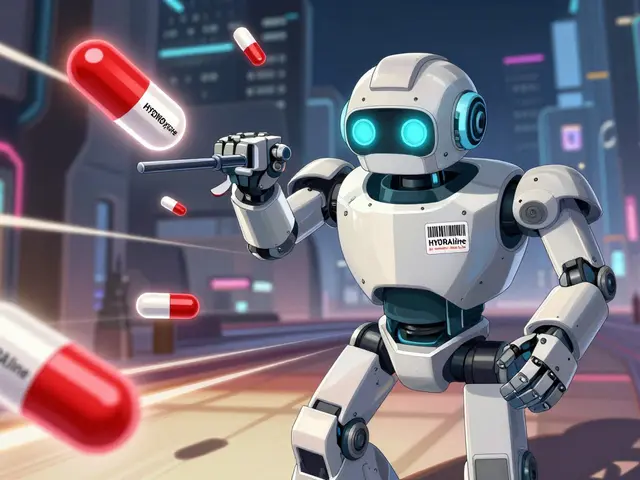
- Adopt Tall Man lettering - This simple visual trick separates look-alike drugs by capitalizing key letters: HYDROxyzine vs. HYDRAline. Pharmacies that use it see a 57% drop in mix-ups. The FDA and ISMP have been pushing this for years-and it works.
- Use clinical decision support tools - Pharmacy software that flags allergies, drug interactions, and incorrect doses in real time reduces errors by over 50%. But beware: too many alerts can cause “alert fatigue,” where staff start ignoring them. The key is smart, targeted alerts-not 20 pop-ups per prescription.
- Standardize documentation and communication - If a doctor writes “Lantus 10 units daily,” does that mean 10 units total, or 10 units per meal? Clear, consistent language prevents confusion. Electronic prescribing (e-prescribing) helps, but only if the system is set up right. A 2023 study showed that pharmacies using e-prescribing with built-in decision support saw a 43% drop in errors.
These aren’t theoretical ideas. They’re proven. The Pharmapod incident reporting system, used in over 1,800 U.S. pharmacies, cut errors by 39% in just one year. Hospitals using robotic dispensers saw a 63% drop. But the biggest wins come from combining multiple strategies-not just one.
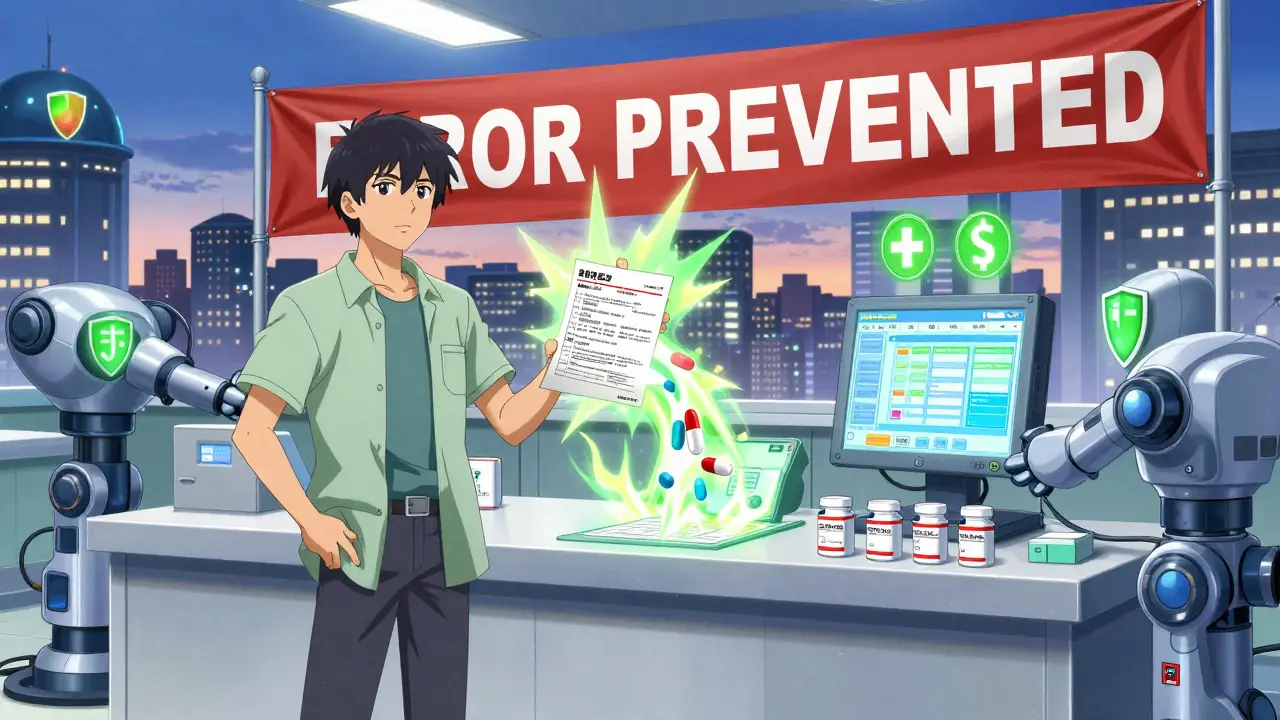
What Patients Can Do to Protect Themselves
You don’t have to wait for the pharmacy to fix everything. Here’s what you can do:
- Always ask - “Is this the same medicine I got last time?” “Why is this pill different?” If the color, shape, or name changed, question it.
- Check the label - Does the drug name, dose, and instructions match what your doctor told you? If not, speak up.
- Keep a list - Write down every medication you take, including supplements and over-the-counter drugs. Bring it to every appointment and pharmacy visit.
- Ask about interactions - “Does this new medicine interact with my blood pressure pill or my vitamins?”
- Report mistakes - If you get the wrong drug, tell the pharmacy. They need to know so they can fix the system.
Patients aren’t just passive recipients-they’re the last line of defense. And when they speak up, errors drop by as much as 30%.
The Future of Pharmacy Safety
Technology is changing fast. AI systems are being tested to predict which prescriptions are most likely to go wrong before they’re even filled. Robotic arms are now handling 80% of pill counting in some hospitals, reducing human contact with medications. Electronic health records are finally talking to pharmacy systems in real time, so allergies, lab results, and dosing guidelines update instantly.
But the biggest shift isn’t tech-it’s mindset. The World Health Organization and the Institute for Safe Medication Practices are pushing for global standards in how errors are classified and reported. Why? Because you can’t fix what you can’t measure. Right now, one hospital might call a mistake “wrong dose,” while another calls it “incorrect strength.” Standardizing language means we can finally compare data across borders and learn from each other.
By 2030, experts predict that integrated systems could cut dispensing errors by up to 75%. But that only happens if we stop treating these mistakes as individual failures-and start treating them as system failures that need system fixes.
What is the most common pharmacy dispensing error?
The most common error is dispensing the wrong medication, dosage strength, or dosage form, which accounts for about 32% of all dispensing errors. This includes giving a patient amoxicillin instead of azithromycin, a 10 mg tablet instead of a 5 mg tablet, or a capsule when the patient needs a liquid. These mistakes are especially dangerous with high-alert drugs like anticoagulants, insulin, and opioids.
How do similar drug names cause errors?
Over 200 drug names sound or look alike, such as hydroxyzine and hydralazine, or clonazepam and clonidine. When prescriptions are handwritten or called in verbally, it’s easy to mix them up. Sound-alike names cause about 22% of verbal prescription errors, while similar-looking packaging contributes to another 19% of errors. Using Tall Man lettering (e.g., HYDROxyzine vs. HYDRAline) reduces these errors by over 56%.
Can barcode scanning really prevent errors?
Yes. Barcode scanning systems that match the medication to the patient’s prescription and ID reduce dispensing errors by nearly 47%. In hospital settings, they cut wrong-drug errors by 52% and wrong-dose errors by 49%. This is one of the most cost-effective safety measures available, and it’s now standard in most hospitals and increasingly used in community pharmacies.
Why do pharmacists make mistakes even when they’re careful?
Most errors aren’t caused by carelessness-they’re caused by system flaws. High workload, frequent interruptions, unclear prescriptions, missing patient data, and time pressure all increase the chance of a mistake. Even the most careful pharmacist can slip up when juggling 20+ prescriptions, answering phones, and dealing with insurance issues. That’s why solutions focus on changing systems, not blaming people.
What should I do if I get the wrong medication?
Don’t take it. Call the pharmacy immediately and ask them to confirm the prescription. Keep the medication and the label. If you’ve already taken it and feel unwell, contact your doctor or go to the nearest emergency room. Reporting the error helps the pharmacy fix their system and prevents it from happening to someone else.

![Insightful Review on the Latest Developments in [Topic Area]](/uploads/2024/07/thumbnail-insightful-review-on-the-latest-developments-in-topic-area.webp)


Post A Comment