

Switching from a brand-name drug to a generic version sounds simple: same active ingredient, lower price, same results. But for millions of people, it’s anything but simple. Many stop taking their meds after the switch. Others skip doses, feel worse, or even stop treatment altogether - not because the generic doesn’t work, but because they believe it doesn’t. This isn’t about science. It’s about perception. And it’s costing the U.S. healthcare system over half a trillion dollars a year.
Why People Stop Taking Their Generic Medications
When a pharmacist hands you a pill that looks different - smaller, differently colored, or with a strange logo - your brain doesn’t immediately accept it as the same thing. A 2020 University of Michigan study found that nearly 3 out of 10 elderly patients got confused by the change in pill appearance. For someone on blood pressure or thyroid meds, that confusion can turn into fear. And fear leads to non-adherence.
It’s not just about looks. A 2018 study in the European Journal of Public Health showed that even when patients were given identical placebo pills, those labeled as "generic" were 23.7% more likely to stop taking them before the end of a 7-day trial. They also reported 18.3% more pain and were 31.6% more likely to take extra pills from other bottles. This isn’t about chemistry. It’s about psychology. The nocebo effect - where expecting something to fail makes it fail - is real, powerful, and often ignored.
Patients aren’t irrational. They’ve been conditioned. Advertisements for brand-name drugs often show vibrant, energetic people living full lives. Generic ads? A plain white box with a price tag. When your medication suddenly changes, it’s easy to think: "This isn’t the one that helped me before."
What the Science Actually Says
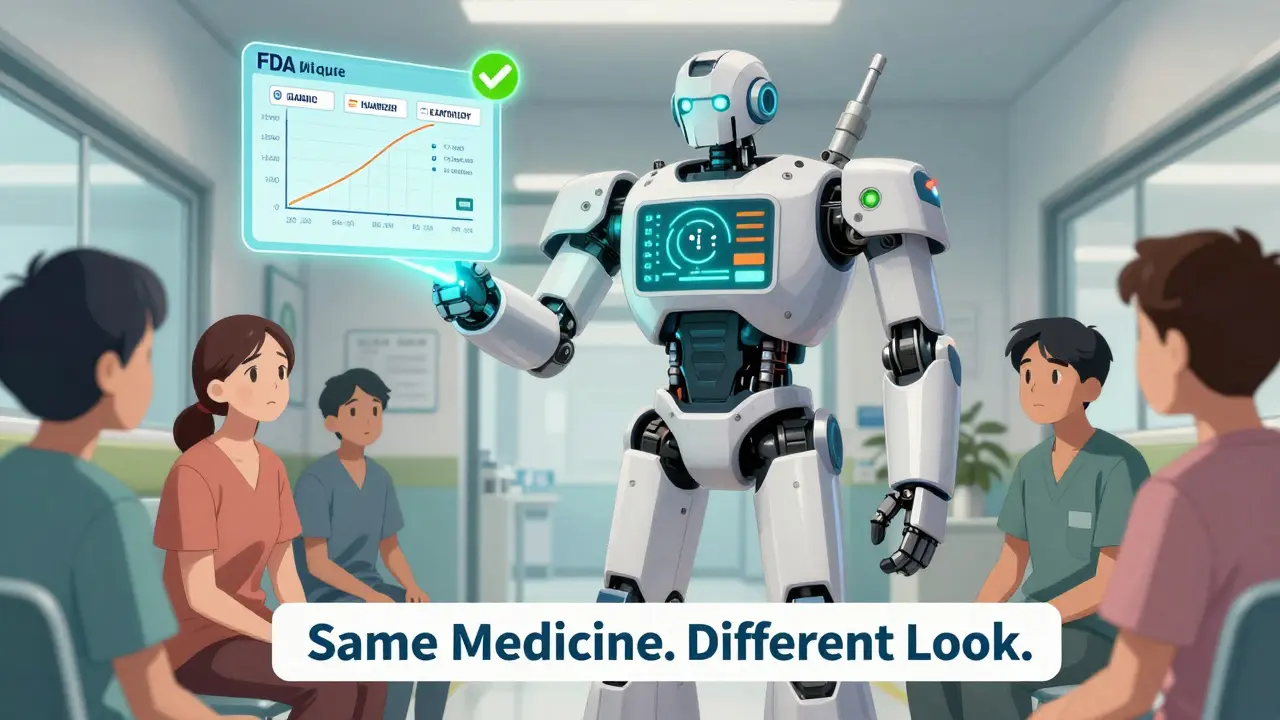
The FDA requires generics to prove they’re bioequivalent to the brand. That means they must deliver the same active ingredient at the same rate and in the same amount. The acceptable range? 80% to 125% of the brand’s absorption. Sounds loose? It’s not. That same 20% variability exists between batches of the brand-name drug. The FDA calls it "manufacturing tolerance." So if your brand-name pill varies by 15% from one batch to the next, your generic does too. The difference isn’t in the drug - it’s in your expectations.
For most drugs, this works fine. A 2015 study of over 300,000 patients found that people on generic statins were actually more likely to stick with their meds - because copays were 80% lower. But for some drugs, even tiny changes matter. Levothyroxine (for thyroid), warfarin (for blood thinning), and seizure medications like lamotrigine fall into a category called "narrow therapeutic index." Here, small differences in absorption can lead to real clinical effects. A 2017 NEJM study found a 0.8% higher hospitalization rate in patients switched to generic levothyroxine. That might sound small, but for someone with thyroid disease, it’s enough to feel off.
And it’s not just the active ingredient. Inactive ingredients - fillers, dyes, coatings - can cause problems. A 2021 JAMA Dermatology study found that 3.7% of patients had allergic reactions to dyes or coatings in generics. For someone with a sensitive skin condition or a history of allergies, that matters. A pill that looks different might not just confuse - it might actually make you sick.
When Generics Help - And When They Hurt
Not all medications behave the same when switched. Adherence changes depending on the condition.
- Statins (cholesterol): Adherence goes up by 9% on average. Why? Lower cost. People can afford to take them daily.
- Antihypertensives (blood pressure): Adherence drops by 12%. Why? No obvious symptoms. If you don’t feel it, you don’t trust it.
- Antidepressants: Discontinuation rates jump 19.4%. Brain chemistry is sensitive. Even small changes in absorption can feel like a relapse.
- Diabetes and seizure meds: No significant difference in adherence. But that doesn’t mean no risk - just that most patients stick with them regardless.
Here’s the kicker: 62% of Americans still believe brand-name drugs are more effective - even when they’re told the generic is identical. A 2021 Consumer Reports survey showed this belief holds even when patients save hundreds of dollars. Money doesn’t override perception.
What Pharmacists and Doctors Should Do
The biggest driver of non-adherence? Poor communication. A 2022 audit found that only 19% of patients were actually asked if they had concerns about the switch. Only 28% were told why the generic is just as safe. Most get handed a new pill with a note: "Your prescription has been changed."
Here’s what works:
- Explain bioequivalence simply: "This generic has the same active ingredient as your old pill. The FDA says it works the same way."
- Describe the difference: "The shape and color changed because a different company makes it. It’s still the same medicine."
- Highlight cost savings: "This will save you $70 a month. That’s $840 a year."
- Ask for concerns: "Have you ever had trouble with a generic before? What are you worried about?"
That conversation should take 3 to 4 minutes. Most don’t. But when it does, adherence improves by 31%, according to a 2022 meta-analysis. Pharmacists who call patients within 72 hours of the switch see even better results. One-on-one check-ins cut non-adherence in half.
What Patients Can Do
You’re not powerless. Here’s how to protect your adherence:
- Ask for the same manufacturer: If you’ve had success with one generic brand (say, Teva or Mylan), ask your pharmacist to stick with it. Consistency helps.
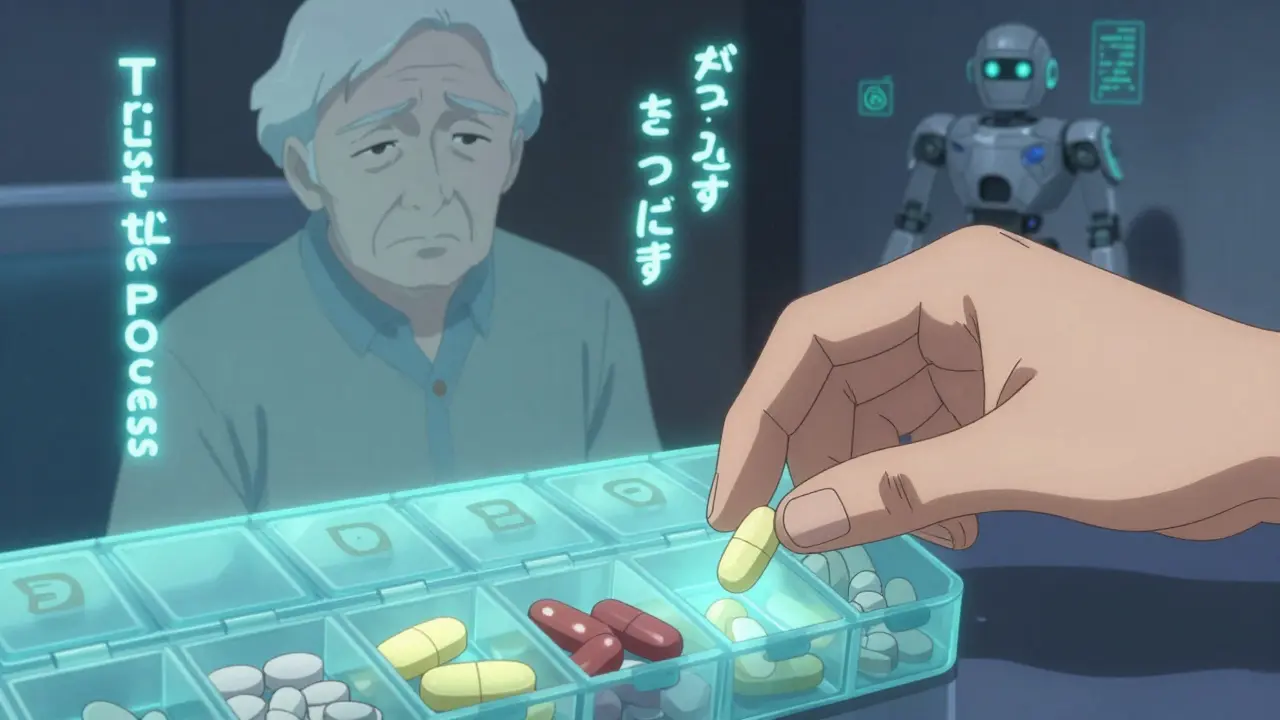
- Use a pill organizer: If pills look different, sorting them by day removes confusion. A 2023 Kaiser study found 63% of high-adherence patients used one.
- Don’t assume side effects are from the generic: If you feel worse, track symptoms. Talk to your doctor. It might be stress, diet, or something else.
- Request written info: Ask for the FDA’s generic drug fact sheet. It’s clear, free, and available online.
Also, if you’re on a narrow therapeutic index drug - like warfarin, levothyroxine, or seizure meds - ask your doctor if switching is necessary. Some insurers force switches. But you have a right to request continuity if it’s medically important.
The Bigger Picture
Generics make up 90% of all prescriptions in the U.S. That’s good for cost control. But if people stop taking them, we end up with more ER visits, hospitalizations, and long-term complications. The savings vanish.
Starting in January 2025, the FDA will require all generic manufacturers to include transition-specific patient education materials. That’s a step forward. The Generic Pharmaceutical Association’s new "Seamless Switch" certification will push for consistent pill appearance in critical drugs - directly tackling the 28.4% confusion rate in elderly patients.
And new tech is helping. AI platforms like AiCure use smartphone cameras to verify patients are taking their pills. In a 2023 study, they boosted adherence during generic transitions by 37%. Not because they changed the drug - but because they changed the support.
Final Thought: It’s Not About the Pill - It’s About the Trust
Generics aren’t inferior. They’re regulated, tested, and proven. But trust doesn’t come from a label. It comes from conversation, consistency, and care. When patients feel heard, informed, and respected - they stick with their meds. When they’re handed a new pill and told to "just take it" - they don’t.
The solution isn’t more generics. It’s better communication. Better support. Better understanding. Because a pill that’s chemically identical won’t help if the person doesn’t believe it will work.
Are generic drugs really as effective as brand-name drugs?
Yes, for the vast majority of medications, generic drugs are just as effective. The FDA requires them to contain the same active ingredient, strength, dosage form, and route of administration as the brand-name version. They must also prove bioequivalence - meaning they deliver the same amount of medicine into your bloodstream at the same rate. The FDA allows up to 20% variability in absorption, but that’s the same range seen between different batches of the brand-name drug. So while there can be slight differences in how fast a pill dissolves, the overall effect is the same.
Why do some people feel worse after switching to a generic?
Often, it’s not the medicine itself - it’s the nocebo effect. If you believe a generic is inferior, your brain can interpret normal sensations as side effects. Studies show people report more pain, fatigue, or nausea when told they’re taking a generic - even when the pill is a placebo. For some, especially with mental health or neurological drugs, even small changes in absorption can trigger real symptoms. Inactive ingredients like dyes or fillers can also cause reactions in sensitive individuals. If you feel worse, track your symptoms and talk to your doctor. Don’t assume it’s the generic without checking.
Which medications are riskiest to switch to generic?
Drugs with a narrow therapeutic index are the most sensitive. These include levothyroxine (for thyroid), warfarin (blood thinner), phenytoin and lamotrigine (for seizures), and cyclosporine (for organ transplants). In these cases, even small changes in blood levels can lead to under- or over-treatment. While the FDA approves these generics, some patients and doctors prefer to stick with the brand - especially if the patient has been stable for years. Always discuss switching these with your provider before making a change.
Can I ask my pharmacist to give me the same generic brand every time?
Yes. While insurers often switch manufacturers to save money, you have the right to request continuity. If you’ve been on a specific generic (like Teva or Mylan) and it works well, ask your pharmacist to fill your prescription with the same manufacturer. Some pharmacies will honor this - especially for critical medications. You can also ask your doctor to write "Dispense as Written" or "Do Not Substitute" on the prescription. It’s legal and often necessary for stability.
How can I tell if my generic is causing side effects or if it’s something else?
Keep a simple symptom journal. Note when you started the new pill, what side effects you noticed, and when they started. Did they appear immediately? Or after a week? Did you change anything else - sleep, diet, stress? Many side effects attributed to generics are actually from other factors. If symptoms persist, don’t stop the medication. Call your doctor. They may check your blood levels (for drugs like warfarin or thyroid meds) or suggest switching back temporarily to confirm the cause. Never assume it’s the generic without evidence.
Do generic drugs have the same inactive ingredients as brand-name drugs?
No. Generic drugs must contain the same active ingredient, but they can use different fillers, dyes, coatings, and binders. This is why generics often look different. For most people, this doesn’t matter. But for those with allergies - especially to dyes like FD&C Red No. 40 or lactose - it can. If you’ve had reactions to medications before, ask your pharmacist for the ingredient list. You can also request a version without certain fillers. Some manufacturers offer "free-from" generics with fewer additives.
Why do some insurance companies force generic switches?
It’s about cost. Brand-name drugs can cost 80-85% more than generics. Insurance plans use formularies to steer patients toward cheaper options. This saves money - for the insurer and often for the patient too. But if the switch leads to non-adherence, it can cost more in the long run through hospital visits and worsening conditions. Many insurers now require prior authorization for brand-name drugs unless there’s a medical reason to stay on them. If you’re forced to switch and you’re worried, talk to your doctor about filing an exception.
Next Steps for Patients and Providers
If you’re a patient: Don’t accept silence. Ask questions. Keep a pill log. Use a pill organizer. Request the same manufacturer if it works for you.
If you’re a provider: Don’t assume patients understand. Talk. Listen. Document. Follow up. Use the 4-step counseling method. Offer written materials. Make the switch part of the care plan - not just a billing change.
Generics are a vital tool for affordable care. But their success depends on more than chemistry. It depends on trust. And trust is built one conversation at a time.



Post A Comment