
Kidney Medication Safety Checker
Check Your Medication Safety
Enter your eGFR value (estimated glomerular filtration rate) and select a medication to see if your dose is safe for your kidney function.
Safety Results
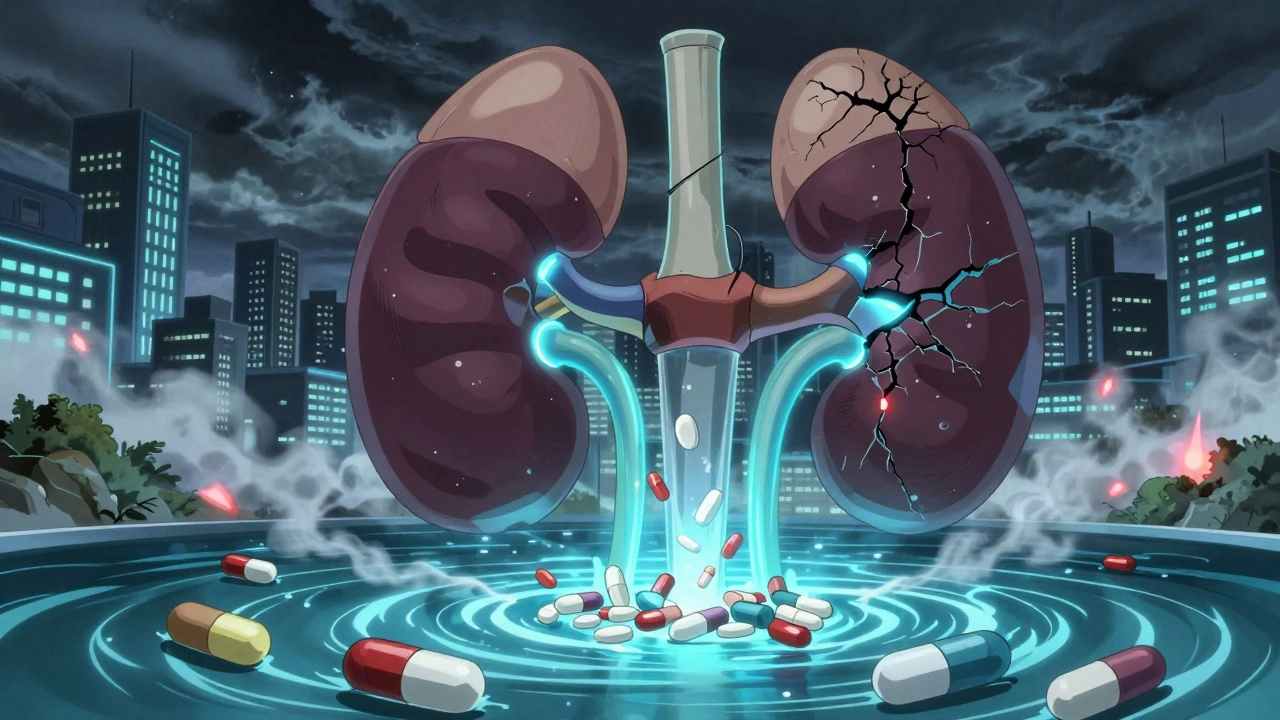
When your kidneys aren’t working right, even common medicines can turn dangerous. It’s not about taking too many pills-it’s about your body not being able to flush them out. For someone with chronic kidney disease (CKD), a standard dose of ibuprofen, metformin, or even an antibiotic can build up to toxic levels, leading to hospitalization, organ damage, or worse. This isn’t rare. About 37 million American adults have CKD, and nearly half of them are on 10 or more medications daily for diabetes, high blood pressure, or heart disease. The problem? Most of those drugs rely on the kidneys to leave the body. When kidney function drops, those drugs stay. And they pile up.
Why Your Kidneys Matter for Medicines
Your kidneys don’t just make urine. They’re your body’s main filter for drugs. Around 30% of all medications are cleared directly through the kidneys. Others are broken down by liver enzymes but still need healthy kidneys to remove the waste products. When your kidneys slow down-because of diabetes, high blood pressure, or aging-those drugs stick around longer than they should. That’s called accumulation. And it doesn’t take much to cross the line from safe to toxic.Doctors measure kidney function with something called eGFR-estimated glomerular filtration rate. A normal eGFR is above 90 mL/min/1.73m². Once it drops below 60, you’re in stage 3 CKD. At this point, 40% of commonly prescribed drugs need a dose change. But here’s the scary part: many doctors never check eGFR. A JAMA study found that in 35% of primary care visits for older adults, kidney function was never calculated. Patients are just getting the same dose they got at 50, even at 75 with failing kidneys.
Top 5 Medications That Turn Toxic in CKD
- NSAIDs (Ibuprofen, Naproxen, Diclofenac) - These over-the-counter painkillers sound harmless, but they cut blood flow to the kidneys by blocking protective prostaglandins. In someone with eGFR under 60, they raise the risk of sudden kidney failure by 3 times. One Reddit user, with stage 3 CKD, took standard ibuprofen for back pain. Within 48 hours, his creatinine jumped from 1.8 to 3.2. He ended up hospitalized for five days.
- Metformin - The go-to diabetes drug. But in CKD, it can cause lactic acidosis-a rare but deadly buildup of acid in the blood. Guidelines say stop metformin when eGFR drops below 30. Some doctors still prescribe it past 45. A Cochrane review of 20,000 patients showed no lactic acidosis cases when rules were followed. But when they’re ignored? Emergency rooms fill up.
- Sulfonylureas (Chlorpropamide, Glyburide) - These older diabetes pills cause dangerous low blood sugar. Chlorpropamide’s half-life balloons from 34 hours to over 200 hours in stage 5 CKD. Patients wake up confused, shaky, or unconscious. Glyburide’s active metabolite lingers for days. Glipizide? Safe. It’s cleared by the liver, not the kidneys. Yet many patients still get the risky ones.
- Trimethoprim (and Co-trimoxazole) - Often used for UTIs. But when combined with ACE inhibitors or ARBs (common in CKD), it can spike potassium levels by 1.2 to 1.8 mmol/L in just 48 hours. High potassium can stop your heart. This combo is a silent killer-often missed because both drugs are prescribed for separate reasons.
- Aciclovir - Used for shingles and herpes. In CKD, it forms crystals in the kidney tubules. About 5-15% of patients with eGFR under 50 get crystal nephropathy. Some develop confusion, seizures, or acute kidney failure. Standard doses are fine for healthy people. Deadly for those with kidney disease.
What About Blood Thinners and Transplant Drugs?
Direct oral anticoagulants (DOACs) like apixaban and rivaroxaban are popular because they don’t need regular blood tests like warfarin. But here’s the catch: apixaban is 50% cleared by the kidneys. Rivaroxaban is 33%. In stage 4 CKD (eGFR 15-29), bleeding risk jumps 40% compared to stage 2. Many doctors don’t adjust the dose. Patients end up in the ER with internal bleeding.For transplant patients, drugs like tacrolimus and cyclosporine are life-saving-but they’re also kidney poisons. Their therapeutic window is razor-thin. Just 20-30% above the safe level causes damage. Long-term use leads to scarring in the kidneys. In fact, 25-30% of transplant recipients develop CKD because of the very drugs keeping their new organ alive. Monitoring blood levels isn’t optional. It’s survival.
Contrast Dyes, Vancomycin, and Other Hidden Risks
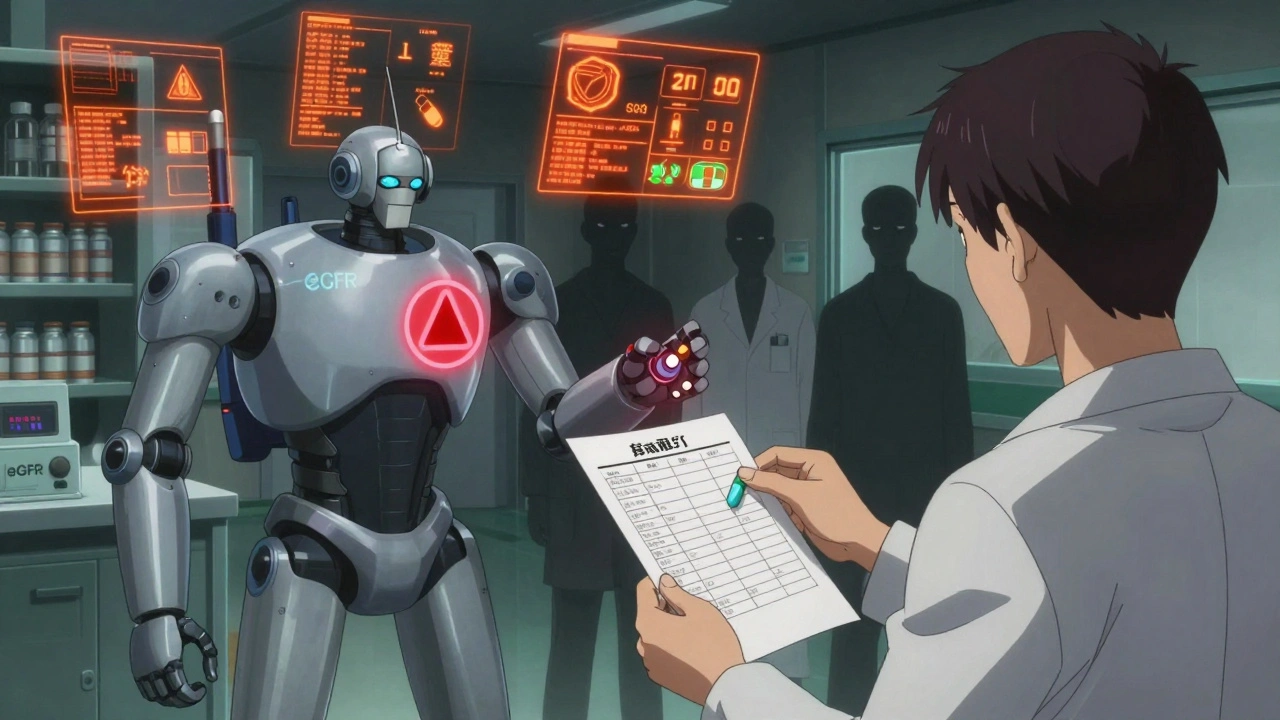
If you need a CT scan with contrast dye, your doctor should know your kidney function. Without proper hydration and dose adjustment, 12-18% of CKD patients get contrast-induced kidney injury. That’s 10 times higher than in healthy people. The fix? Hydrate before, delay the scan if eGFR is below 30, and use low-osmolar dyes. Simple. But often skipped.Vancomycin, a powerful antibiotic used for serious infections, needs careful dosing too. Standard is 15 mg/kg every 12 hours. But if eGFR is under 30? Extend the interval to every 48-72 hours. And check blood levels. Too high? You risk hearing loss and kidney damage. Too low? The infection doesn’t clear. This isn’t guesswork. It’s science.
Why Do These Mistakes Keep Happening?
It’s not that doctors don’t care. It’s that the system is broken. Most electronic health records don’t auto-adjust doses. Prescribing systems don’t flag a dangerous combo like trimethoprim + lisinopril. Many providers still rely on serum creatinine alone-ignoring age, weight, gender, and muscle mass. That’s like judging a car’s fuel efficiency by looking at the gas gauge without knowing the tank size.A 2022 survey by the American Association of Kidney Patients found that 78% of CKD patients received at least one medication without proper dose adjustment. Over 40% had an adverse event serious enough to need hospital care. The cost? $10,000 to $15,000 per preventable hospitalization. And nationally, we’re wasting $18.7 billion a year on avoidable kidney injuries.

What You Can Do Right Now
- Know your eGFR. Ask for it at every checkup. Don’t accept “your creatinine is normal” without the number.
- Keep a full list of every pill, supplement, and OTC drug you take. Include painkillers, antacids, and herbal products. Bring it to every appointment.
- Ask: “Is this safe for my kidneys?” Especially if you’re over 60 or have diabetes or high blood pressure.
- Use tools like Meds & CKD. This free app, developed by health experts, tells you which drugs are risky and what doses to use based on your eGFR. Users report 82% better communication with their doctors after using it.
- Never take NSAIDs without asking your doctor. Even one dose can be risky if your kidneys are already weak.
The Future Is Better Dosing
Change is coming. The FDA now requires all new drugs to include kidney dosing info on the label. In 2023, they approved KidneyIntelX-a machine learning tool that predicts your personal risk for drug toxicity with 89% accuracy. Stanford researchers are testing AI that will one day auto-flag dangerous prescriptions right when the doctor hits “send.”But you don’t have to wait. The tools are here now. The knowledge is out there. The biggest risk isn’t your kidney disease-it’s assuming that your meds are safe just because they were prescribed. Your kidneys can’t tell you they’re overwhelmed. You have to speak up.
Can I still take ibuprofen if I have kidney disease?
No, it’s not safe. Even a single dose of ibuprofen or naproxen can reduce blood flow to your kidneys and trigger sudden kidney injury, especially if your eGFR is below 60. Use acetaminophen (Tylenol) instead for pain relief, and only if your liver is healthy. Always check with your doctor before taking any NSAID, even if it’s labeled "over-the-counter."
How do I know if my medication dose needs to be lowered?
Your eGFR tells you. If it’s below 60 mL/min/1.73m², most medications need review. Ask your pharmacist or doctor to check if your drugs are cleared by the kidneys. Drugs with more than 50% renal clearance-like metformin, vancomycin, or apixaban-almost always need adjustment. Use tools like Meds & CKD or the Renal Dosage Handbook to cross-check your list.
What’s the safest diabetes medicine for someone with kidney disease?
Metformin is safe if your eGFR is above 45 and you’re monitored. Below 45, dose reduction is needed. Below 30, stop it. For higher CKD stages, newer drugs like SGLT2 inhibitors (dapagliflozin, empagliflozin) are preferred-they actually protect the kidneys. Sulfonylureas like glyburide and chlorpropamide are dangerous. Glipizide is safer because it’s cleared by the liver, not the kidneys.
Can kidney damage from medications be reversed?
Sometimes. If caught early-like a sudden rise in creatinine after taking NSAIDs-stopping the drug and hydrating can restore kidney function. But if damage is chronic, like from long-term calcineurin inhibitors or repeated AKI episodes, scarring sets in. That’s permanent. Prevention is the only cure.
Why don’t all doctors adjust doses for kidney disease?
Many don’t know how. Others assume creatinine is enough. Some are overwhelmed with patient load. And many systems don’t alert them. A study found a 42% error rate in dosing renally cleared drugs when eGFR is below 60. It’s not laziness-it’s a broken system. That’s why you need to be your own advocate. Ask. Check. Double-check.


Post A Comment