
Immunosuppression Infection Risk Calculator
Select Your Immunocompromised Condition
Key Diagnostic Insights
Select your condition to see key diagnostic information.
Why Infections in Immunosuppressed Patients Are So Dangerous
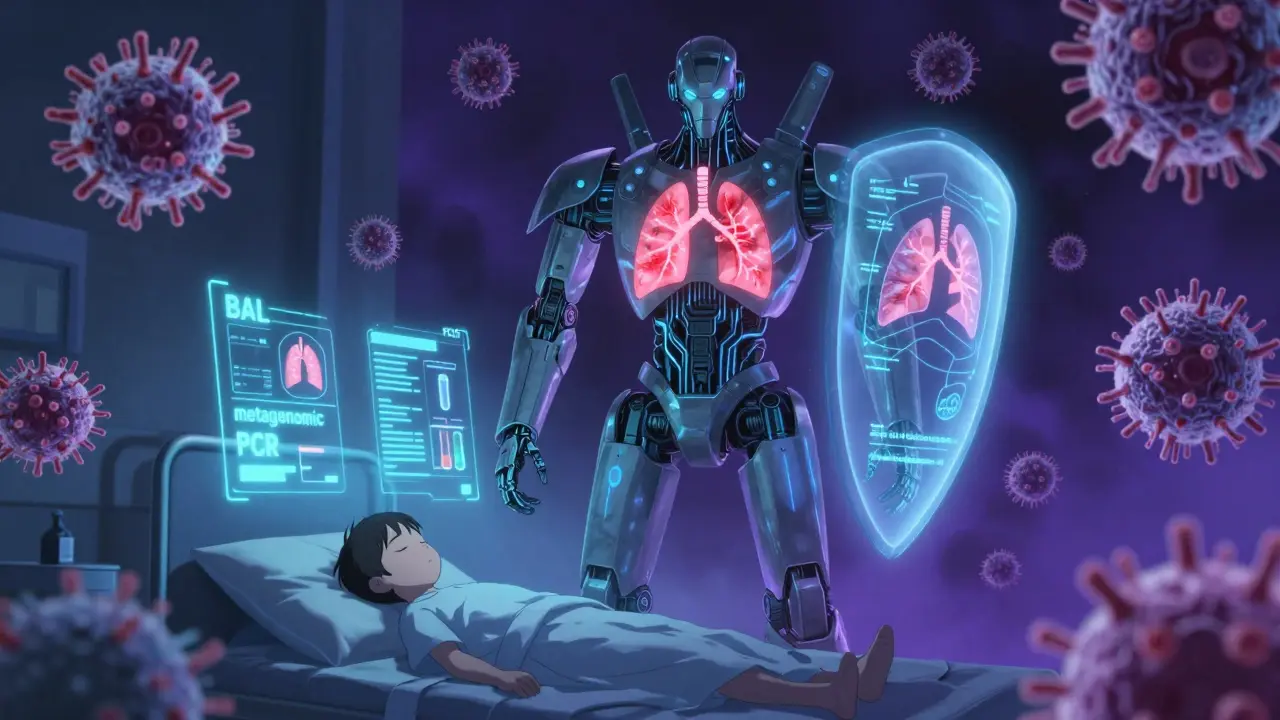
When your immune system is turned down - whether by steroids, chemotherapy, transplant drugs, or autoimmune treatments - your body loses its ability to fight off germs that most people never even notice. These aren’t just colds or flu. They’re rare, aggressive, and often deadly infections caused by organisms that normally don’t bother healthy people. A simple cough can turn into pneumonia from Pneumocystis jirovecii. A rash might be a spreading fungal infection hiding as skin inflammation. And sometimes, there are no symptoms at all until it’s too late.
Studies show that up to 60% of all infections in immunosuppressed patients happen in the lungs. But here’s the twist: many of these patients don’t have fever, cough, or even trouble breathing when they’re already seriously ill. In one study of 69 children with severe immune disorders before a stem cell transplant, nearly a quarter showed zero symptoms - yet their lung fluid was full of dangerous pathogens. That’s why doctors can’t wait for classic signs. They test early, even when the patient feels fine.
What Organisms Are Actually Causing These Infections?
Not all germs are created equal. Your immune system has different parts, and each part defends against different threats. When one part fails, specific bugs take advantage.
- If you’re low on antibodies (like in X-linked agammaglobulinemia), you’re at high risk for Giardia intestinalis - a tiny parasite that causes chronic diarrhea, bloating, and weight loss. In immunosuppressed kids, 87% of those infected show clear symptoms, and standard treatments often fail.
- If your T-cells are suppressed (common after organ transplants or with high-dose steroids), viruses like CMV, adenovirus, and HHV-6 can reactivate and spread. CMV alone hits 40% of transplant patients without preventive drugs.
- If your white blood cells can’t kill germs (like in chronic granulomatous disease), you’re vulnerable to Aspergillus, Mycobacterium avium, and even Staphylococcus aureus. Aspergillus infections in neutropenic patients kill over half the people who get them - even with the best antifungals.
- Patients on long-term immunosuppressants are also at risk for Pneumocystis jirovecii pneumonia (PCP), which was found in 22% of respiratory samples in one pediatric study. It’s not rare anymore - it’s expected.
And then there are the weird ones: Coronaviruses NL63 and HKU1, which cause mild colds in healthy people, can lead to life-threatening lung damage in immunosuppressed patients. In the 2022-2023 season, these viruses made up 8.5% of all respiratory infections in leukemia patients. They’re not just background noise - they’re serious threats.
How These Infections Look Different - And Why That’s Deadly
Healthy people get sick in predictable ways. Fever. Swelling. Pus. Redness. But in someone on immunosuppressants, the body can’t mount a normal response. That means infections hide.
In 1967, doctors documented a case where a patient on steroids developed what looked like a skin infection called erysipelas - red, hot, swollen patches. But it wasn’t bacteria. It was histoplasmosis, a fungal infection usually seen in bird or bat droppings. The patient died because the infection spread silently, without the body’s usual warning signs.
Another patient had a herpes simplex infection that didn’t just blister - it ate through skin and tissue, causing massive necrosis. Standard antivirals didn’t work. Why? Because the immune system couldn’t help clear the virus. The drugs alone weren’t enough.
Today, doctors know: if an immunosuppressed patient has a persistent rash, unexplained fever, or even just fatigue, they need tests - not just a guess. A normal-looking chest X-ray doesn’t rule out PCP. A normal white blood cell count doesn’t mean there’s no infection. You have to look deeper.
Diagnostic Challenges: When the Body Won’t Tell You It’s Sick
Traditional signs of infection - fever, high white count, pus - are often missing. That’s why doctors rely on tools that don’t depend on the body’s reaction.
- For lung infections: bronchoalveolar lavage (BAL) is the gold standard. It finds PCP with 92% accuracy - way better than sputum tests.
- For gut parasites: stool microscopy with immunofluorescent testing catches Giardia in 98% of cases. A simple stool sample can save a life.
- For unknown infections: metagenomic next-generation sequencing is now being used to scan all genetic material in a sample - bacteria, viruses, fungi - without needing to grow them in a lab. This is critical when cultures come back negative but the patient is getting worse.
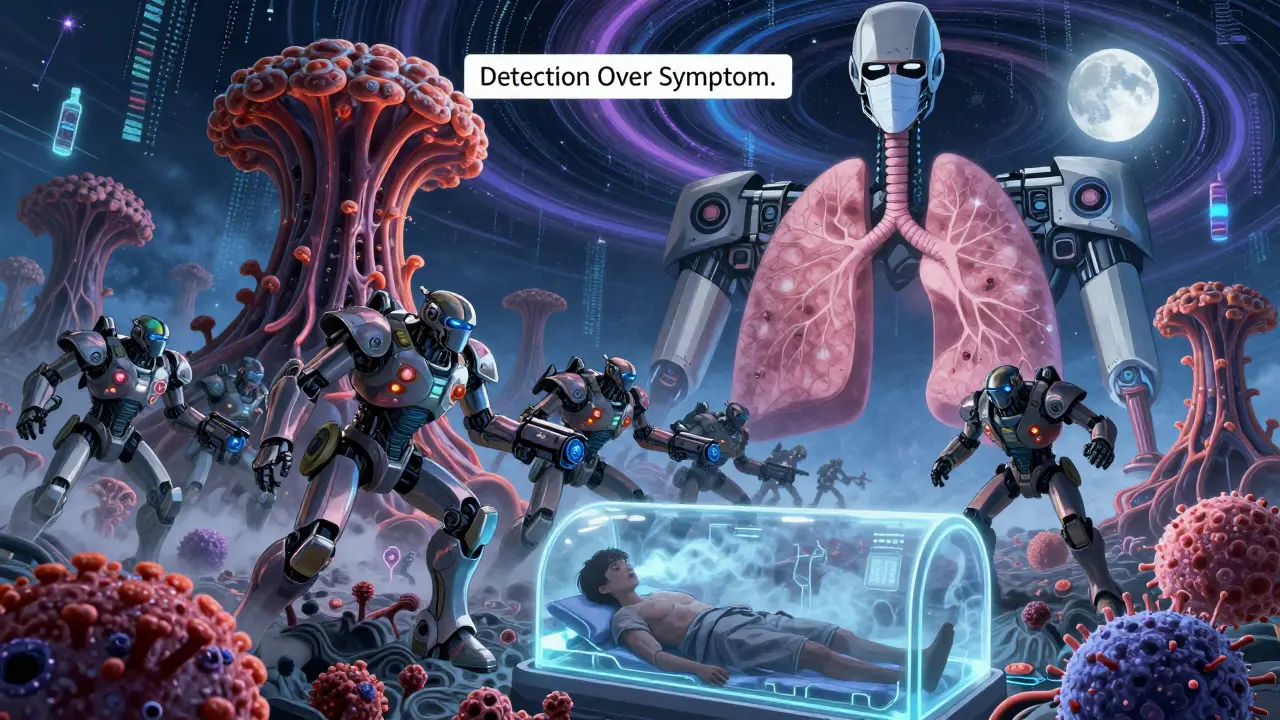
One study found that 23% of immunosuppressed children with confirmed infections had no symptoms at all. That’s not an anomaly - it’s the rule. Routine screening isn’t optional. It’s life-saving.
Treatment Isn’t Just About Antibiotics - It’s About Timing and Strategy
You can’t treat these infections like you would a regular pneumonia. Standard doses often fail. Resistance is common. Toxicity is higher.
- For Giardia: Metronidazole is first-line, but in immunosuppressed patients, it fails 30-40% of the time - compared to just 5-10% in healthy people. Doctors now use combination therapy: metronidazole plus tinidazole or nitazoxanide.
- For PCP: Trimethoprim-sulfamethoxazole is the go-to, but if the patient can’t tolerate it, alternatives like pentamidine or atovaquone are used - often with added steroids to reduce lung inflammation.
- For CMV: Ganciclovir or valganciclovir are standard, but in transplant patients, preemptive therapy (starting treatment before symptoms appear, based on blood tests) has cut infection-related deaths by nearly half.
- For Aspergillus: Voriconazole is first-choice, but mortality still exceeds 50%. Newer drugs like isavuconazole and combination therapy are being tested, but outcomes remain poor without early detection.
And here’s the hard truth: even with perfect treatment, infection-related death rates in stem cell transplant patients still hover around 25-30%. That’s not because doctors aren’t trying. It’s because the immune system is too weak to recover, even when the bug is gone.
Emerging Threats and New Hope
The pandemic showed us how vulnerable immunosuppressed people are to viruses. Some patients shed SARS-CoV-2 for over 120 days - far longer than the 10-14 days seen in healthy people. They became long-term carriers, risking transmission and developing chronic lung damage.
But there’s progress. Researchers are now using pathogen-specific T-cell therapies - taking immune cells from donors, training them to target CMV or adenovirus, and giving them back to the patient. In phase II trials, 70% of patients with stubborn viral infections responded. This isn’t sci-fi - it’s happening now in major transplant centers.
Another breakthrough: drugs that can briefly boost immunity without triggering graft-versus-host disease. Imagine turning up the immune system just enough to kill the infection, then turning it back down. That’s the goal. Clinical trials are underway.
What Patients and Caregivers Need to Know
If you or someone you care for is on immunosuppressants:
- Don’t wait for fever or cough to get tested. If you feel off, even slightly - ask for a check-up.
- Know your specific immune risk. Are you low on antibodies? T-cells? White blood cells? That tells you what infections to watch for.
- Follow prevention guidelines: avoid construction sites (dust = fungi), stay away from sick people, wash hands constantly, get all recommended vaccines (except live ones).
- Keep a symptom journal. Fatigue, mild diarrhea, skin changes - write them down. These might be early signals.
- Ask about preemptive testing. Blood tests for CMV, PCR for respiratory viruses - these can catch problems before they become emergencies.
The biggest mistake? Assuming that if you feel okay, you’re okay. That’s exactly when you’re most at risk.
What are the most common unusual infections in immunosuppressed patients?
The most common unusual infections include Pneumocystis jirovecii pneumonia (PCP), Giardia intestinalis (intestinal parasite), cytomegalovirus (CMV), Aspergillus (fungal lung infection), Mycobacterium avium complex (MAC), and viruses like adenovirus and human metapneumovirus. These organisms rarely cause illness in healthy people but can be life-threatening in those with weakened immune systems.
Why don’t immunosuppressed patients show typical signs of infection like fever?
Immunosuppressants blunt the body’s inflammatory response. Fever, swelling, and pus are signs your immune system is fighting - but if it’s turned down, those signals don’t happen. That means infections can spread silently. A patient might have severe pneumonia with no fever, no cough, and normal blood tests. That’s why doctors rely on diagnostic tests, not symptoms alone.
Can steroids cause unusual infections?
Yes. Long-term steroid use suppresses multiple parts of the immune system, especially T-cells and macrophages. This increases risk for fungal infections like histoplasmosis and aspergillosis, viral reactivations like CMV, and bacterial infections like tuberculosis. Even low-dose steroids taken for months can increase infection risk significantly.
How are these infections diagnosed if there are no symptoms?
Doctors use targeted screening. For lung infections, bronchoalveolar lavage (BAL) is used. For gut parasites, stool tests with immunofluorescence detect Giardia. Blood tests check for viral DNA (like CMV or adenovirus). Metagenomic sequencing can identify unknown pathogens in fluid or tissue samples. Routine surveillance is standard in high-risk patients, even when they feel fine.
Are these infections preventable?
Partly. Prophylactic antibiotics (like trimethoprim-sulfamethoxazole for PCP), antivirals (like valganciclovir for CMV), and antifungals can reduce risk. Vaccinations (inactivated only) help. Avoiding exposure - like staying away from bird droppings, construction sites, and sick people - matters too. But prevention isn’t perfect. That’s why early detection and aggressive testing are just as important.
What’s the survival rate for these infections?
It varies. Aspergillus infections kill over 50% of neutropenic patients. PCP has a 20-30% mortality rate even with treatment. CMV can be controlled with early drugs, but if it spreads to organs, death rates climb. Overall, infection-related death in stem cell transplant patients remains at 25-30%. Early diagnosis and tailored treatment improve outcomes, but these infections are still among the leading causes of death in this population.





Post A Comment