
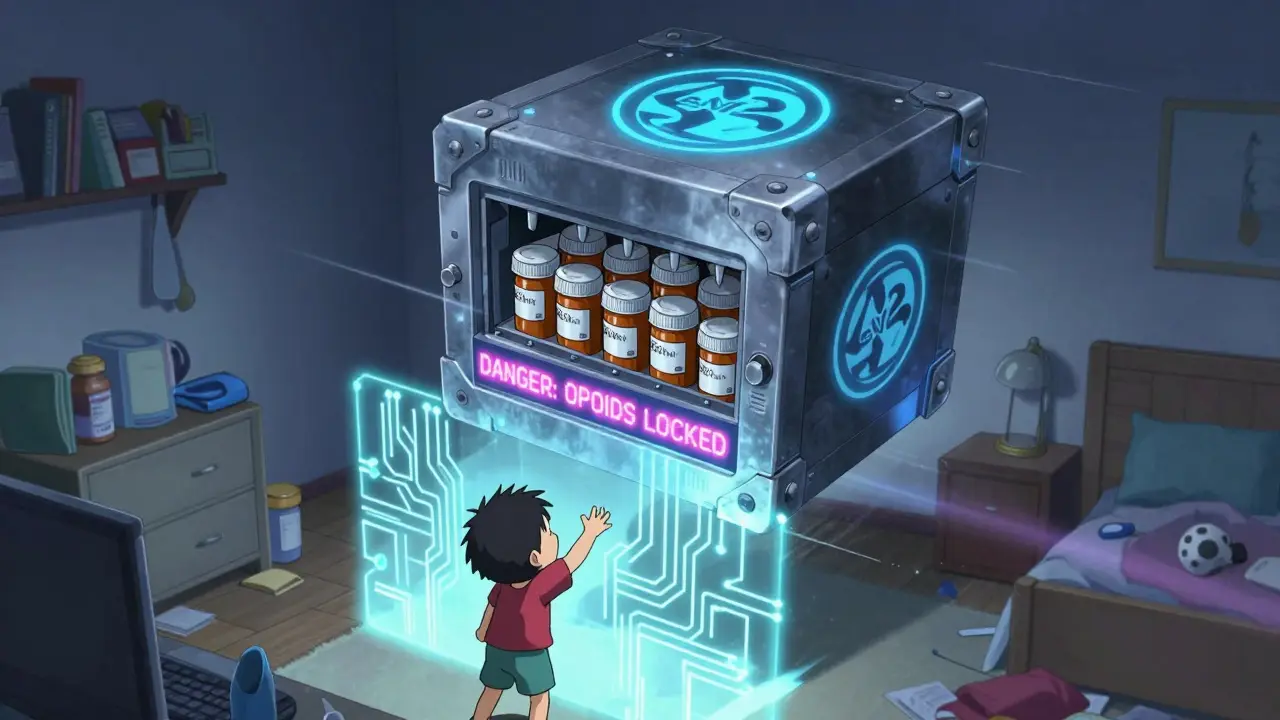
Every year, over 90,000 people in the U.S. die from drug overdoses. Around 16,000 of those deaths involve prescription opioids - drugs that were meant to help, but ended up hurting because they weren’t stored safely. The problem isn’t always addiction. Sometimes, it’s a child finding pills in a nightstand. Or a teenager taking a friend’s leftover painkillers. Or an elderly person mixing up medications because they’re stored in a messy medicine cabinet. Storing high-risk medications properly isn’t just a suggestion - it’s a lifesaving step that almost anyone can take.
What Counts as a High-Risk Medication?
Not all prescriptions need the same level of security. High-risk medications include opioids like oxycodone, hydrocodone, fentanyl patches, and morphine. But it’s not just painkillers. Benzodiazepines like Xanax or Valium, sleep aids like Ambien, and even some ADHD medications like Adderall can be dangerous if misused. These drugs are powerful. They can slow breathing, cause unconsciousness, or even stop the heart if taken in the wrong dose - especially by someone who’s never used them before.The CDC says that 53% of people who misuse prescription opioids get them from friends or family. That means the biggest risk isn’t strangers or drug dealers. It’s the bottle sitting on your bathroom counter.
The Gold Standard: Locked Storage
The most effective way to prevent accidental overdose is to lock up these medications. Not just put them in a drawer. Not just hide them under clothes. Lock them in a container that can’t be opened easily by kids, guests, or even other adults in the house.Studies show that locked storage reduces accidental poisonings in children by 87%. The CDC recommends using a lockbox that meets ANSI Grade 2 standards - meaning it can resist forced entry for at least 10 minutes. These aren’t fancy safes. They’re simple, affordable boxes with a key, combination, or even a biometric lock. Prices range from $15 for a basic model to $150 for ones with digital access.
Here’s what to look for:
- Child-resistant locking mechanism
- At least 4 inches deep to prevent easy access
- Secure mounting option (so it can’t be pulled off the wall)
- Emergency access feature (like a code override for elderly users with arthritis)
Brands like Med-ic Safe and Hero Health offer models designed specifically for this. But even a simple lockbox from Walmart or Target works - as long as it’s actually locked.
Keep Medications in Original Packaging
Too many people transfer pills into pill organizers, Ziploc bags, or empty vitamin bottles for convenience. That’s a dangerous habit. Why? Because if someone finds a bag of white pills, they have no idea what it is. No dosage. No name. No expiration. That’s how accidental overdoses happen.By law, these medications must come in containers with child-resistant caps. Those caps aren’t just for show. They’re tested to prevent kids under 5 from opening them. But if you remove the pills from the original bottle, you lose that protection. Studies show that keeping meds in their original containers cuts accidental ingestions by 40% compared to repackaged ones.
Also, keep the label on. It tells you the name of the drug, the dose, and who it was prescribed to. If a child swallows one, emergency responders need that info fast. If you’re worried about the label being too obvious, cover it with a sticker or tape - but don’t remove it.
Location Matters: Keep Them High and Out of Sight
Where you store the lockbox is just as important as the box itself.Children can reach up to 36 inches high. That means a nightstand, dresser top, or shelf above the toilet is too low. The CDC recommends storing medications at least 4 feet off the ground - out of reach and out of mind.
Good spots:
- High closet shelf
- Locked cabinet above the kitchen sink
- Wall-mounted lockbox in a bedroom closet
Bad spots:
- Bedside table
- Kitchen counter
- Medicine cabinet in the bathroom (too humid, too accessible)
- Car glove compartment
A 2021 survey found that 56% of households store medications below 2 feet high. That’s not just risky - it’s predictable. Kids explore. Curiosity is natural. Your job isn’t to outsmart them - it’s to make it physically impossible for them to get to the pills.
Temperature and Environment
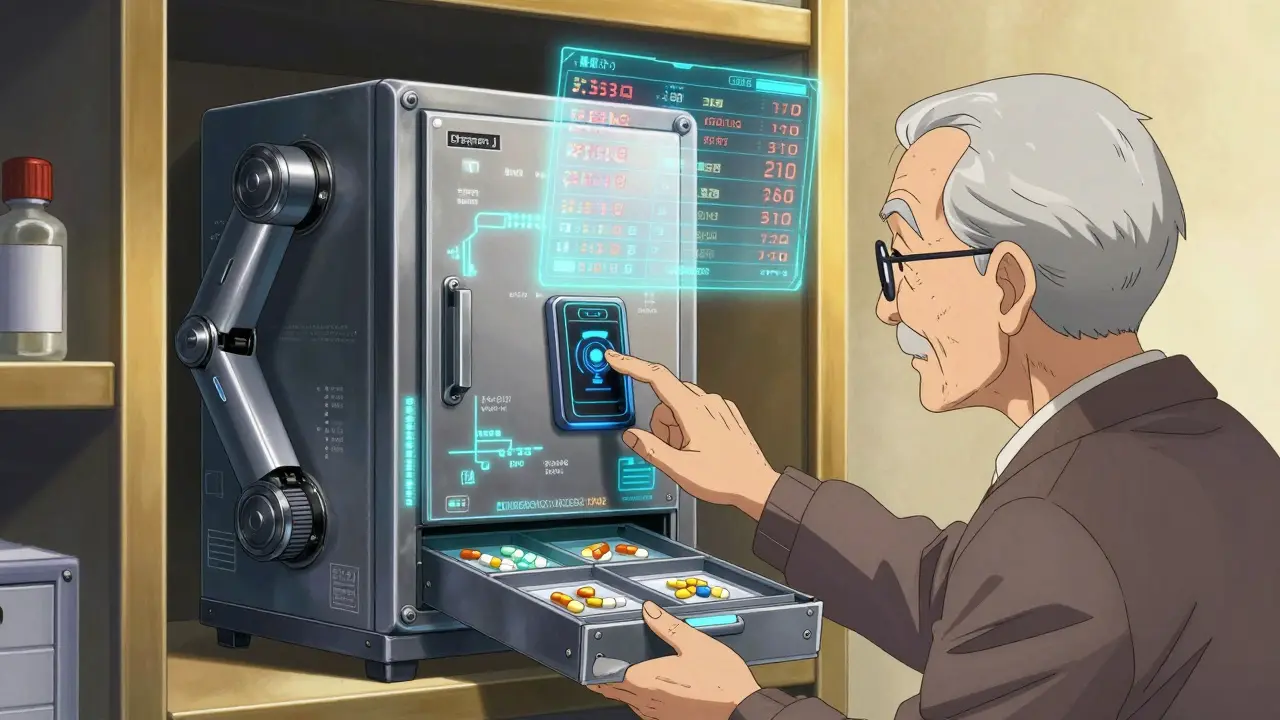
Medications don’t just need to be locked - they need to be stored right. Heat, moisture, and sunlight can break down drugs, making them less effective or even dangerous.The United States Pharmacopeia says most pills should be kept between 68°F and 77°F. That’s room temperature. Avoid:
- Bathroom cabinets (steam from showers ruins pills)
- Windowsills (sunlight degrades potency)
- Garages or basements (temperature swings)
Some medications, like fentanyl patches, require refrigeration. Always check the label. If you’re unsure, call your pharmacist. They’ll tell you what’s safe.
Track What You Have
If you’re taking opioids or other high-risk meds, you need to know how many pills are left - and when they were last taken. Why? Because missing pills mean they might be gone - stolen, taken by someone else, or accidentally swallowed.The CDC recommends a simple daily log:
- Write down the date and time
- Count the pills
- Record how many remain
Example: "42 tablets remaining at 8:00 AM on January 15, 2023"
You can use a notebook, a phone note, or even a sticky note on the lockbox. This isn’t about surveillance - it’s about awareness. If you notice 10 pills missing, you know something’s wrong. You can call your doctor. You can check the lockbox. You can act before someone gets hurt.
What About People Who Can’t Open Child-Resistant Caps?
This is a real problem. Over 30% of older adults struggle to open those caps because of arthritis, tremors, or limited hand strength. For them, safety and access are in conflict.There’s a solution: lockboxes with emergency access. Some models, like the Med-ic Safe, let you open them with a 4-digit code. That way, the person who needs the medicine can get it - but no one else can. These cost around $35 and are often covered by Medicaid or VA benefits.
If you can’t open the cap and don’t have a smart lockbox, talk to your pharmacist. They can prescribe a pill dispenser with a push-button opener. Or they might be able to give you the medication in a different form - like a patch or liquid.
What About Electronic Monitors?
Devices like Hero Health or MedMinder track when you take your pills and send alerts if you miss a dose. They’re great - but they’re not for everyone. They cost $99-$149. Only about 3% of people use them. They’re complex. They need Wi-Fi. They need charging.For most people, a $20 lockbox and a notebook work better. Don’t let the tech industry make you feel like you need a smart device to be safe. Simple works.
What If You’re Not the Patient?
You might be caring for someone else - a parent, a partner, a child with chronic pain. Your job is the same: lock it up. Keep it high. Track it. Know what’s missing.And if you’re a teen or young adult living in a home with these meds? Talk to someone. A school counselor. A teacher. A trusted adult. You’re not being nosy - you’re being smart. If you find pills in a drawer, don’t touch them. Tell an adult. It could save a life.
What About Disposal?
Unused pills shouldn’t sit in your medicine cabinet forever. The DEA runs National Prescription Drug Take Back Days twice a year - April and October. But you don’t have to wait. Many pharmacies, hospitals, and police stations have drop boxes for old meds. No questions asked.Never flush pills down the toilet or throw them in the trash. That pollutes water and makes it easy for others to dig them out. Use a take-back program. If you can’t find one, mix pills with coffee grounds or cat litter, put them in a sealed bag, and throw them in the trash. It’s not perfect - but it’s better than leaving them out.
Why Aren’t More People Doing This?
Only 23% of U.S. households with children use locked storage. Why? Three reasons:- They don’t know they should. Only 37% of doctors talk to patients about safe storage.
- They think it won’t happen to them. "My kid wouldn’t touch that." But kids don’t think like adults. They’re curious. They’re clumsy. They’re not trying to get high - they’re trying to see what’s in that bottle.
- They can’t afford it. A lockbox costs $15-$150. For low-income families, that’s a luxury. The CDC says 41% of households earning under $25,000 a year can’t afford one.
But here’s the good news: many states and nonprofits give away free lockboxes. Call your local health department. Ask your pharmacist. Check with your insurance. Some programs offer them at no cost.
What to Do Right Now
You don’t need to wait. You don’t need to be an expert. Just do this:- Find all your high-risk medications - opioids, benzodiazepines, sleep aids.
- Put them back in their original bottles with child-resistant caps.
- Buy or borrow a lockbox - even a cheap one.
- Put it up high - on a closet shelf, behind a door, above a cabinet.
- Lock it.
- Write down how many pills are inside - today.
- Check it every day.
That’s it. Five minutes. One lockbox. One habit. That’s all it takes to stop a tragedy before it starts.
Overdose isn’t always a choice. Sometimes, it’s an accident. And accidents happen because something was left out. Don’t let your medicine be the reason someone dies.
What if I can’t afford a lockbox?
Many local health departments, pharmacies, and nonprofits give away free lockboxes. Call your county health office or ask your pharmacist. Some insurance plans cover them too. Even a small, inexpensive lockbox from a dollar store works - as long as it locks. What matters isn’t the price - it’s that the meds are out of reach.
Can I just hide the meds under my bed instead of locking them?
No. Hiding isn’t enough. Kids are good at finding things. They climb. They dig. They pull drawers out. A locked box is the only reliable barrier. If it’s not locked, it’s not safe. Even if you think your kids wouldn’t go there - someone else might. A guest. A teenager. A sibling.
What if I need to take my medication often and the lockbox is hard to open?
Look for lockboxes with emergency access - like a 4-digit code or a key fob. Some models are designed for people with arthritis or mobility issues. If your current box is too hard to open, ask your pharmacist about alternatives. You shouldn’t have to choose between safety and access.
Do I need to lock up all my medications, or just the risky ones?
Focus on opioids, benzodiazepines, sleep aids, and stimulants - these are the most dangerous if misused. But if you have any unused pills, especially antibiotics or painkillers, it’s safer to lock them up too. Better safe than sorry.
How do I know if my lockbox is secure enough?
Look for ANSI Grade 2 certification on the box. If it’s not labeled, test it: Can a child under 5 open it? Can someone easily pry it open with a screwdriver? If the answer is yes, get a better one. A basic lockbox from a pharmacy or online retailer that costs $20 or more usually meets the standard.
What should I do if I think someone took my medication?
Call the Poison Help hotline at 1-800-222-1222 immediately. They’re available 24/7 and can guide you on what to do next. If someone has taken pills and is showing signs of overdose - like slow breathing, confusion, or unconsciousness - call 911 right away. Narcan (naloxone) can reverse opioid overdoses if you have it on hand.
Is it safe to store medications in the fridge?
Only if the label says so. Most pills are fine at room temperature. Fridge storage can cause moisture buildup, which ruins some medications. Fentanyl patches and some insulin products need refrigeration - but always check the instructions. If you’re unsure, call your pharmacist.
Can I share my medication with someone else if they have the same condition?
Never. Even if it’s the same drug, dosages are personalized. What’s safe for you could kill someone else. Sharing prescription drugs is illegal and dangerous. If someone needs help, encourage them to see a doctor - don’t give them your pills.


Post A Comment