

Every time you pick up your prescription, you might get a different pill. Same active ingredient. Different color. Different shape. Different brand name on the bottle. If you’ve ever looked at your medication and thought, “Wait, this isn’t what I got last month,” you’re not alone. This isn’t a mistake. It’s generic switching-and it’s happening more often than you realize.
Why Do Generic Medications Keep Changing?
Generic drugs are cheaper copies of brand-name medicines. Once a patent expires, multiple companies can make the same drug. In the U.S., over 90% of prescriptions are filled with generics. That’s great for cost savings-generics are 80% to 85% cheaper than brand names. But here’s the catch: each company makes their version slightly differently. Insurance companies and pharmacies often switch to the cheapest generic available each time you refill. It’s not about your health-it’s about price. A pharmacy might get a better deal from Teva one month, then switch to Mylan the next because their bid was lower. You don’t get asked. You don’t get warned. You just get a different pill.Not All Generics Are the Same
The FDA says generics must be “bioequivalent” to the brand-name drug. That means the amount of active ingredient in your blood should be between 80% and 125% of the original. Sounds fine, right? But here’s the problem: two different generics could be at opposite ends of that range. One could deliver 80% of the drug, another 125%. That’s a 45% difference in how much medicine your body actually gets. For most drugs-like blood pressure pills or statins-that’s not a big deal. Your body adjusts. But for some medications, even a small change can cause real problems.When Switching Gets Dangerous
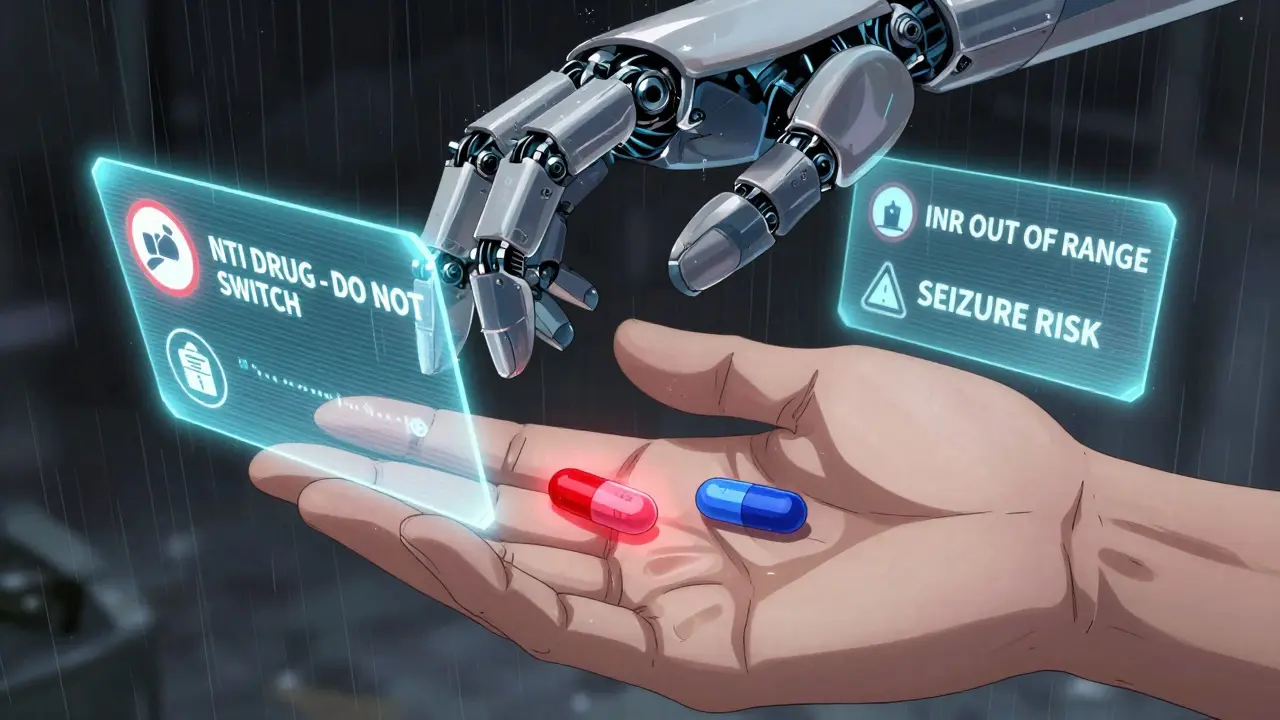
Certain drugs have what’s called a narrow therapeutic index (NTI). That means the difference between a dose that works and a dose that harms you is tiny. If your blood levels dip too low or spike too high, bad things happen. Three of the most common NTI drugs are:- Levothyroxine (for hypothyroidism): Even small changes in thyroid hormone levels can make you tired, gain weight, or feel anxious. Patients report feeling awful for weeks after switching manufacturers. One person on Drugs.com said: “Every time my levothyroxine changes, my TSH goes out of range.”
- Warfarin (a blood thinner): Too little, and you risk a clot. Too much, and you could bleed internally. Studies show INR levels can swing after switching generics. The FDA recommends sticking with the same manufacturer for warfarin if possible.
- Antiepileptic drugs (like phenytoin or lamotrigine): Patients have reported breakthrough seizures after switching generics. One Reddit user shared: “I switched from Mylan to Teva, and had two seizures. My neurologist confirmed my blood levels dropped.”
What Happens When You Switch Too Often?
Frequent switching doesn’t just affect your body-it affects your mind. A 2022 survey found that one in three patients struggled to keep track of their meds because the pills looked different every time. Some people even took two versions of the same drug because they didn’t realize they were the same medicine. In 11.5% of cases, patients accidentally doubled up on generics. That’s not just confusing-it’s dangerous. Doctors don’t always know when the switch happens. A 2023 survey by the American Medical Association found that 62% of physicians weren’t told when their patient’s generic was changed. They only found out when the patient showed up with side effects or weird lab results.Who’s Most at Risk?
Not everyone has problems with generic switching. In fact, 68% of patients on PharmacyChecker.com reported no issues at all. But risk isn’t equal.- High risk: People taking levothyroxine, warfarin, antiepileptics, immunosuppressants like tacrolimus, or lithium.
- Medium risk: Those on antidepressants, asthma inhalers, or diabetes meds with tight control needs.
- Low risk: Patients on statins, antibiotics, or most blood pressure pills. These drugs are forgiving.

What You Can Do
You don’t have to accept random pill changes. Here’s how to take control:- Ask your pharmacist which manufacturer made your last refill. Write it down. Ask them to note it on your file.
- Request a “lock-in” for NTI drugs. Tell your doctor you want to stay on the same generic brand. Many clinics now offer this. It’s not a luxury-it’s a safety measure.
- Check your pill every time. Use apps like Drugs.com or Medscape to scan the imprint code. If it looks different, ask why.
- Get blood tests after any switch. If you’re on warfarin, get an INR check within 1-2 weeks. For thyroid meds, get a TSH test. Don’t wait until you feel bad.
- Call your insurance if they keep switching your drug. Ask them to cover your preferred generic. Sometimes they’ll agree if you explain the risks.
What’s Being Done?
The FDA is starting to wake up. In 2023, they launched a pilot program requiring generic makers to report major formulation changes. In 2024, Medsafe (New Zealand’s drug regulator) issued new guidance advising against switching levothyroxine brands unless absolutely necessary. The Association for Accessible Medicines is also working on a standard pill identification system-so you can recognize your drug by shape and imprint, not just the name on the bottle. But until these changes roll out, the burden is on you.Bottom Line
Generics save billions of dollars every year. That’s good. But assuming all generics are interchangeable? That’s dangerous. If you’re on a high-risk medication, don’t let a pharmacy’s price list decide your health. Ask questions. Track your pills. Demand consistency. Your body doesn’t care about cost savings-it cares about stability. And if you’ve had a bad experience after switching? Tell your doctor. Tell your pharmacist. Tell others. You’re not overreacting-you’re being smart.Can I ask my pharmacy to always give me the same generic brand?
Yes. You have the right to request a specific generic manufacturer. Some pharmacies will charge a small extra fee if the requested brand isn’t the cheapest, but many will honor the request, especially for high-risk drugs like levothyroxine or warfarin. Always ask-don’t assume they’ll do it automatically.
Are generic drugs less effective than brand names?
For most drugs, no. Generics meet the same FDA standards for safety and effectiveness. But for drugs with a narrow therapeutic index, small differences in inactive ingredients or how the drug is absorbed can lead to real clinical changes. It’s not that generics are “less effective”-it’s that they’re not always identical in how your body responds.
Why don’t doctors warn me about switching generics?
Most doctors aren’t told when a switch happens. Insurance companies and pharmacies make the decision behind the scenes. Only about 38% of physicians are notified before a generic change. That’s why patients often notice the difference first-through side effects, lab results, or pill appearance.
What should I do if I feel worse after switching generics?
Don’t ignore it. Contact your doctor immediately. For high-risk drugs, ask for a blood test to check your drug levels. Keep a log of when you switched and what symptoms you noticed. This helps your doctor determine if the switch caused the problem. You may need to switch back or request a specific manufacturer.
Is there a list of drugs that shouldn’t be switched?
Yes. Common high-risk drugs include levothyroxine, warfarin, phenytoin, carbamazepine, cyclosporine, tacrolimus, and lithium. Some states and health systems maintain “do not substitute” lists for these. Ask your pharmacist or doctor if your drug is on one.
Can I switch back to the brand-name drug if generics cause problems?
Yes, but it’s often expensive. Your doctor can write a “dispense as written” or “do not substitute” note on your prescription. Insurance may require prior authorization. Some manufacturers offer patient assistance programs to lower the cost of brand-name drugs if generics cause issues.




Post A Comment